Poetry & Words, Theology

She’s outside of time. We’re in it.

One week and three days. That’s how long it’s been since Holly left this earth. Thirty years she lived on this side of eternal life.

“We are not alone / We are more than flesh and bone / What is seen will pass away / What is not is going home…” –Andrew Peterson
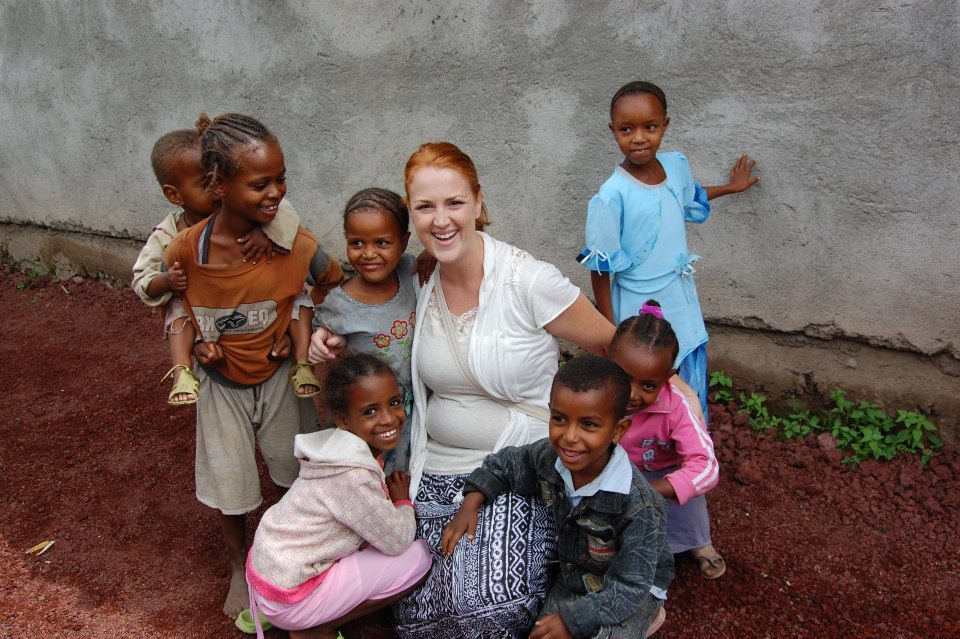
Donations to Ethopian school  Ziway Adami Tulu in memory of Holly Lutterman[Donate in Holly’s memory to the The Ziway + Adami Tulu Project]

And now, she’s home.

She’s dancing in the pure Light, healed. 

She’s outside of time. We’re in it. She’s free, and we’re trapped, feeling deeply the ebb and flow of new grief, constantly aware of life’s frailty.

The thing about death, you know, is that the living keep on living.

“The living can’t quit living,” Wendell Berry writes. “They can’t because they don’t. The light that shines into darkness and never goes out calls them on into life. It calls them back again into the great room. It calls them into their bodies and into the world, into whatever the world will require. It calls them into work and pleasure, goodness and beauty, and the company of other loved ones.”

And so we can’t quit. We don’t. We keep on, changed. Our perspectives shift, our priorities shift, our vision is altered. But we don’t quit.

We mourn, but not without hope. We grieve, but not without hope.

Hope is the anchor.

Hope points me to the “holy shores of uncreated light“, and the One who lights the way.

“‘Praise, Praise!’ I croak. Praise God for all that’s holy, cold, and dark. Praise him for all we lose, for all the river of the years bears off. Praise him for stillness in the wake of pain. Praise him for emptiness. And as you race to spill into the sea, praise him yourself, old Wear. Praise him for dying and the peace of death.

…Now that I can hardly walk, I crawl to meet him there. He takes me in his chilly lap to wash me of my sins. Or I kneel down beside him till within his depths I see a star.

Sometimes this star is still. Sometimes she dances. She is [Holly]’s star. Within that little pool of Wear she winks at me. I wink at her. The secret that we share I cannot tell in full. But this much I will tell. What’s lost is nothing to what’s found, and all the death that ever was, set next to life, would scarcely fill a cup.” -Frederick Buechner

Poetry & Words, Theology

It is early in the days of new grief

The grief will change usIt is early in the days of new grief, and the sorrow comes in waves, tidal, like the roaring surge of surf just before the crash, just before the sea glass scatters, rearranged, just before the shelled critters scurry backwards into the sand.

I lie awake in the stillness, awake until just before the periwinkle dawn. I’m afraid to close my eyes because I don’t want to forget. In the morning, I blink, I sit up, and for eight fleeting, transitory seconds, I’ve forgotten. Then the grief crashes in, then I remember, and the flood of tears roll down.

Maybe the grief will always come like the ocean’s tide, glistening like December topaz, glistening like the salty water that rearranged the Klamath coast every year. The river ran through it, always shifting, always flowing, always shaping the earth around it. Some years the driftwood arranged itself into gentle patterns and the sands fell smooth, sloping down gently into the brackish river. And some years the dunes rose high, and the winds whipped, and the gnarled branches of petrified wood were tangled in between the constant rise and fall of frothy waves.

Like the river against the stones, the ocean against the glass, and the mouth of the ocean against the changing shore, the grief will change me.

It will change us.

Every year, it will look different.

The river will continue to ebb and flow, the shoreline will be carved and smoothed, the waters will rise and fall, the glass will be broken and polished, the winds will breathe in and out.

He makes all things beautiful in His time.

Little Style, Poetry & Words

LITTLE STYLE :: When it comes to LEGO® bricks, pink is just another color

Modern legos for girls

This is my daughter. That is her LEGO collection.

You may notice a light smattering of pink.

Ah, pink. Nothing gets bloggers’ undies in a bunch faster than the mention of pink LEGO bricks. I might even lose my blogger card.

Can you imagine the kerfuffle in 1962 when LEGO introduced motors? The audacity! The nerve! The beginning of the end of children’s creativity!

Thankfully, there were no bloggers in 1962.

So, let’s skip forward a bit and start where most of the LEGO diatribes begin: the now infamous 1981 LEGO ad. It’s completely endearing and delightful! And it advertised universal building sets. The universal building sets were awesome.

LEGO 1981 ad

But pink bricks alone hardly will destroy a girl’s — or boy’s for that matter — childhood.

Pink is just a color.

By vilifying pink LEGO sets, we give a color (a color!) far more power than it ever should have. When we gasp at pink bricks, we’re saying the toy is more powerful than the imagination of the child playing with it.

Let’s chill out. It’s just pink. And besides, this color isn’t the worst thing Lego is introducing to our children. I present to you . . . The Simpsons in LEGO form, coming February 2014.

So, let it go. Shake your pinkophobia out.

In a few more days we’ll all have something else to blog out.

New Legos are not harming little girls. Pink is just a color

Poetry & Words, Theology

The thing about life is how fragile it is

The thing about life is how fragile it is

The thing about life is how fragile it is.

We don’t realize it.

We’re too busy pumping up humanity and climbing Everest and launching ourselves into orbit. We collect accolades and list our achievements and add antennas atop towers in an effort to make it all seem bigger, better, taller than it is. We love the stories that are larger than our collective humanity, the people who muster brute strength to do the one thing that no one else can even imagine.

We’re obsessed with strength.

We’re fascinated by human success. We can form armies, we can stop rivers. We’re so busy being strong, we sometimes forget that for all our sky-high buildings and conquered Everests and technological masterpieces, we can’t stop a cell from marching.

We can’t push oxygen where it needs to go. We’re no life-givers.

And in these moments when our frailty becomes the largest thing in the room, we see. We see the veil, thinner than we ever knew it could be. We see the Milky Way and we see the oceans and we see our souls and we see the sky as a canopy over us.

And the wind rushes in, and the curtain lifts up for one ethereal moment and then falls — and we gain a glimpse, and know that in all our trembling bravery and brawn, it was always His hand holding us up.

And we cling to that.

Adoption, Poetry & Words, Theology

The Hague Convention is not Enough

If you’re friends with me on my personal Facebook account, I know, I’m sorry. I’ve been over all this before. But when I saw the positive reaction online to the news this morning — Japan just became the 91st country to ratify the Hague Convention — I’ve decided I need to talk about it here, too.

Because it matters.

I’m not going to talk about whether or not there were good intentions behind the Hague Convention in the beginning. I’m going to talk about now.

We’ve seen it over and over and over again: the Convention adds an unnecessary layer of bureaucracy and red tape to the countries which ratify the treaty. It piles on the list of requirements, and in many cases the countries don’t have the infrastructure, the funding or the ability to comply with the new regulations. And in the wake of the Hague Convention — not always, but often — international adoptions grind to a near-halt.

Take a look at the Hague Convention’s complicated legacy in Guatemala.


I don’t have the answers, but I know there’s more to international child advocacy than the Hague Convention.  It’s not enough to push a nation to ratify, and then walk away.

If you want to take a more in-depth look at the way the international adoption system is broken, I’d highly recommend watching the STUCK documentary.  (At the time of this post, you can stream STUCK for free if you have a Netflix account. If you don’t have a way to access Netflix, email me, and I can send you a different link to stream the film.)

Poetry & Words

POETRY & WORDS :: Parenting Magazines vs. Reality

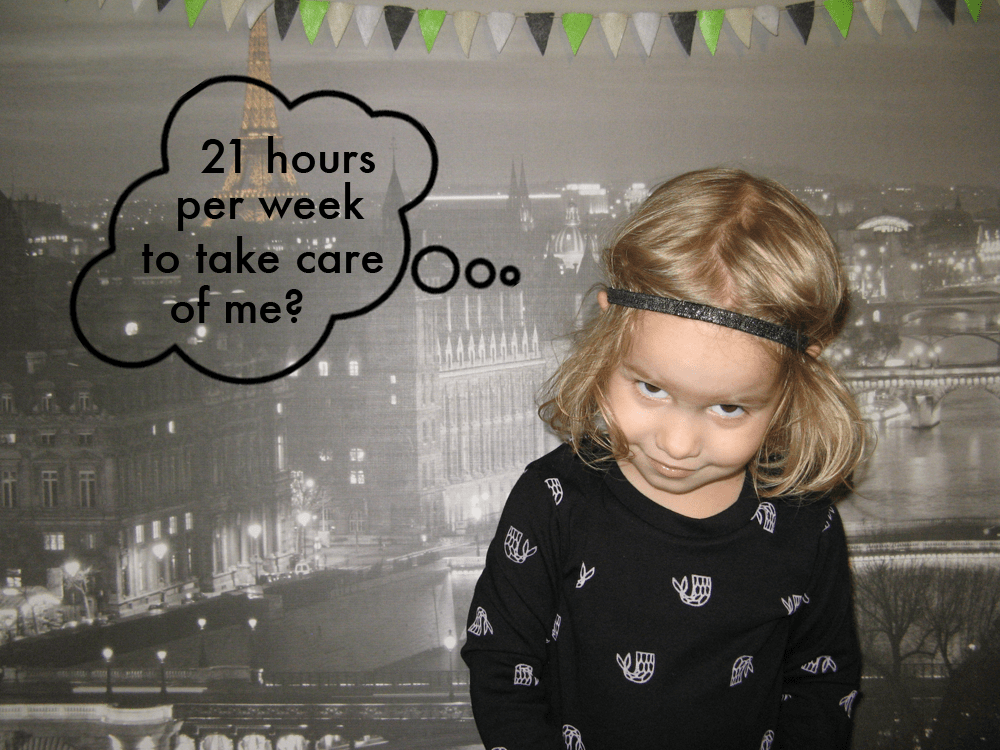
Study says parents spend 21 hours per week actively parenting their children. This blogger says, HA HA HA HA

We receive a big stack of magazines every month, and of those, a large percentage are free subscriptions. I’ve never needed an excuse to read a magazine, although I don’t always fork over the cash for them. Once, when my mother-in-law was trying to describe me to an employee at a library we both frequented, the disappointed librarian exclaimed, “Oh yes! She checks out…magazines.”

Some magazines, like Martha Stewart Living, Dwell, and Inc., I love. Others — like Parents — I find myself reading just because the content baffles me so much.

For instance, a few months ago, Parents ran a Venn diagram of stay-at-home moms vs. outside-the-home working moms. The word “exhausted” was conspicuously absent from the stay-at-home mom’s circle. I rubbed my eyes and looked again, thinking perhaps my sleep-deprived orbs deceived me. But I showed the magazine to two or three well-rested friends, and they saw the same thing. Outside job or not, I think any woman who has brought forth another human from her own body will agree “exhausting” is a mild and kind descriptor.

This month, one of the feature articles in Parents is about hyperparenting. I have no idea what hyperparenting is; but admittedly, I’m still getting used to the idea of the word “parenting” being tossed around as a verb. My Oxford dictionary tells me  n., a father or a mother; but then again, there’s probably a word for people who still own multiple copies of physical dictionaries, too.

I’ve been reading the article in snippets, in between explaining to a small bouncing kangaroo the difference between the clothes in the laundry basket and the clothes in her dresser. (“I not Aveline today, mummy. I just a little kangaroo.”) The author, Gail O’Connor, cites a 1995 University of California, San Diego study which apparently found that “mothers spent an average of about 12 hours weekly actively attending to their children”. The author goes on to say that “by 2007, that number had risen to 21 hours.”

Certainly the author meant 210 hours? Because, in any given 168-hour week, I would say about 210 of those 168 hours are spent actively attending to my child — er, kangaroo.

I started a load of wash, first stopping to gather up Hello Kitty unders from various points throughout the house while once more expounding upon the virtues of the laundry hamper to my bouncy offspring. I then stepped on a Lego, removed a My Little Pony comb from my screeching kangaroo’s flowing locks, and spent the next fifteen minutes explaining that I could not, in fact, miraculously refill the squeeze bottle of Elmer’s despite the pile of farkly [sparkly] beads just begging to to be glued into the coloring book pages.

I turned back toward the coffee pot. I could see the fluorescent light glinting off the stainless steel of the French Press. The miraculous vision blinded me, and I tripped over the magazine. Twenty-one hours per week, it said.

Cold coffee in hand, I moved a pirate and a Lego flower and sat down again to ponder this. Last Wednesday was 24 hours long, five of which I slept, except for the two occasions at 4 AM and 5 AM when I was, in fact, not asleep and instead in my kangaroo’s room bouncing her. (Ah, how the tides have turned.) According to my highly-calibrated mathulator, I logged 21+ hours of “actively attending to a child” on Wednesday alone.

Staring blankly into the bottom of my coffee mug, I suddenly remembered where we had an extra bottle of Elmer’s glue. “Aveline!” I called, holding out the magazine. “Do you still want to glue beads?”

Poetry & Words, Theology

“Where does the light goes?”

Oaxacaborn blog

“Where does the light goes?” she asks. “Where does it goes?”

No one really knows, we say. It’s all packets and photons and waves. But, this we know. It’s always there, even when it’s dark, because the darkness is no match for light. Light swallows the dark, and the dark will never triumph over light.

She presses her forehead against the glass, and looks out at the solid sheet of afternoon clouds. She asks, “It still a sunny day? It not night?”

It’s called daylight, we say. Even when we can’t see sunshine, we’re still wrapped in light.

It’s almost sunset. The sphere of light is edged in coral, sliding down behind the ridge just across the highways. “Where da sun go now? It move in da sky?” she asks.

It is we who move, we say. The light is always there, an anchor. We move around it, our faces to it, our eyes fixed on it.

“Leave my farkle [sparkle] light on?” she asks. “Leave it on?”

We have to turn it out, we say. It’s time to sleep. It’s dark, but just for a little while. The morning will come. And it will be light again.

Poetry & Words

POETRY & WORDS :: Reevaluating and rethinking my approach to blogging

Finding a new approach to bloggingIt’s January, so like millions of other Americans, I have all sorts of ideas in my head about things I need to organize. My need to de-clutter kicks into overdrive every year when I’m putting away the Christmas decorations. (Which I haven’t actually started yet, by the way. But I haven’t even been home for a full week yet, so I think that excuses me. For now.)

My desire to organize and rearrange spills over into the digital realm. I need to clean out files I don’t need anymore, because my poor iMac is choking and needs more space. (Anyone else notice that it’s way harder to organize virtual file folders than it is to clean out a junk drawer? Or is it just me?)

And, I feel the itch to reevaluate — and redesign — this blog. During 2012, this blog grew by leaps and bounds, a dramatic jump up from the year before. But then, throughout 2013, traffic remained exactly the same as 2012, almost to the digit. Sure, I maintained the growth this blog saw in 2012, but I feel like I didn’t really build on it throughout 2013. So that’s kind of discouraging — to get to the end of the year and look back and realize this blog didn’t reach the kind of growth I wanted it to.

Interestingly, though, engagement across social media skyrocketed during that time — with Instagram, Twitter and Facebook chatter climbing up the charts. I think a lot of that has to do with how we spend our time online these days. Blogs are evolving as the internet becomes more and more saturated with content, and I am constantly trying to figure out what the “it” factor is that makes some blogs really take off while others remain stagnant.

So, in addition to doing a little visual spruce up in the coming weeks, I’m thinking hard about how I’m going to approach this blog and its content in 2014. I’m not going anywhere. I’ve been blogging since 2004 and couldn’t imagine NOT doing this. But I want to set some big, yet realistic, goals for Oaxacaborn in 2014.

I’m just not sure yet what they are.

What do you love most about this blog? What do you want more of? What types of posts could you do without? I’m all ears!