by Gina Munsey | Homeschooling | Diverse Global Reads
Author: Gina @ Oaxacaborn
Gina Munsey is a Mexico-born, Eastern Europe-raised missionary kid who ended up being a Californian by way of Florida outside of Nashville, Tennessee. She lives her days full of coffee and adventures while her 12-year-old learns Mandarin Chinese and Greek, her 3-year-old uses all the markers, and her artist-husband creates worlds from pixels and light. A blogger since the turn of the century (ouch!) she's an editor, co-op teacher, and writer who has only completed four chapters of her languishing manuscript. You can find Gina right here at oaxacaborn.com, or in the middle of [home]school surrounded by stacks and stacks of books.
This spring, both Western Easter and Eastern Pascha are marked on my calendar — a week apart, a world apart, yet united as one. It’s fitting. I’ve always had one foot here and one there, floating as it were between the culture of my passport and the culture in which I was raised.
I bought a little green book of ancient Christian writings, and have been slowly reading through the dancing words as the seasons ebb and flow.
And this green book, on the page marked Resurrection, these words penned between 347 and 407 AD jumped out at me–
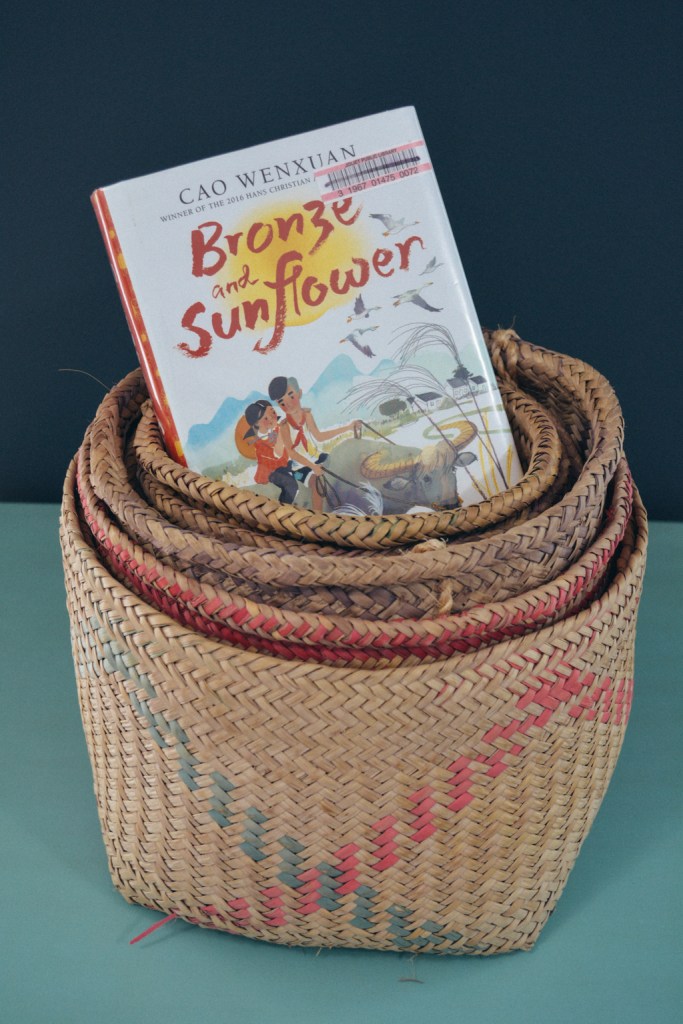
In your quest to add own-voices literature to your homeschool, don’t overlook translated novels! Translated books don’t try overly hard to be diverse, they simply are.
Written in Chinese by children’s author Cao Wenxuan, Bronze and Sunflower follows the two title characters through a summer in a rural village in China in the 1960s, shortly after Chairman Mao established agricultural labor camps during the Cultural Revolution.
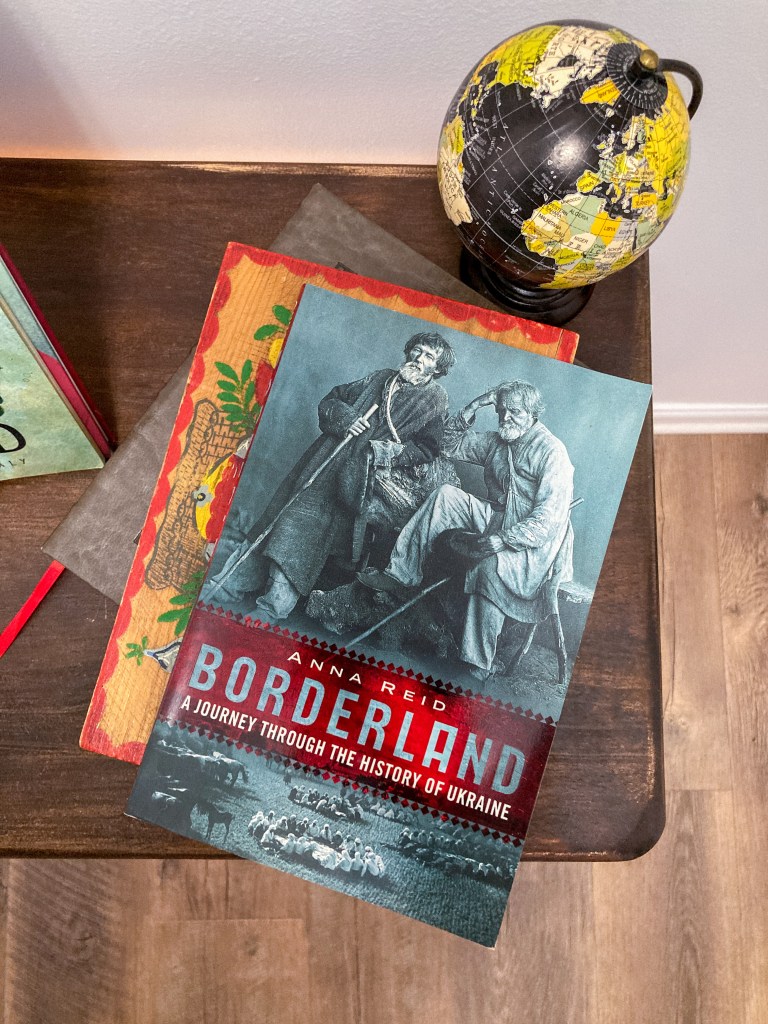
When the news starting tumbling through the airwaves, the literary homeschool groups on Facebook were flooded with posts from moms asking for picture books to help their kids understand Ukraine. Yet very few were asking for reading material which would help them, as adults, make sense of the news’ garbled deluge of information about Ukraine.
While I understand the immediate desire to help guide kids through the tangled web of current events, the lack of curiosity from adults made me a little bit sad. Maybe this comes from having spent my early childhood in a place no one has ever heard of (“the former Yugo-what?”) Maybe I’m just a Slavic history nerd — after all, I’m of Slavic descent and already had Borderland on my shelves. But wouldn’t it help if we asked more questions? Wouldn’t it go a long way if we, as parents, at least tried to educate ourselves along the way as we educate our kids?
We start the school year inside one set of walls, and wind it down inside a new set of walls down an old-new highway, further away from the maddening din. We fling open the curtains and let in the newfound light as we hold the books in our hands. Our left hands grow heavier and our right hands grow lighter and lighter as we creep toward the end of the school year, page by page by page.
We rearrange the shelves and fold paint over the walls and fold up sweaters and make the beds and unroll rugs and dream of where we’ll plant sunflowers and cherry tomatoes.
The coffee maker hums and my brain runs back and forth, jumping from track to track: eleven-year-old and two-year-old, eldest and youngest, deodorant and diapers. I swing from Chinese to Greek to toddler English, drawing brackets around grand middle-grade essays and then enunciating consonants and vowels for the smallest little friend. The light rises and falls, rises and falls, rises and falls.
Outside, the news rages. Zealots call for cancellation, call for vengeance, scream at you for the wrong kind of silence or the wrong kind of words, screaming for no reason at all. We all weep. The news cycle drains and spins, drains and spins, drains and spins.
Inside, we sing: Kyrie, eleison.
The marquee at the gas station around the corner winds up. I look away. Someone texts more doom, another soundbite, more fire and ice — another way the world will end.
Music floats in and out and in again. I reach, and grab it.
We press on: dishes and poetry, mopping and tantrums, sunrise and bedtimes.
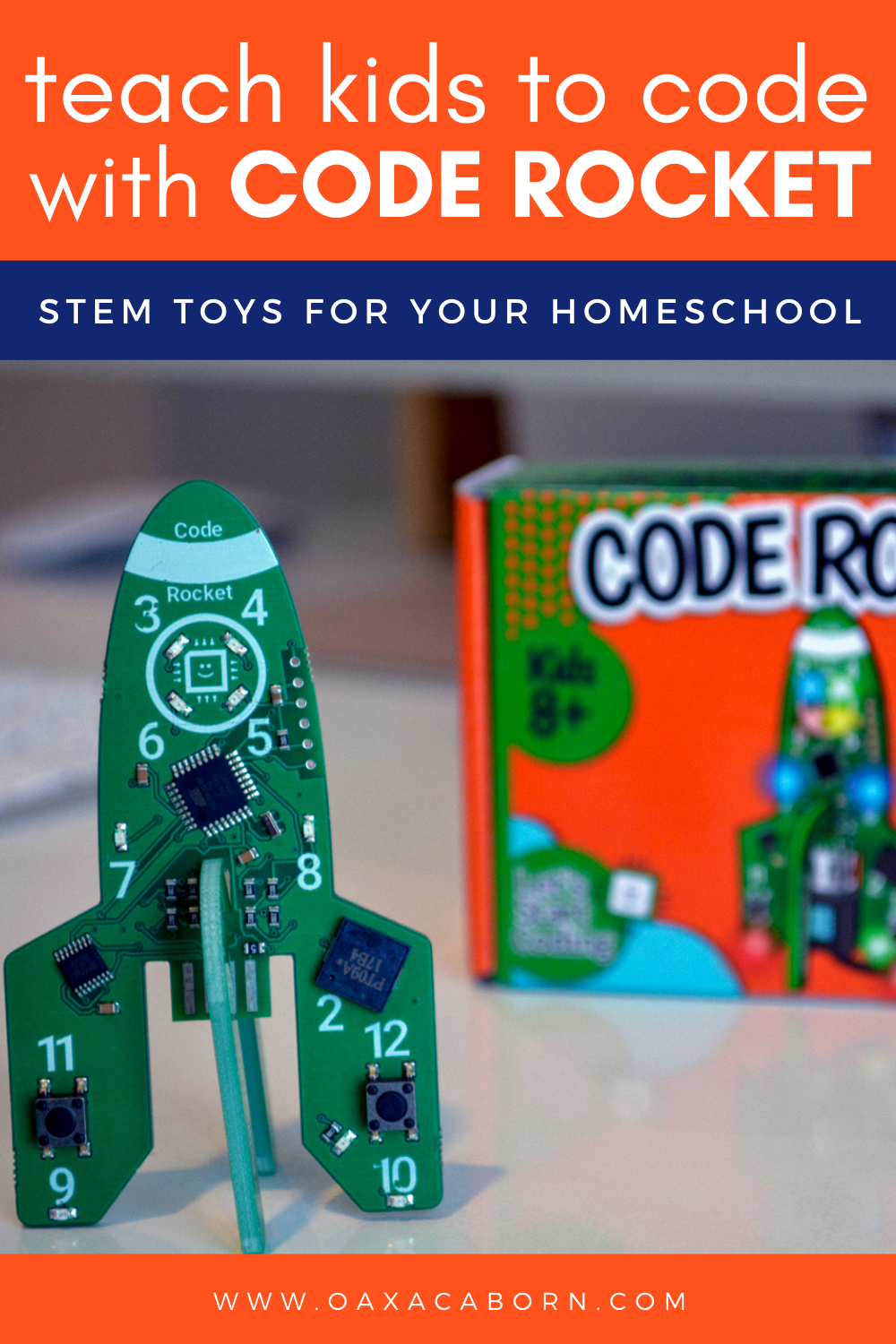
If you’re science-or math-averse, don’t let your own limitations keep your kids from delving into STEM projects. Code Rocket lets you teach kids to code, even if you have no idea how. The video lessons — and the interactive circuit board — walk kids through fun C++ programming projects. Because the code kids are compiling operates the physical rocket-shaped circuit board, they’ll get immediately satisfying results, like blinking LEDs and beeping sounds!
Tell me you’re a homeschooler without telling me you’re a homeschooler. I’ll go first: we just completed an intestine puzzle. There are some activities which just scream “homeschooler”, you know what I mean? Assembling the internal organs of the human abdomen in jigsaw form is definitely one of those moments.
[Disclosure of Material Connections: I received a complimentary Dr. Livingston’s Anatomy Jigsaw Puzzle – the Human Abdomen from Timberdoodle in exchange for writing and publishing this post. All opinions — and photographs! ;) — are my own, and I was not required to write a positive review.]
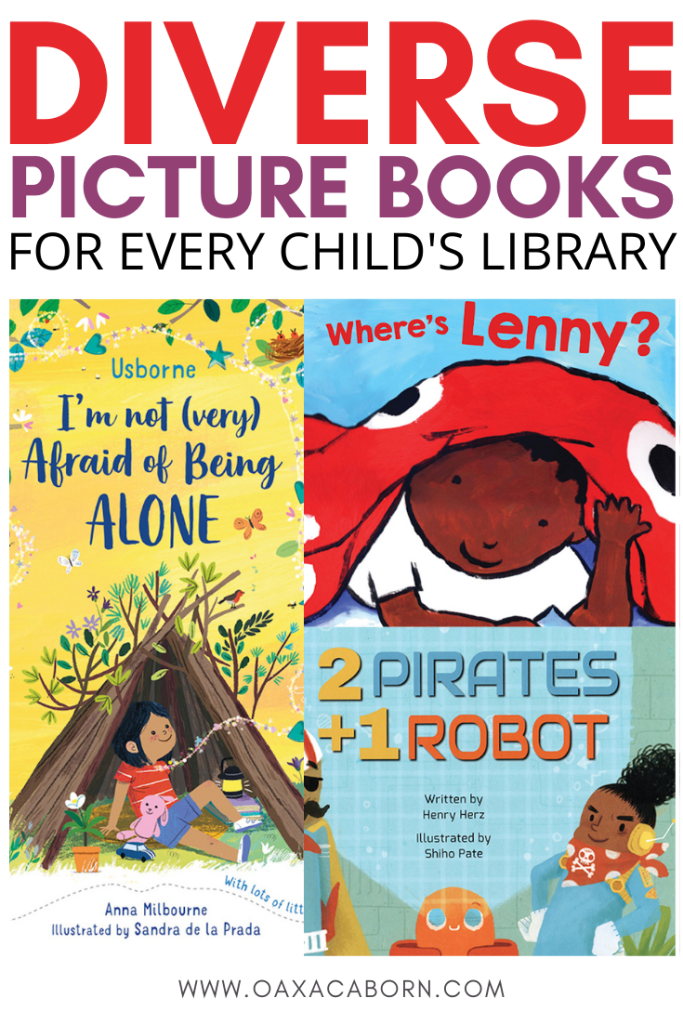
Usborne and Kane Miller books are well-known for their encyclopedic non-fiction. But did you know about the gorgeous picture books? Here are ten lovely and vibrant picture books featuring diverse characters in everyday situations, doing everyday things.
I’ve been thinking a lot about the books we homeschoolers choose to highlight in our individual homeschools. Classical Great Books? Vintage readers? Diverse own-voices novels? Non-fiction memoirs? Re-written edited morality tales? (Please, just say no to that last option.)
Why do homeschoolers choose the books they do?
It’s a question worth asking, and worth examining our own choices. As Christian homeschoolers, we want our children to know about God, and grow up to love Jesus. Certainly we also want to nurture the gifts God has given our children, and not bury our kids’ talents in the ground like the servants in Matthew 25 did with the talents the master had given. If we have a math-minded child, for instance, we want to allow that child to excel and soar in mathematics. And we may make it a priority to raise culturally literate children, who have at least heard of Mother Goose, Winnie the Pooh, and Shakespeare (although they don’t need to love them.)
But beyond the basics of reading and writing, and the basics of spiritual catechesis, why do we choose the books we do? What sorts of books are filling our shelves — and our kids’ minds?




 The Oaxacaborn Blog