by Gina Munsey | Homeschooling | Diverse Global Reads
Author: Gina @ Oaxacaborn
Gina Munsey is a Mexico-born, Eastern Europe-raised missionary kid who ended up being a Californian by way of Florida outside of Nashville, Tennessee. She lives her days full of coffee and adventures while her 12-year-old learns Mandarin Chinese and Greek, her 3-year-old uses all the markers, and her artist-husband creates worlds from pixels and light. A blogger since the turn of the century (ouch!) she's an editor, co-op teacher, and writer who has only completed four chapters of her languishing manuscript. You can find Gina right here at oaxacaborn.com, or in the middle of [home]school surrounded by stacks and stacks of books.
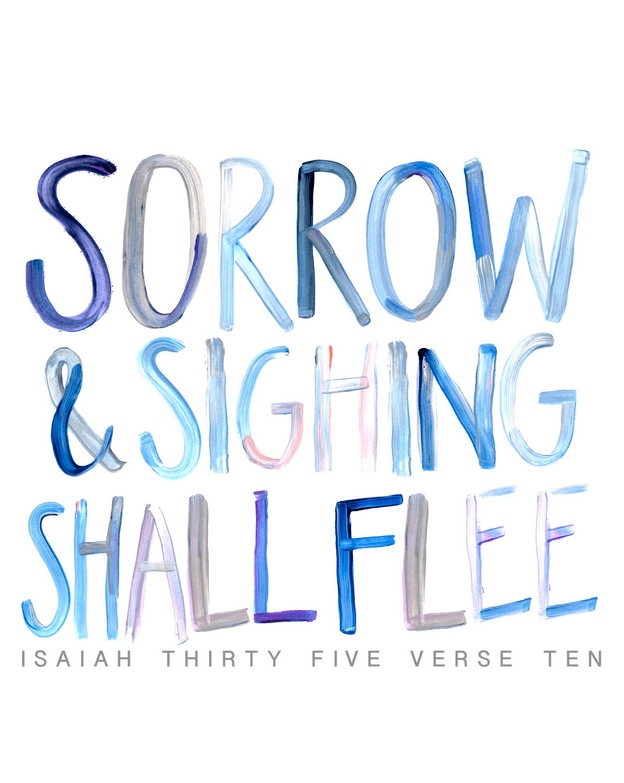
Are you familiar with Naptime Diaries? They have the neatest art! And this year they have a GORGEOUS Advent collection. I mean, it’s really something — prints, calendar, devotional.
And here are a few of my favorite prints from the latest collection —
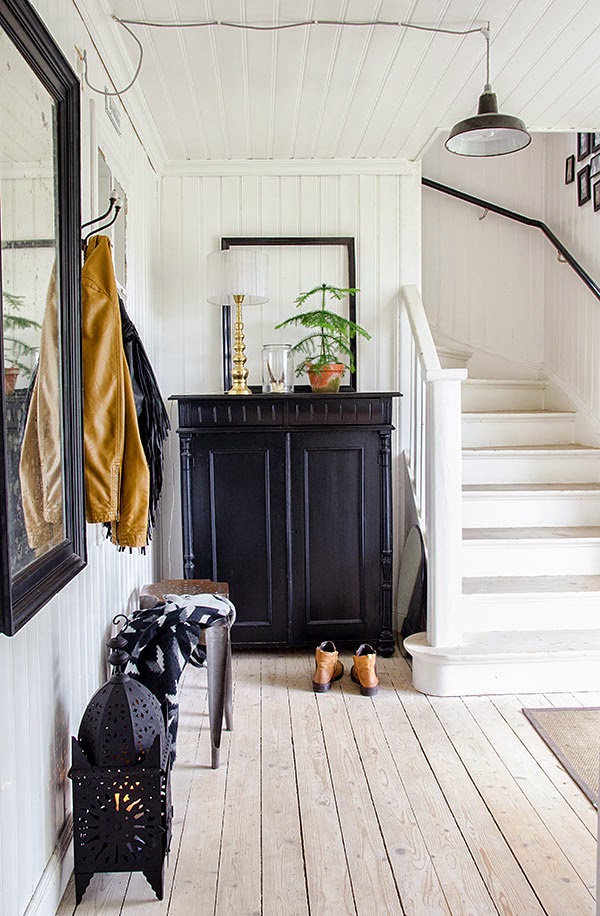
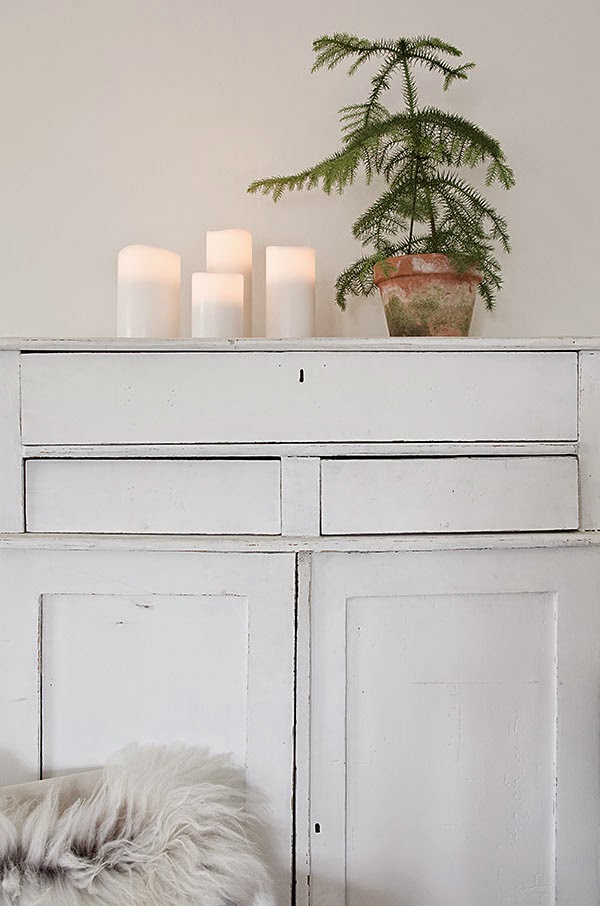
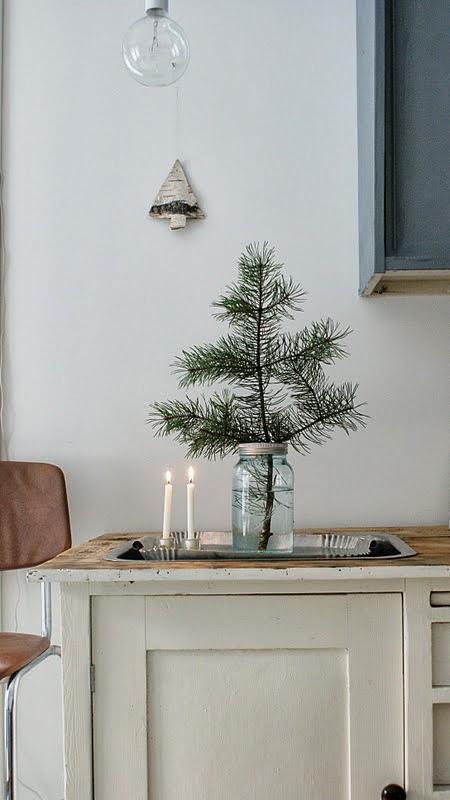
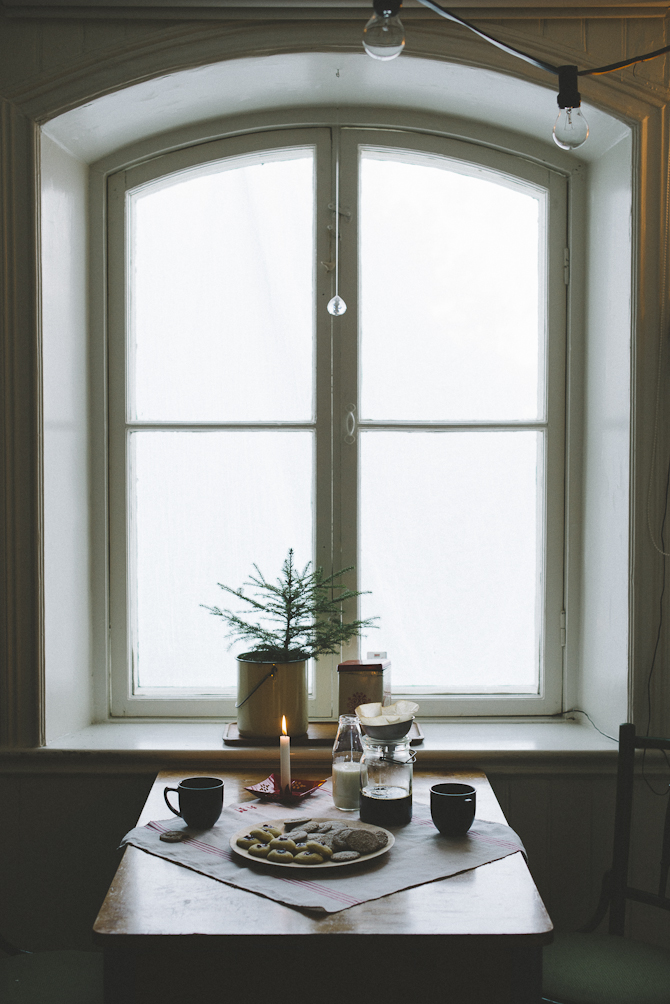
Every Christmas tree doesn’t have to be a big, Costco-sized production. Here are some lovely ideas to use small, table-top trees — or even the extra branches you might have leftover after trimming to fit into the tree stand!
Whether you spell it advent calendar or adventskalender — or even julkalender — we’re just two weeks away from December 1. Time to get this Scandinavian Christmas series underway!
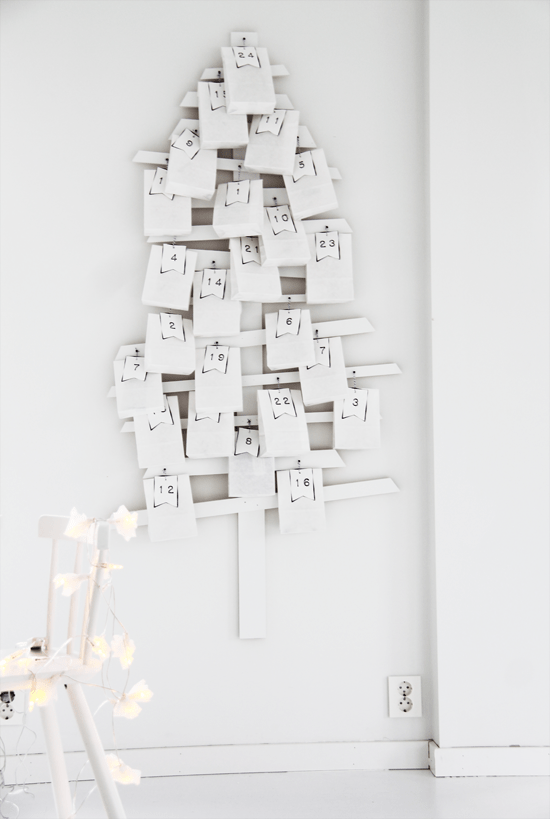
The first advent calendar example comes from Elisabeth Heier in Norway. She made this kalender tree from painted white boards — and then attached the paper bags to the tree using nails and wire. It’s really striking — and the black and white design keeps it from looking too cluttered.
This next advent calendar, from The Merry Thought blog, cleverly strings up an evergreen bough and then decorates with tiny plywood-covered matchboxes. The full tutorial can be found here.
Starting with a plain tree, and adding one decoration per day until the tree is filled at Christmas — what a good idea! This filigrantrae is Danish-inspired and comes from Nalle’s House blog. Bonus: her post has a full tutorial if you want to make your own dowel tree, although this ideas would work with any small tree.
Most of the advent candles I’ve seen in my life are a group of four candles, one for each advent Sundag leading up to Christmas. But I love the idea of a single large candle measuring the days, turning the candle into a daily tradition rather than weekly one. In fact, Tina over at Copenhagen’s Traveling Mama, has observed that’s the norm in Denmark!
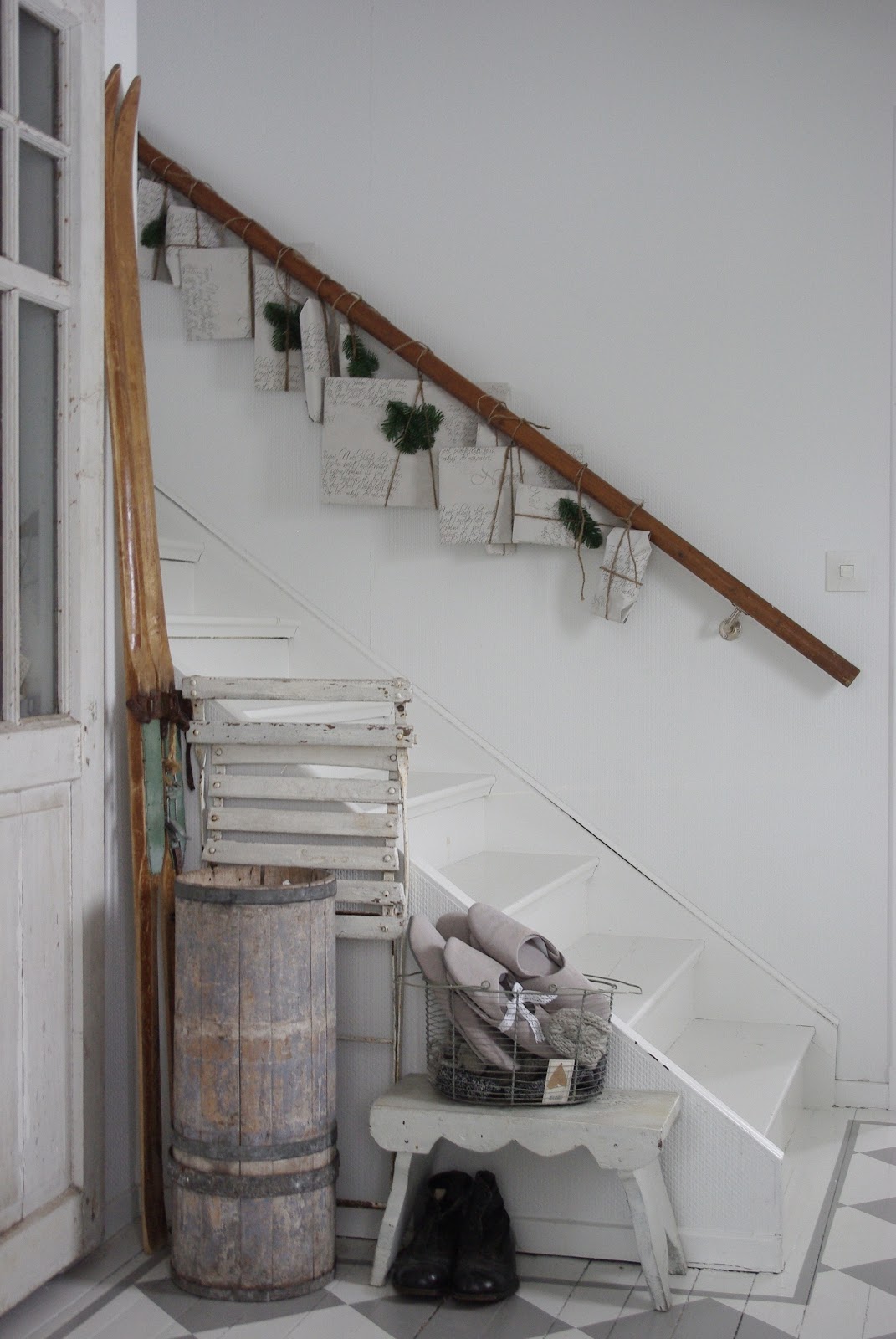
If you have an accessible staircase bannister, you could make that the focal point for your advent gifts, like Swedish blog Fröken Knopp did with newsprint and twine. (P.S. How cute is that painted floor?)
November 9, 1989 — I’ll never forget that day 25 years ago — well, I didn’t hear the news until Friday morning, the 10th, over breakfast in West Germany. The night before, East German Communist Party spokesperson Günther Schabowski suggested, without much oomph — almost accidentally, it seemed — that travel between East and West could happen “from now”. [1]
Humanity surged toward the barrier, climbing over it, smashing at it with axes and hammers, and waiting in endless lines at the now-open gates, disbelief in the air. It’s emotional for me even now to think about this exodus, the pieces that held up the regime crumbling, the people locked in for years.
People died trying to cross that wall.
In a giant cloud of exhaust fumes of two-stroke engines, hundreds of East German cars wait bumper to bumper in front of the West German checkpoint Helmstedt to enter the west, Nov. 11, 1989. In front of the eastern checkpoint, the cars wait in line for a distance of 30-40 kilometers, a West German policeman said. The ride from Berlin to Helmstadt (about 200 kilometers) would last about 11 hours. (AP Photo/Claus Eckert)
“So it was the other side of the roughcast concrete barrier that mattered, the side that people did not spray with aerosol cans but had risked their lives to climb over. The emotional quality of this liberation can only be captured if you can imagine what it was like to live behind that ‘anti-fascist protection rampart’ (its mendacious official name) for all your life, never setting foot in the western half of your own city, and with the expectation that this would continue for years to come.
Here is the other thing that even the finest historians struggle to recover: the sense of what people at the time did not know. To those who lived behind it, the Berlin Wall had become something almost like the Alps, a seemingly unchangeable fact of physical geography. Even when things began to change so dramatically in Poland and Hungary, most people just did not believe the Alps could crumble. After all, there was a nuclear-armed empire holding them up. ” [2]
People now tell me I couldn’t have understood what was happening when November 10th dawned. I begin to tell my story, and they quickly interrupt. No, I couldn’t have known the significance of the day. I wasn’t yet six years old, they remind me.
In a way, they are right. I can never fully understand what it was like to have lived under East German rule. During that time, I did not live in Berlin. I lived in the former Yugoslavia — officially, the Socialist Federal Republic of Yugoslavia. And I was on the Western side of the wall when it fell.
But unlike many six-year-olds, I knew about the secret police. I knew about the checkpoints. I knew about smuggling, and borders, and visas and papers and freedom. And on November 10th, I could feel the wild mix of jubilation, uncertainty, and the thrill of the unfettered unknown.
People who’ve always lived in freedom don’t always know how to describe it. And people who’ve always lived in fetters can’t always articulate the lack of freedom, either.
“It is almost impossible to recreate the emotional intensity of the moment of liberation. For that intensity came from having lived for most, if not all, your life with the aching certainty that something like this was, precisely, impossible.” [Read More: The Berlin Wall: What it Meant to Be There]
Oh, I remember. There is no doubt about that.
And there’s something else: I am going to keep remembering, and keep telling this story. Because I don’t want to forget.
We all need something to keep our priorities in order. Something to keep us grounded, for lack of a better word, something to prevent us from wallowing in our #firstworldproblems.
Sometimes, all it takes is to stop focusing on ourselves. I’m preaching to myself here. My daily complaints do NOT constitute suffering.
Not when I have a family to call my own, and this girl (shown below) has none.
Almost every day, a story about a child lands in my inbox, and every time, I read it. Not because I love sad things. Not because I want to have pity. But because the broken parts of this world will never change if we’re too busy holed up in our comfortable little havens. Because the broken pieces will never be picked up if we’re too busy creating ourselves a safe little bubble.
I want to look up. I want to look outward. I want to make a difference.
Because every child matters.
—
RESOURCES a.k.a. a partial list of the blogs and newsletters I read.
I have to stop and remind myself: I don’t get these moments in the frenzy.
I don’t get moments like this if I’m consumed with the tyranny of the urgent, if I’m lost in the self-made chaos, if I measure my worth against how much I’ve achieved or accomplished in the last twenty-four hours.
We’re to run this race with perseverance, yes, but our strength is in quietness and rest. The heart never stops beating, yes, but the stillness between every heartbeat is essential to staying alive.
And I see that stillness in the the way the sun filters through the smudged glass. The way a horse stands motionless in the cool darkness of the county fair, refusing to fear the racket rattling from the midway outside. The way the living room chairs are pushed together, the blankets are tugged from the beds, and her mischievous face peeks up at me through the ramshackle fort.
These are the moments — and yes, He is the God — I want to choose, seek, and hold.
“O Thou who art my quietness, my deep repose, My rest from strife of tongues, my holy hill, Fair is Thy pavilion, where I hold me still. Back let them fall from me, my clamorous foes, Confusions multiplied; From crowding things of sense I flee, and in Thee hide. Until this tyranny be overpast, Thy hand will hold me fast; What though the tumult of the storm increase, Grant to Thy servant strength, O Lord, and bless with peace.”
– Amy Carmichael
Of course, none of this would be possible without YOU, my incredible world-wide readers. So, what do you have for us all this year? Email me at oaxacaborn@gmail.com!









 The Oaxacaborn Blog