Poetry & Words, Theology

Sojourning is not a rhythm

IMG_4920 IMG_4902 IMG_4853

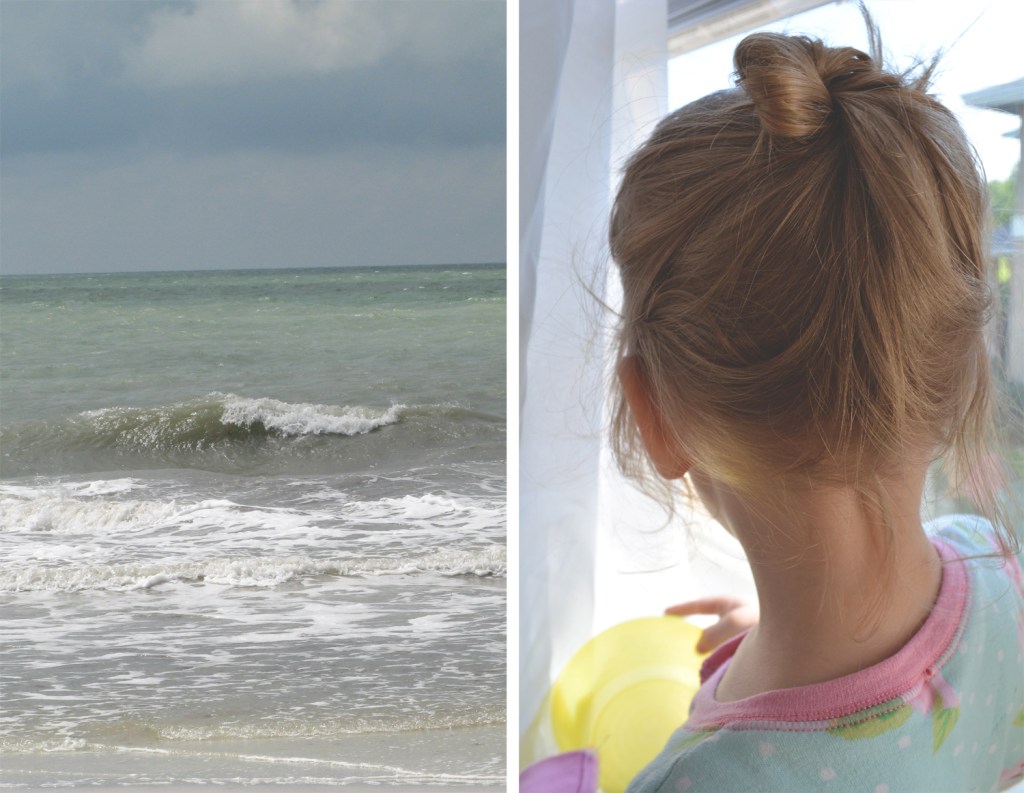
The words get lost in the days, lost in the shuffle between high tide and low tide — the choreographed swap of sand and sea — lost in the couch cushions, like copper coins, lost in the fray, lost in the routine between breakfast and sunset.

This, of course, is exactly when I should be writing. Words are spun from the gossamer threads which wrap around our days. I can see them, glinting, drenched from the downpour, drenched from the puddles, drenched from the spray.

“You write while you are alive”, Anaïs Nin said. “You do not preserve them [living moments] in alcohol until the moment you are ready to write about them.”

And so, alive, I write.

We stick pins in a map and wonder which one will hold. We squint at the horizon and see mountains through the mirage, and yet, the pillar stands still. The life of a sojourner is not a rhythm of motion and stillness, like the poets would have you believe. Sometimes, there is no rhythm. Sometimes it is abrupt, sometimes it is whiplash, sometimes it is an awkward slow dance, a holding pattern at best. Sometimes, you fold up your belongings into a square, and load the truck, and don’t look back when every inch of you longs to cling to the roots you tried to push into the broken ground. But most of the time, you stand.

You stand even when your feet so dearly ache to run.

Life in Photos, Poetry & Words, Theology

Inside Outside

LIFE IN PHOTOS :: Inside Outside, a post on the Oaxacaborn blog

LIFE IN PHOTOS :: Inside Outside, a post on the Oaxacaborn blog

LIFE IN PHOTOS :: Inside Outside, a post on the Oaxacaborn blog

LIFE IN PHOTOS :: Inside Outside, a post on the Oaxacaborn blog

LIFE IN PHOTOS :: Inside Outside, a post on the Oaxacaborn blog

Spring here doesn’t approach slowly with neon green buds or opening blossoms. There is no fading ice, no crocuses or daffodils. Spring here is akin to a lobster in a pot of water, temperature unconsciously leaping upward, a baptism by immersion of drenched air and torrential rain until the whole wet world is submerged.

There is one month left between us and hurricane season, between us and and daily electrical storms. One month left until the six-month stretch of tropical storms begin and the canned goods stack up  under the countertop and the gallons of water in the closet are restocked and clocks are reset by the rhythm of cyclical thunder and the afternoons are spent inside.

Inside, outside, inside, outside, inside.

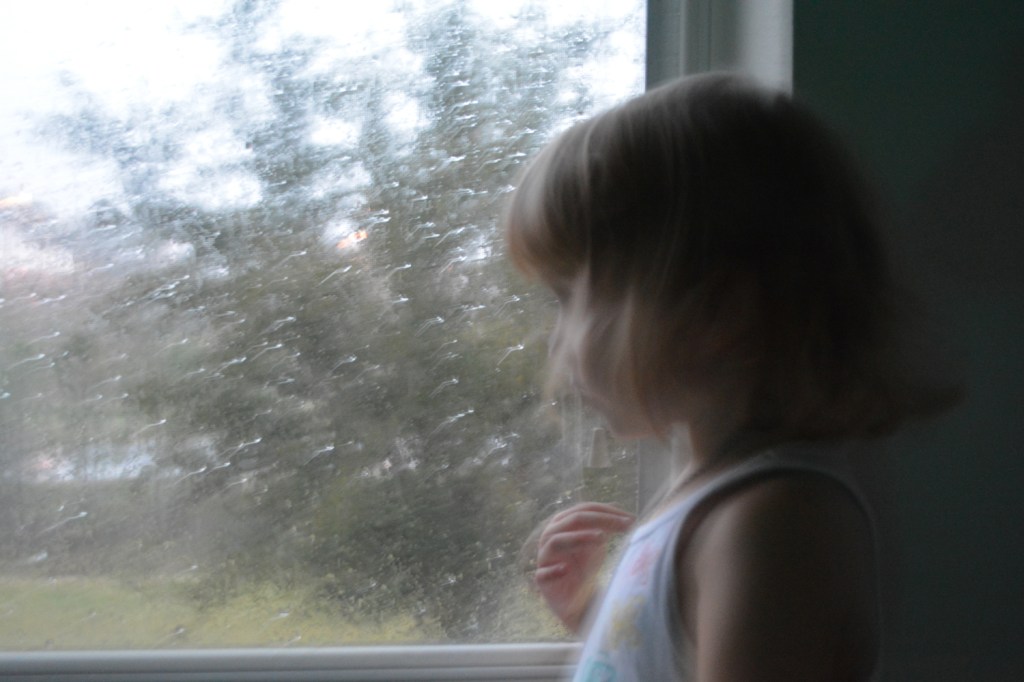
One month left until the sidewalks are rivers and the windows are our constant view to the outside deluge.

I want to see beauty in it this year. I want to see beauty in the spongey grass and the low skies and the waterlogged earth and the thick roadside ponds and the one single shade of green coating it all.  I want to see it for what it is, rather than what it is not. It is not the thin high skies specked with pollen and pine resin and wildfire, it’s not the sun-baked clay earth that shatters into a million immobile pieces every summer, it’s not twisted oak silhouettes or mountain ridges. The sunsets are pastel, not copper, but we are the same people here as we are anywhere.

This is a journey of becoming, after all, and a journey is not where you put on the skids and claw and pound your tent stakes in deeper and rage against the rain. Sojourning means you tend to your fires and your campsite wherever you are, keeping the light alive from dawn to dusk, no matter if you’ll pull up stakes tonight or in three months or in a year. You pull your loves in closer, you keep your eyes to the light, and in the darkness you see the One who pulls the tides and pushes the moon and punctured heaven to give you stars has not failed you yet.

And so you tarry, and so you sojourn, and so you live.

Poetry & Words, Theology

A Mountain Can’t Hide the Light

We can't hide memories any more than mountains can hide the sunWe want to say the memories split the light in half, the way a single mountain peak does at sunrise, when the orb of burning fire rises just beyond the apex. But the truth is, the light never splits that way. Really, it diffuses, it lights up every crevice and ridge and line until the whole horizon is in flames. As much as we want to fold up the memories and draw lines around them and never travel their pathways again, memories don’t compartmentalize. There is no Continental Divide.
We can’t divy the past up — this drop for the Atlantic and this drop for the Pacific — because water and light don’t work that way. Memories wrap around us, they are us. We’ve been led through the past and we’ve been redeemed and we are redeemed and we are being redeemed, right in this very rain-drenched, sun-soaked moment.

A mountain can’t hide the sun any more than droughts can prove rain is a myth. And shadows, those shifting slate-grey mirages, depend on light for their very existence.

And so deluge or drought, midnight or dawn, shadow or noon, there’s still light

and there’s still life-giving rain

and there’s still hope.

Poetry & Words, Theology

In death, life becomes everything

Death, in all its soul-wrenching grief, gives perspective

When there is a death, it rattles you.

The very fact of life, previously neglected beneath the raging urgent tyranny of tasks, grows larger and larger until it fills the room and becomes the one thing you see coursing through everything.

And in the grieving silence that’s followed Holly’s death, I’ve never been so aware of my ability to see and hear and feel the heartbeat of everyone in the room. Life never seemed so obvious, so mysterious, so frustratingly completely and entirely out of my control.

In the faces around me, over and over and over again, I saw only this: he is alive, she is alive, this one is alive. The very existence of life, once overlooked, became everything.

Death has reminded me that the frustrations and irritations which raise our ire and make us indignant — all those situations which cause us to lash out and speak out and act out — precious few of those things actually matter. Death, in all its soul-wrenching grief and sorrow, shows us perspective.

While the wave crashes over me and I can’t see the sky for the watery canopy, I grasp snippets of this: others over pride. Others over self. This moment, because you’re not guaranteed the next. This child, because she’s on loan. This man, because our days are numbered and written in a book.

I want this to be her legacy in my life.

I want to listen more than I speak, and I want to stop jumping up so quickly, boxing gloves donned, ready to fight.

Like my friend Andrea says, “I can say what I want about theology, doctrine, justice, right and wrong and so on, but at the end of the day, when the fires are dying, it’s clear we were all created by One and placed on one earth, under one sky, on one planet. …There is only one man who came to this earth, and was not entirely made up of the stuff of this earth, and it’s Him that I want to get my fire from. It’s His light I want to see in the stars; his stories that were told fireside that I want to find in my own.”

It’s life that matters, it’s people who are alive, and this earth is where I am.

I want to make it count.

Poetry & Words, Theology

The Fog and the Quiet

It doesn't happen very often that the fog and the quiet coincide - via the Oaxacaborn blog

It doesn’t happen very often that the fog and the quiet coincide. Not here. Here was not a place for fog. Who ever heard of Atlantic fog, anyway? Not here, not wedged between the Gulf of Mexico and the Atlantic, on a slab of land as smooth and flat as, well, a swamp.

The fog didn’t pause here often, and definitely never on little cat feet.

The quiet didn’t pause here often, either, not inside or outside. Outside were layers of neighbors and four-footed bark machines who were wound up each morning and set on loop on loop on loop to run from nine until five, reset every time little cat feet or brown-clad parcel delivery men trotted by merely to raise their ire.

No, the fog and the quiet were infrequent visitors, welcomed gladly by some — mostly the out-of-staters — but exploited as breaking news by the hurricane-worn meteorologists to whom category five is just another day but fog — oh fog! — is a newsworthy anomaly.

But on this morning, briefly, a curtain of twisted fog and quiet drifted in and rested lightly overhead, an undulating curtain of phantom peaks and ridges — a nod to mountains where there were none — lifting, waving, turning, spreading its long white wings over the earth.

But no one, except for the Pacific-coast natives and the meteorologists, saw it.

Impatient drivers and tired commuters lined up at the toll both, honking out of sync while fumbling with quarters and dimes, eyes seeing only just past the windshield, driving like automatons only as far as the timecard required, hearing nothing but the cubicle chatter, until it was time to return again, back out through the fog, to the layers of noise which switched gears at five.

Poetry & Words, Theology

We were created to know beauty beyond what our senses can take in

IMG_0872

We see it in the burst of green which sprouts up from a thick, decaying layer of broken leaves in the spring. It fills our hearts the way of vase of daffodils fills a room, like a smile brightening every line of the face of the one you love after a long, long absence.

This is beauty.

And mountains and sunsets and the magnetic tide, beautiful songs and lilting poetry, and laughter, clear like bells; these are beauty. These things lift our spirits. They buoy us; they bring happiness. We’re created to see this, to breathe this, to be enveloped in this.

We were created to know beauty beyond what our senses can take in.

And all of this earthly beauty — a fire-tinged sky, the quiet breathing of a sleeping child,  velvet buds on a tangled vine — all this great, overwhelming, everywhere beauty is reflection of the One, the author of good, the divine Creator of all things bright and beautiful.

Poetry & Words, Theology

“Where does the light goes?”

Oaxacaborn blog

“Where does the light goes?” she asks. “Where does it goes?”

No one really knows, we say. It’s all packets and photons and waves. But, this we know. It’s always there, even when it’s dark, because the darkness is no match for light. Light swallows the dark, and the dark will never triumph over light.

She presses her forehead against the glass, and looks out at the solid sheet of afternoon clouds. She asks, “It still a sunny day? It not night?”

It’s called daylight, we say. Even when we can’t see sunshine, we’re still wrapped in light.

It’s almost sunset. The sphere of light is edged in coral, sliding down behind the ridge just across the highways. “Where da sun go now? It move in da sky?” she asks.

It is we who move, we say. The light is always there, an anchor. We move around it, our faces to it, our eyes fixed on it.

“Leave my farkle [sparkle] light on?” she asks. “Leave it on?”

We have to turn it out, we say. It’s time to sleep. It’s dark, but just for a little while. The morning will come. And it will be light again.

Babiekins Magazine, Christmas, Poetry & Words

POETRY & WORDS :: The Candle Tree

The Candle Tree, Illustration by Maia Larkin of The Voyagers for Babiekins Magazine

“Everyone’s Christmas tree is different. Some people have a quiet tree with tiny twinkling lights, silvery tinsel, and fluffy white snow. Other people have neon trees with bright garish bulbs, twitching and blinking against the backdrop of Santas in Hawaiian shirts, and elephants wearing antlers.

But when I was a little girl, our Christmas tree was very different.

Our tree was dotted with cookies.

And candles.

Candles with fire…”

To continue reading my story about Christmas in the former Yugoslavia, go to page 36 of the Babiekins Magazine gift guide.

(The accompanying illustration was created by Maia Larkin of The Voyagers, and is available here.)