Homeschooling, Poetry & Words, Theology

The Autumn Liturgy of Rest: How Seasons Can Prepare our Hearts

The Autumn Liturgy of Rest: How Seasons Can Prepare Our Hearts

I’m drawn to the changing of the seasons, the time of the year when everything is on the cusp and the old world starts dying and the new world starts coming on [1]. ( Each new day does this too, but the rising sun doesn’t bring out the poetry in me.  Maybe that’s why I’m drawn to liturgical holidays— this neat and tidy slicing up of seasons, tied to the calendar but not the clock.

It’s a reminder that mercy is new, always.)

And I like the changing of the seasons for the nudge to pause and breathe. It’s a time to take stock of whether or not frenetic busyness has creeped in, unnoticed, encroaching on our calm and peaceful margins.  Margin is important to me. Margin is vital. I cannot thrive without margin.

In the 1990s, Dr. Richard Swenson wrote about this in his book “The Overload Syndrome: Learning to Live Within Your Limits“, saying, “We must have some room to breathe. We need freedom to think and permission to heal. Our relationships are being starved to death by velocity. No one has the time to listen, let alone love. Our children lay wounded on the ground, run over by our high-speed good intentions. Is God now pro-exhaustion? Doesn’t He lead people beside the still waters anymore?”

The Autumn Liturgy of Rest: How Seasons Can Prepare Our Hearts (from the Oaxacaborn blog)

The changing of the seasons, for me, means a reminder to cultivate those still waters in my own home. I have good intentions, of course, but they are prone to slip, and the seasons give me pause to reconsider whether I am still being intentional about my goals of rest.

Rest doesn’t happen on its own. We must fight for rest.

There’s no escaping it this time of year in Eastern Europe and in the American North. The leaves surge with one last burst of chlorophyll, summer’s flowers tuck their heads, and heirloom rugs are rolled up and beaten outside, clearing the stage for fall, scouring the home for winter, and steeling one’s heart against the coming wintry blast. All of nature is preparing for the quieter, slower season.

The Autumn Liturgy of Rest: How Seasons Can Prepare Our Hearts (from the Oaxacaborn blog)

There’s no such meteorological shift in the climate, here.  I’ve never seen anyone take a rug out of the front door to clean it. But the days are lengthening, even if the air plants still cling to the palm trunks, and the egrets never stop sifting through the marshes for brunch.  But I don’t need an obvious equinox outdoors to prepare my home and heart for the autumnal shift, setting out pumpkins on the stoop, simmering ginger and spice on the stove, singing along to my favorite music, and pressing vinyl cling leaves up against the window panes.

This takes time and intention — and more often than not, it takes saying no to things, even good things.  You might feel silly saying “no” to that extra event, that meet-up, that task you’re not even obligated to do for the committee. You might feel self-conscious regularly scheduling in an entire day (or a week!) to breath in the scent of the autumn blend wafting out of the diffuser, stash away the clutter and close the laundry closet doors, pick up the toys off the floor and switch out the bathroom hand soaps. After all, tomorrow, the laundry doors will be open again, the LEGOs will be strewn — but you know what else? Tomorrow, the leaves on the window panes will catch your eye and the lingering aroma of clove and cinnamon will still flutter in and out of the curtains. And there’s a certain transforming power this has on the heart. Somehow, I find that when the house is clean, when corners of the home hint at  the changing season, I feel more calm and purposeful.

I suppose this is a way of presenting a visible reminder of worship before my eyes.  And in the autumn especially, when all of creation is storing and stockpiling and preparing to slow for hibernation, this visible reminder of worship pulls me into the present, and slows me. It’s easier to sit down and drink in the Word, when the clutter isn’t pulling my attention away. It’s easier to help my daughter navigate that non-stop brain of hers, when I’m not stressed over the neglected housework.

The Autumn Liturgy of Rest: How Seasons Can Prepare Our Hearts (from the Oaxacaborn blog)

No, I’m not perfect. I haven’t learned this art  yet. My home is not a spotless showcase. I know a slower rhythm doesn’t solve the pressing problems of the world. This doesn’t instantly heal what hurts. We are real, and real people are messy people. But real people can also be purposeful people, fighting for what matters.

Preparing our homes and hearts for the season sets the stage for contentment, and for cultivating margin. That makes a big, big difference.

You see, it is difficult to pursue purpose without margin.

It is difficult to even complete tasks effectively — to say nothing of cheerfully or contentedly — without margin.

Dr. Swenson told the story of how at one point before his epiphany of rest, he was so overwhelmed, overloaded, over-scheduled and burnt out as a physician that he actually deeply resented his patients for being sick. I find in my own life, that in times of marginless frenzy, I resent my tasks as a wife, mother, and full-time educator (that last one takes up every waking hour — can you relate?)

But I refuse to glorify “busyness”.  I refuse to put “busyness” on a pedestal. I’d much rather fight for margin and rest, wouldn’t you?

It’s not a popular choice. Possibly, fighting for rest for your family might put you in uncomfortable situations. It might make you unpopular for a time. But it will also make you peace-filled.

The

Swenson writes of contentedness: “It has so little cultural traction that I don’t even hear it in casual conversation, let alone preached or praised. The word contented has been replaced by driven, aggressive, hungry, ruthless, relentless.

Taking a deeper look, however, we notice that contentment has been a principle in good standing throughout history, endorsed by philosophers, statesmen, men of letters and theologians of all religions. Even if times were marked by destitution, tragedy and pestilence; even if gutters were filled with beggars, doorways filled with prostitutes and people beat each other with chickens; still, contentment was lifted high. Thought leaders endorsed contentment as a source of hidden comfort and riches, treasured within a human heart despite circumstances.

It is only recently that contentment has fallen out of favor. With the escalating totalitarianism of progress and economics, something had to give, so contentment was replaced by unbridled ambition. No one stopped to have a memorial service nor slowed to light a candle.” [2]

This autumn, won’t you join me in making margin and rest your ambition? Let’s slow down together, and purpose to let our hearts rest in contentedness, no matter the storm outside.

I’ll light a candle  or three to that.

Babiekins Magazine, Life in Photos

INTERIOR DESIGN :: Home Office and Homeschool Room (in an Apartment with Limited Space)

Oaxacaborn's Homeschool Room (as featured in Babiekins Magazine print edition)

Oaxacaborn's Homeschool Room (as featured in Babiekins Magazine print edition)

Oaxacaborn's Homeschool Room (as featured in Babiekins Magazine print edition)

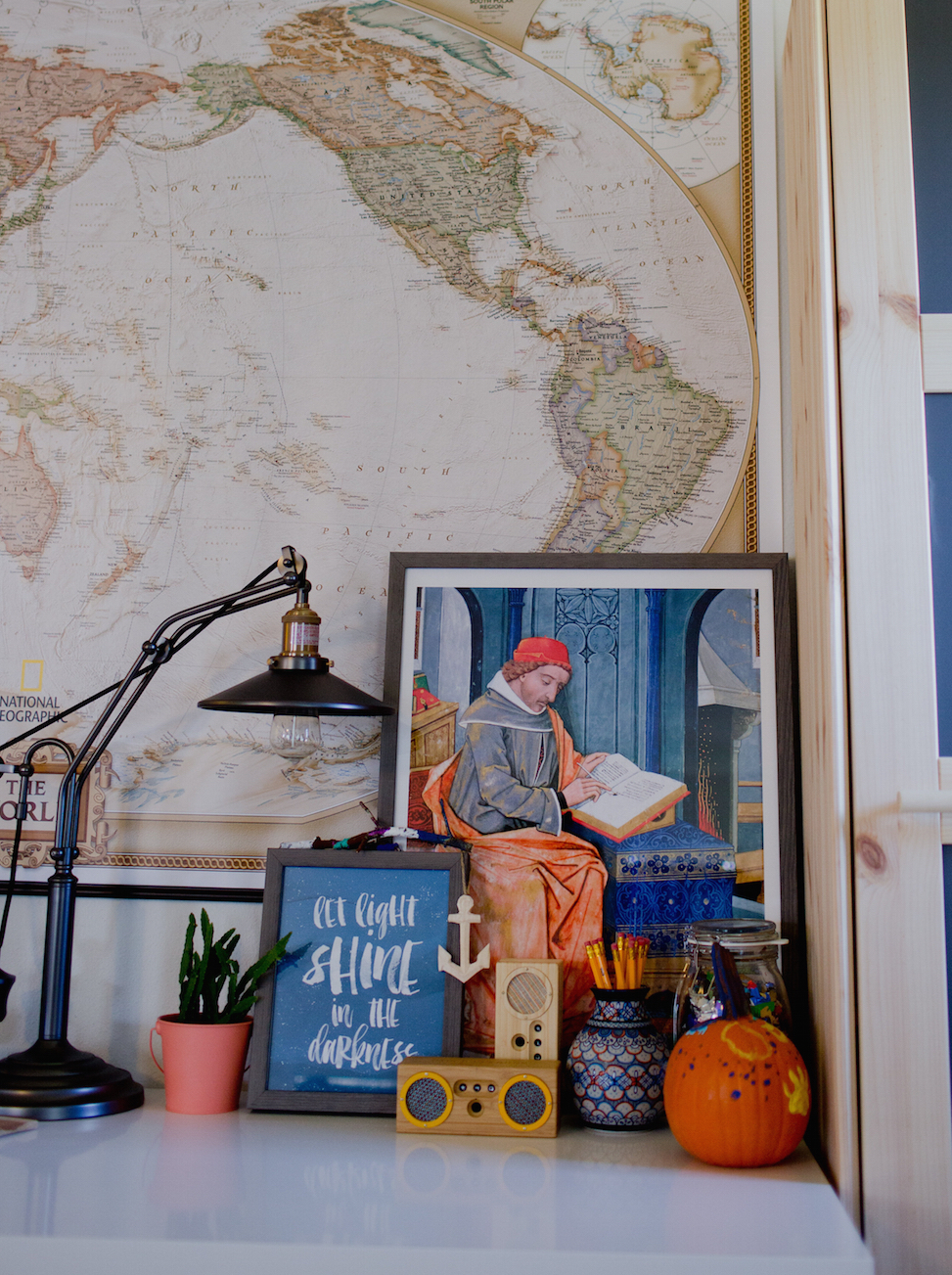
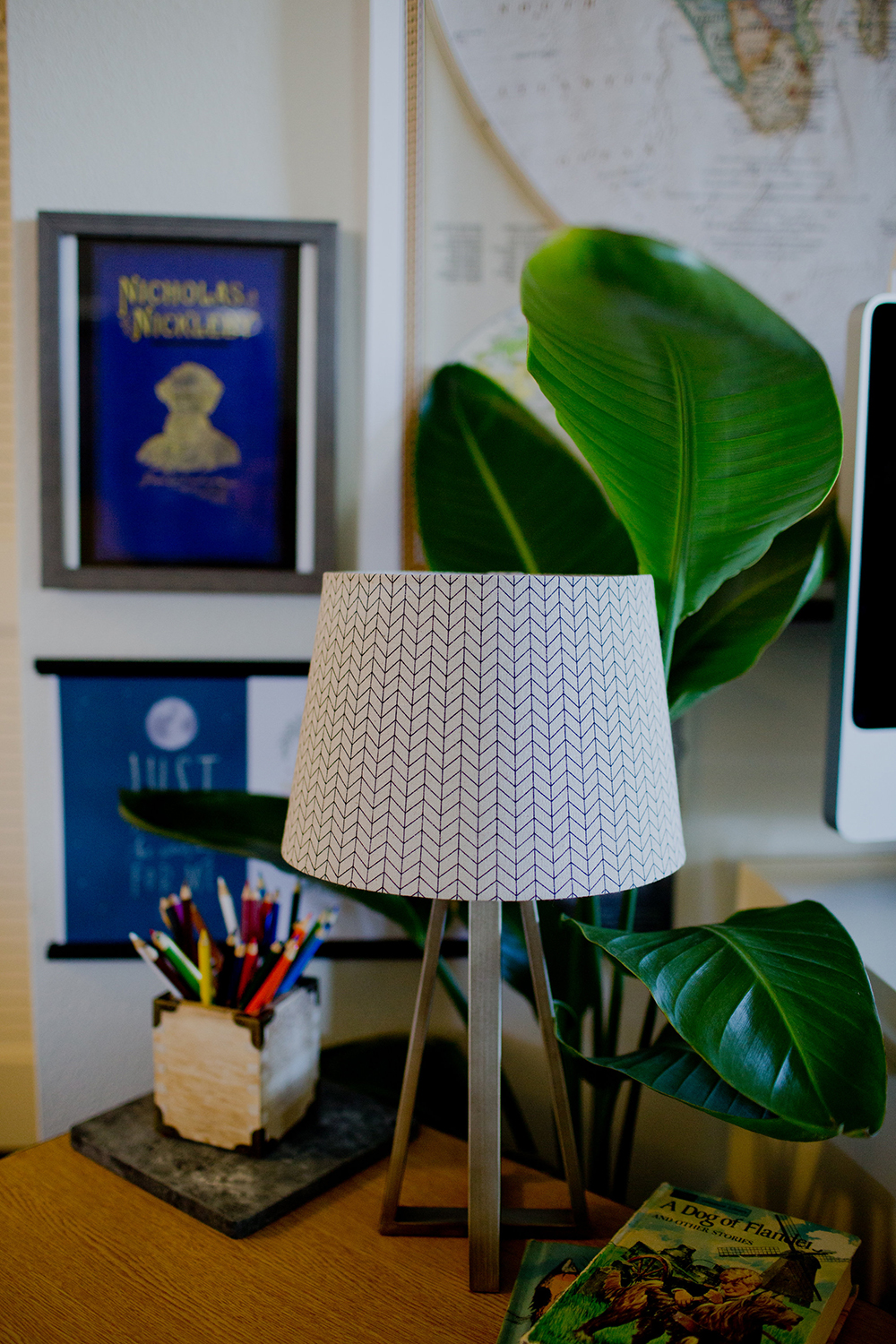
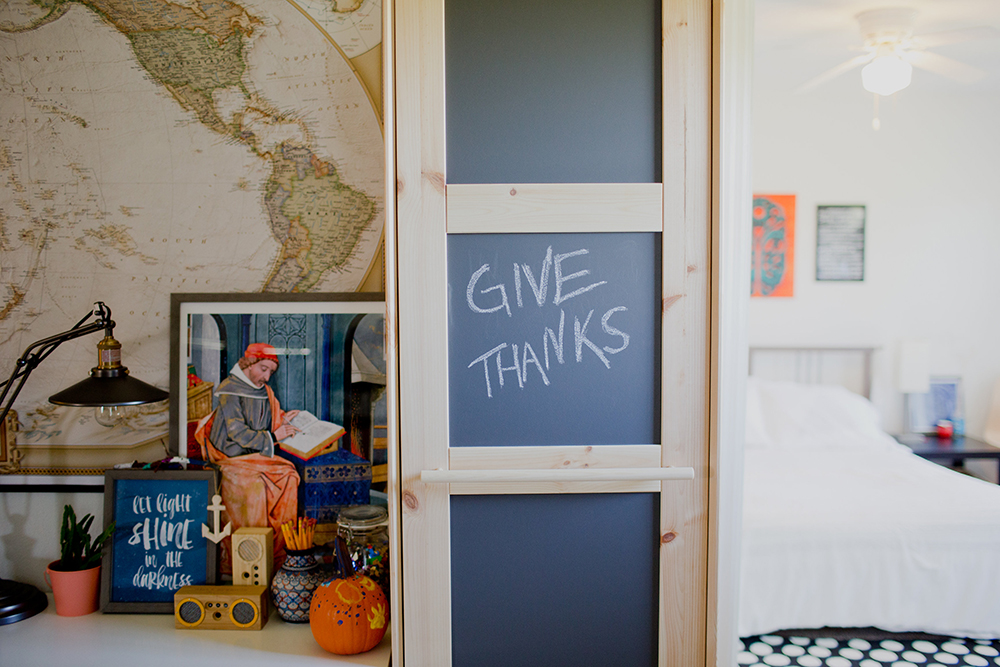
Several months ago, I had the exciting opportunity to style a practical workspace for Babiekins Magazine; one that would function both for working from home and homeschooling. (Previously, I had styled a global-themed kids bedroom, too.) Since we live in an apartment, I didn’t have a dedicated room to serve as a home office and school room, so I cleared one wall of our living room instead. And I really didn’t want it to be a primary color menagerie of school posters.

There are a few things I really like about this space. Of course the huge wall map is right up at the top of the list! And I love the big white rug to cover the rental carpet. But I also really love how the wardrobe from IKEA hides away the printer and all the messy office/school supplies — leaving room for “pretty things, my dear”. (Oliver Twist, anyone?) And the pine bench, another IKEA find, is amazingly comfortable, and is the perfect arrangement for my daughter and to work side-by-side.

You might notice there aren’t many books in these photos — our bookcases are actually stashed in various places throughout our apartment, so they didn’t all fit in these photos. But boy, do we have a lot of books. A LOT. (My husband is legitimately concerned about this. Don’t tell him each Sonlight core adds 50 or more, give or take a dozen.)

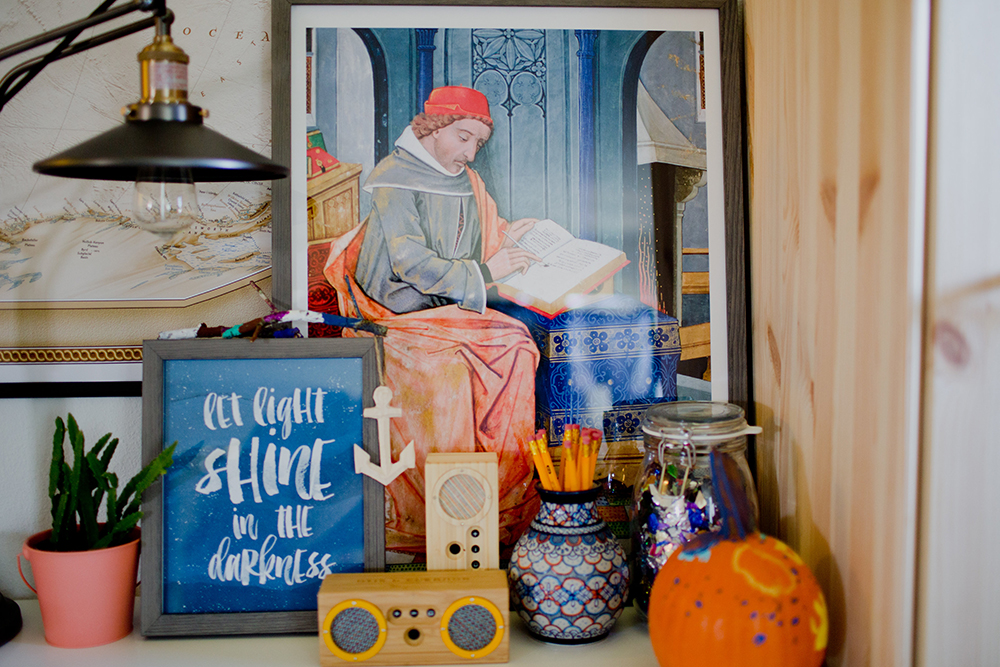
It’s no secret I’m in love with words. I love to try to untangle the words in my mind, and coax them into sentences no one has ever read before. I love to read the expertly-woven words of not just classic authors, but contemporary voices, too. The middle ages print from the late 1400s — showing the arduous process of writing a book in the 1100s — reminds me that it hasn’t always been easy for one’s voice to be heard. This reminder, along with the “Let Your Light Shine In the Darkness” poster, spurs me on to keep speaking out.

I’m so pleased with the way our homeschool room / home office turned out — it’s such a happy, inspiring, wonderful space. (All styling by me, Gina Munsey; and thanks to Priscilla Barbosa Photography for the images!)

Oaxacaborn's Homeschool Room (as featured in Babiekins Magazine print edition)

Oaxacaborn's Homeschool Room (as featured in Babiekins Magazine print edition)

Oaxacaborn's Homeschool Room (as featured in Babiekins Magazine print edition)

Oaxacaborn's Homeschool Room (as featured in Babiekins Magazine print edition)

Oaxacaborn's Homeschool Room (as featured in Babiekins Magazine print edition)

Oaxacaborn's Homeschool Room (as featured in Babiekins Magazine print edition)

Oaxacaborn's Homeschool Room (as featured in Babiekins Magazine print edition)

Oaxacaborn's Homeschool Room (as featured in Babiekins Magazine print edition)

Oaxacaborn's Homeschool Room (as featured in Babiekins Magazine print edition)

Oaxacaborn's Homeschool Room (as featured in Babiekins Magazine print edition)

Gina_Munsey_Sonlight_5

Oaxacaborn's Homeschool Room (as featured in Babiekins Magazine print edition)

You can catch this room in the special “#SCHOOLKINS: Books, Bugs & Discovery” interior design section of the 7th print issue of Babiekins Magazine, available here.  And if you have questions about any of the items shown, just leave a comment! :)


DESK :: Malm, c/o IKEA Orlando
WALL MAP :: National Geographic, via The Map Center

MAP RAILS :: c/o Posterhanger
PINE WARDROBE :: Nornäs used as bookshelf, c/o IKEA Orlando
PINE BENCH :: Nornäs, c/o IKEA Orlando
MOROCCAN SHAG RUG :: c/o Rugs USA
GLASS JAR :: Korken, via IKEA Orlando
CERAMIC VASE :: Stylist’s Own, from Mexico City
BAMBOO SPEAKERS :: c/o Otis & Eleanor
METAL LAMP and EDISON BULB :: c/o Lamps Plus
LET LIGHT SHINE PRINT :: Naptime Diaries
DESKTOP CACTUS & TROPICAL PLANT ::  Lowe’s
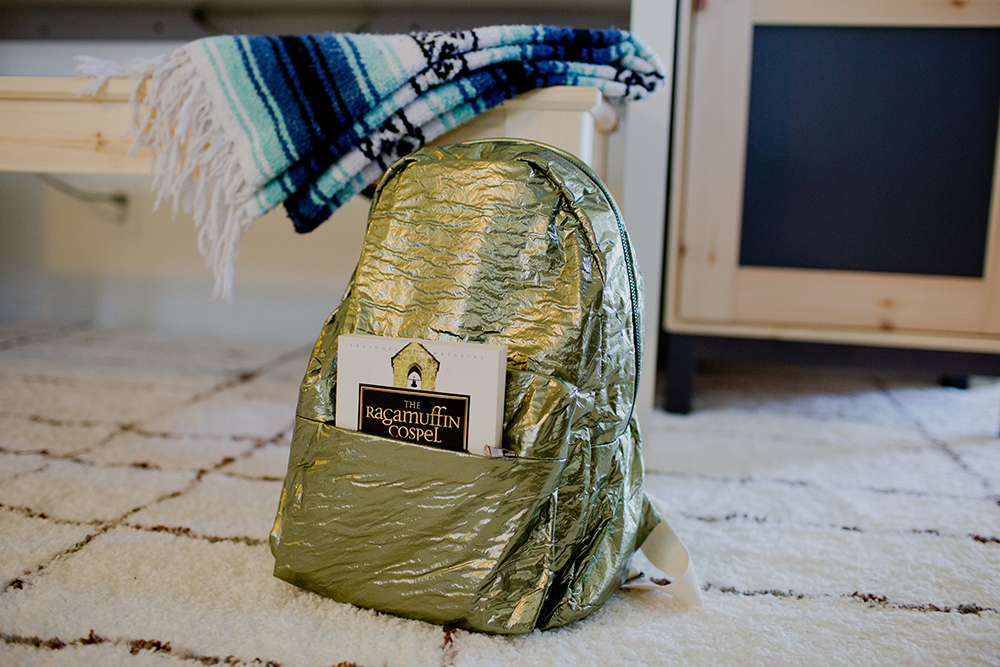
SPACEPACK BACKPACKS :: c/o lukids.ru
PRINT RAILS :: c/o Posterhanger
MIDDLE AGES PRINT  :: Matthaeus Platearius Writing “The Book of Simple Medicines” via AllPosters.com
NICHOLAS NICKLEBY PRINT :: Book Cover Print via AllPosters.com
ROW OF 3 PRINTS :: Emily McDowell Studio and Jessica Sprague Printables
LAMP and SHADE :: Target
COWHIDE ::  Koldby, c/o IKEA Orlando
BOOKCASE :: Billy, via IKEA Orlando

PERCH CHAIR :: c/o Room & Board
STUDENT DESK :: Flash Furniture Desk with Metal Book Box, via Amazon

To receive an update in your inbox each time I publish a post, click here.

We are a participant in the Amazon Services LLC Associates Program, an affiliate advertising program designed to provide a means for us to earn fees by linking to Amazon.com and affiliated sites.

Book Reviews, Homeschooling

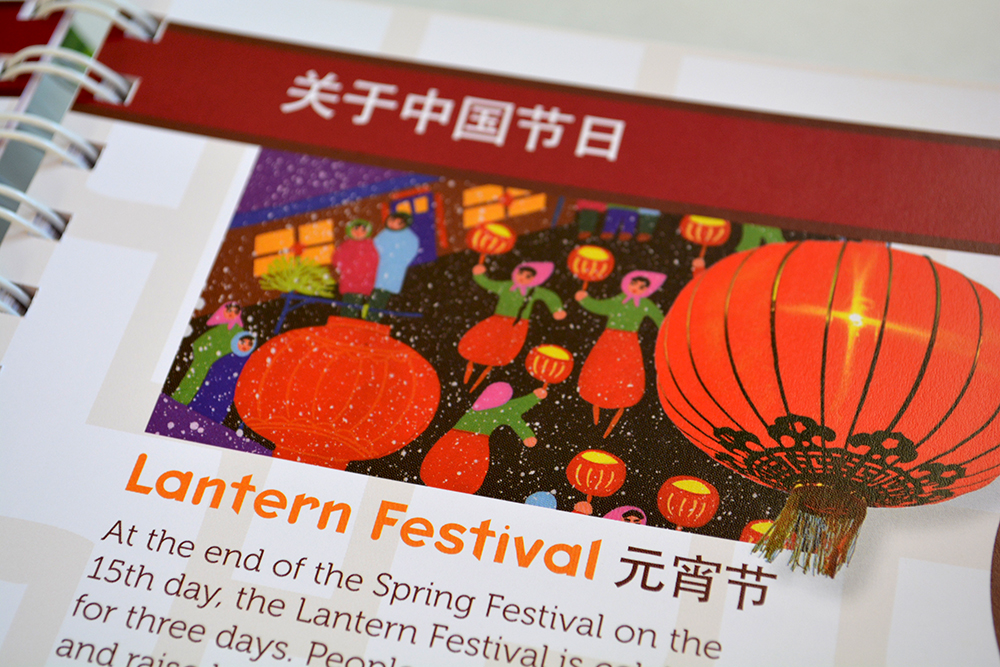
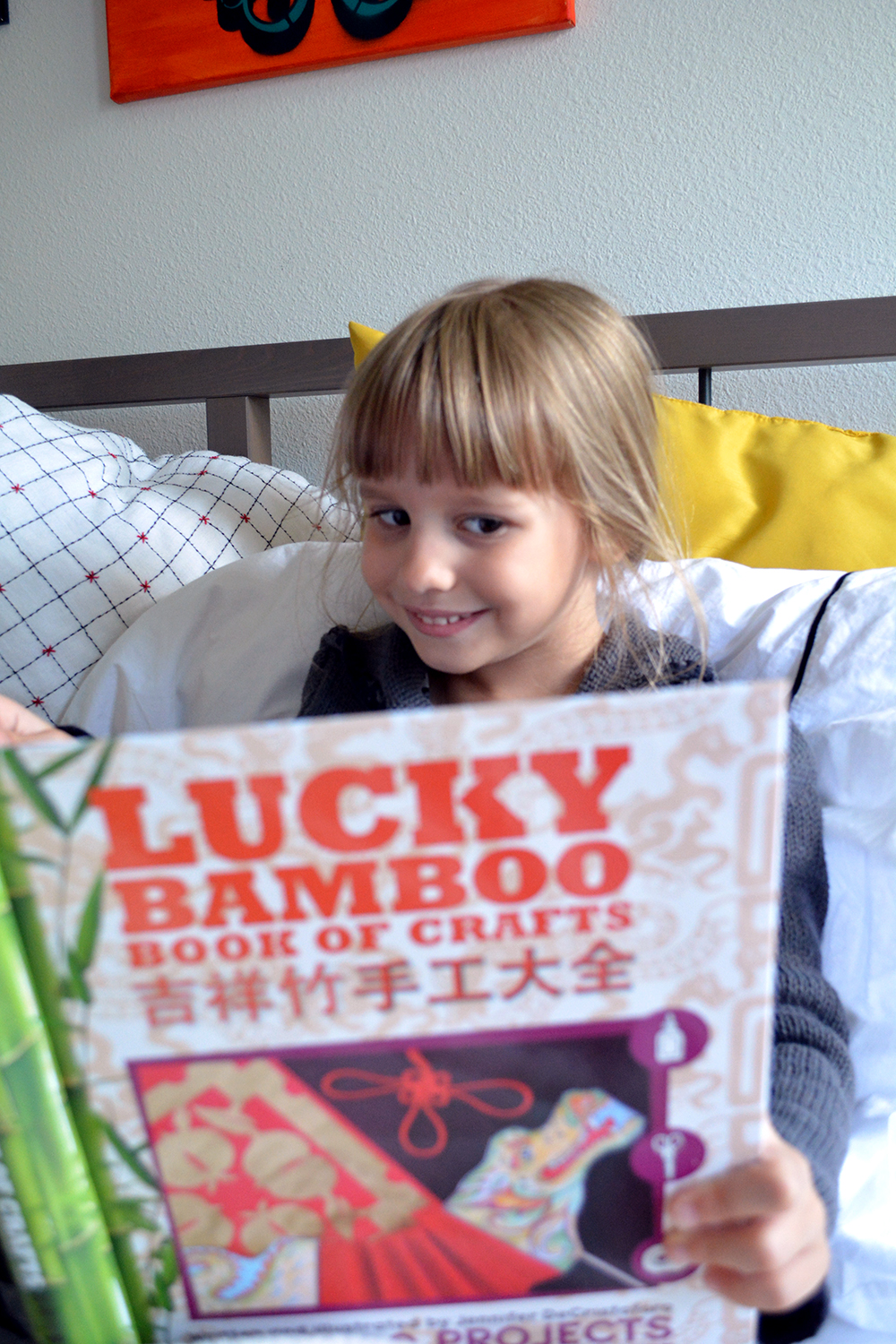
#OAXACABORNREADS // The Lucky Bamboo Book of Crafts: Over 100 Projects and Ideas Celebrating Chinese Culture

#OAXACABORNREADS // The Lucky Bamboo Book of Crafts: Over 100 Projects and Ideas Celebrating Chinese Culture

#OAXACABORNREADS // The Lucky Bamboo Book of Crafts: Over 100 Projects and Ideas Celebrating Chinese Culture

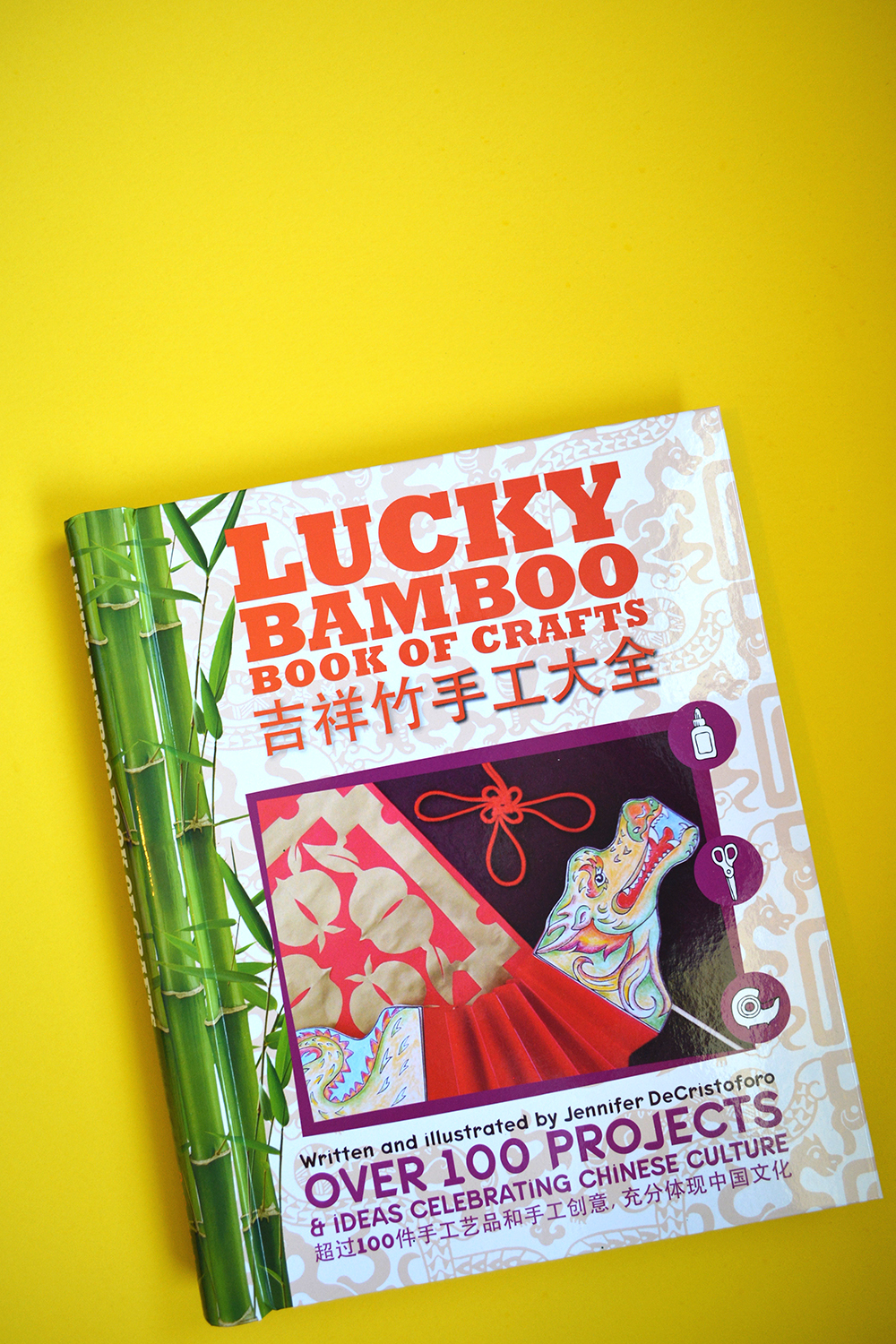
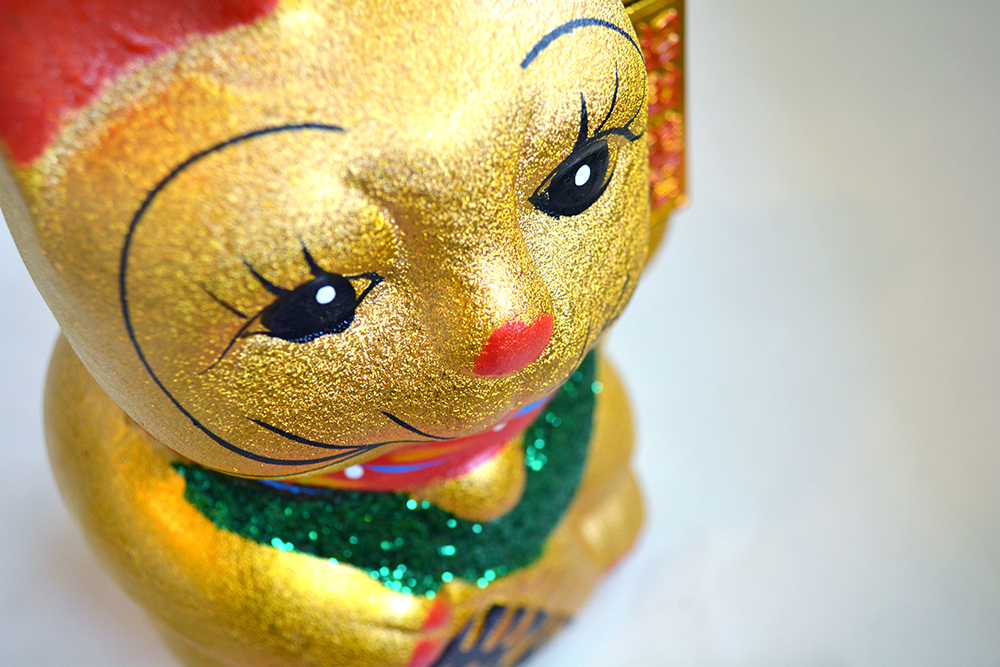
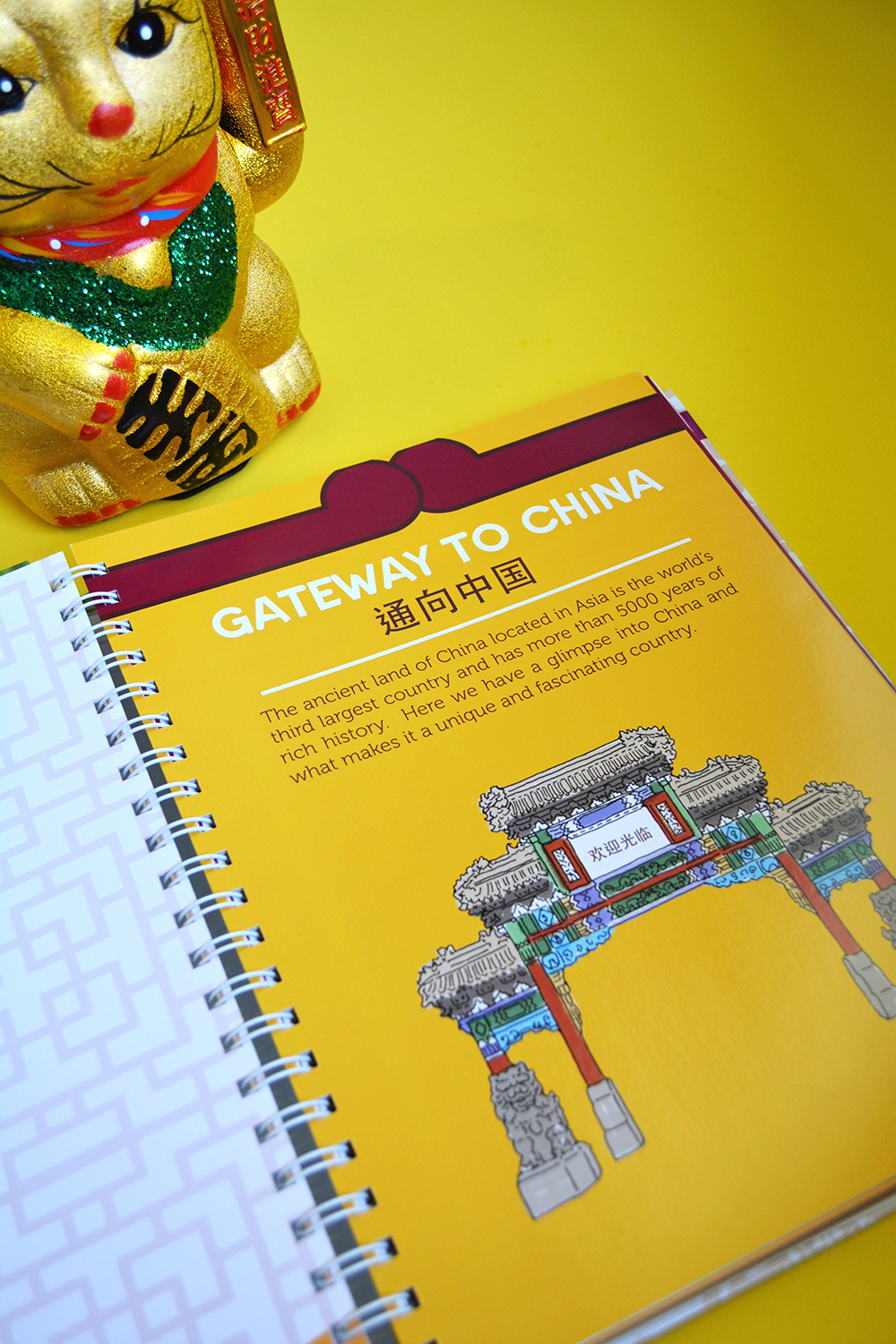
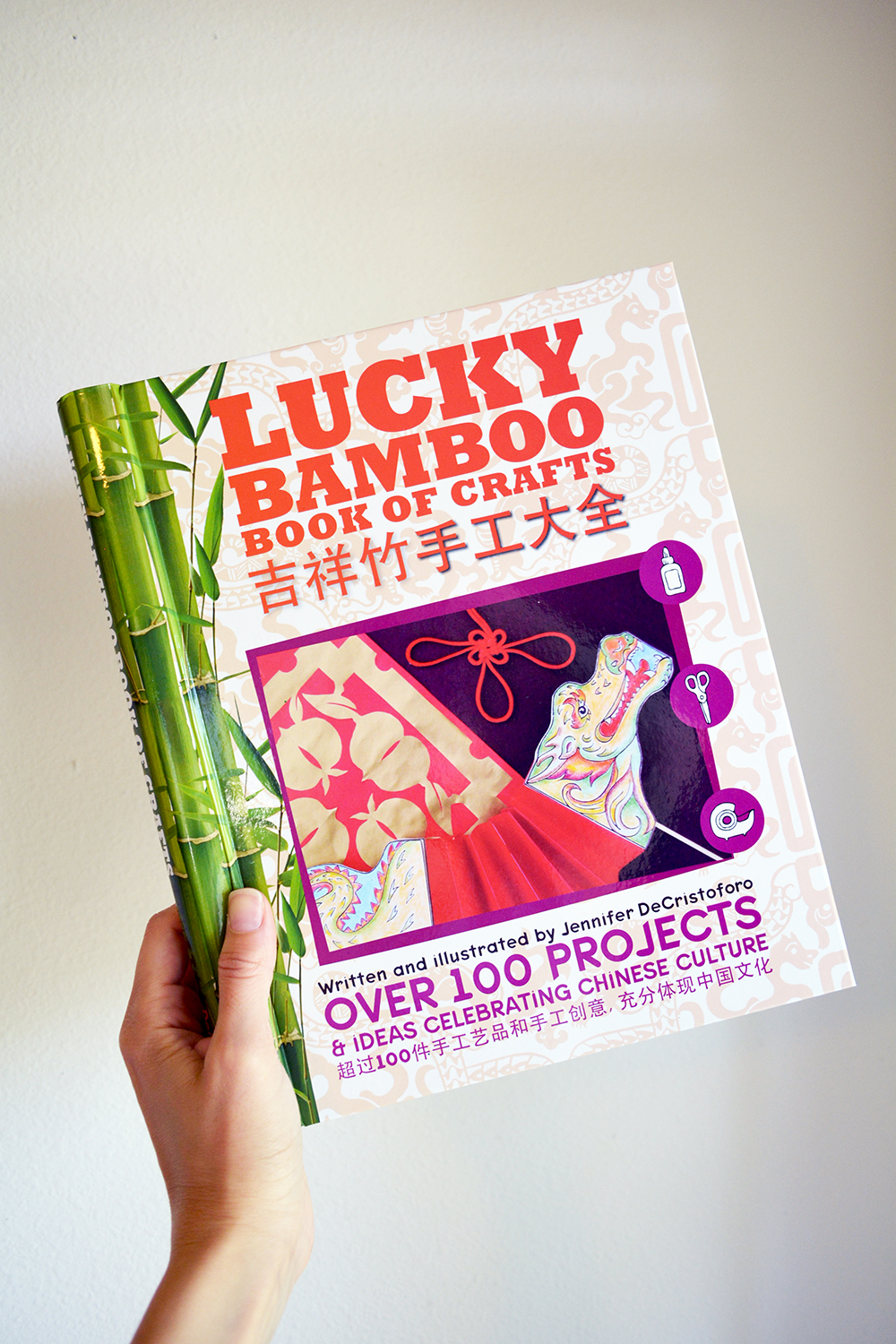
If you’re teaching your kids Mandarin Chinese and are looking for a hands-on way to supplement the lessons, or if you’re searching for summer kids’ craft projects which are also culturally and historically relevant, you’ll love this book. Now that Chinese school is out for the summer, we’re looking forward to creating shadow puppets, lanterns, traditional knots, banners, and even a floating dragon boat — all from the instructions and templates in the “Lucky Bamboo Book of Crafts”!

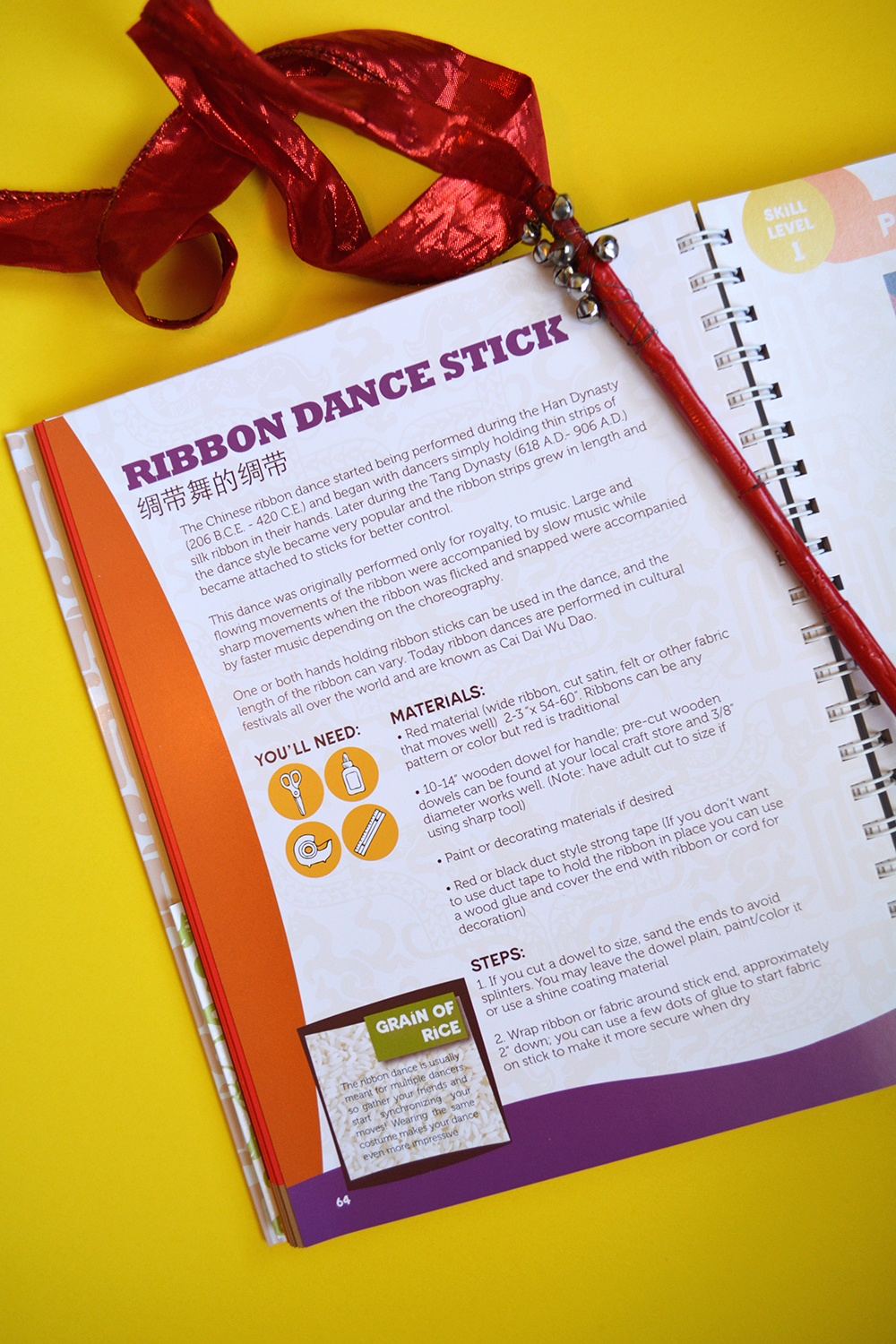
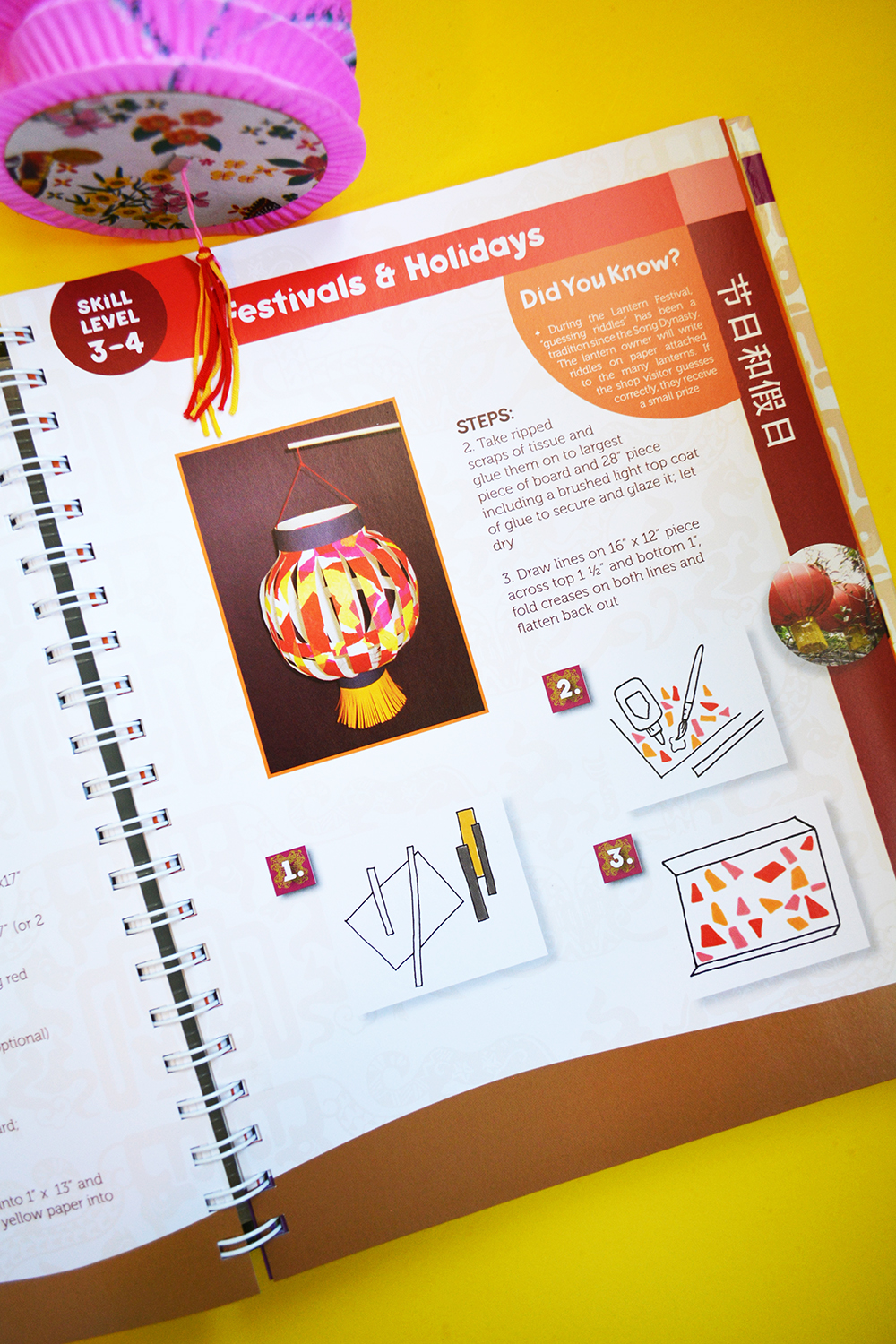
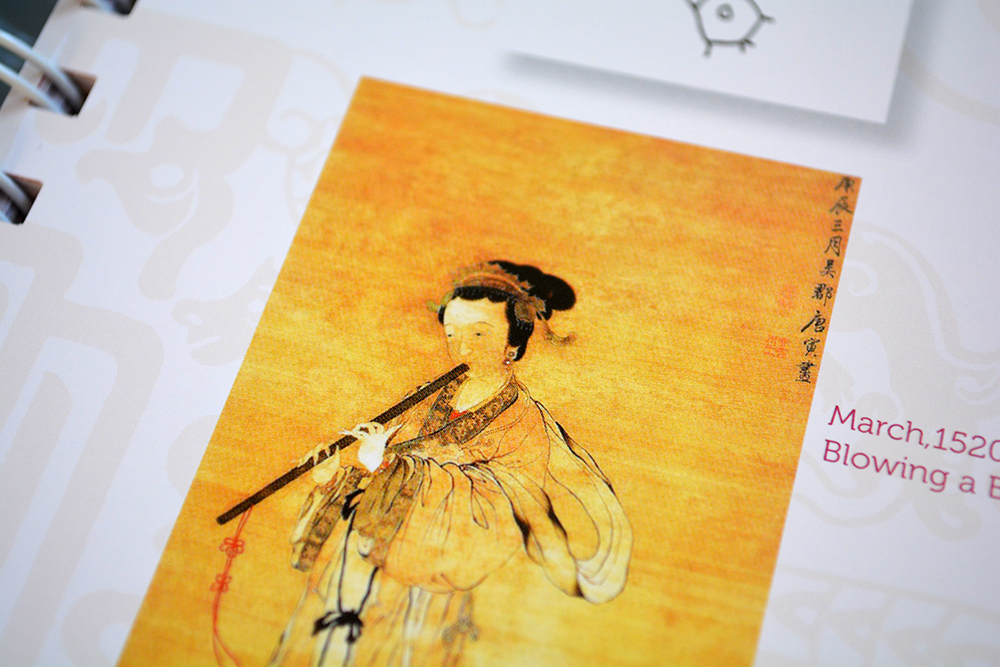
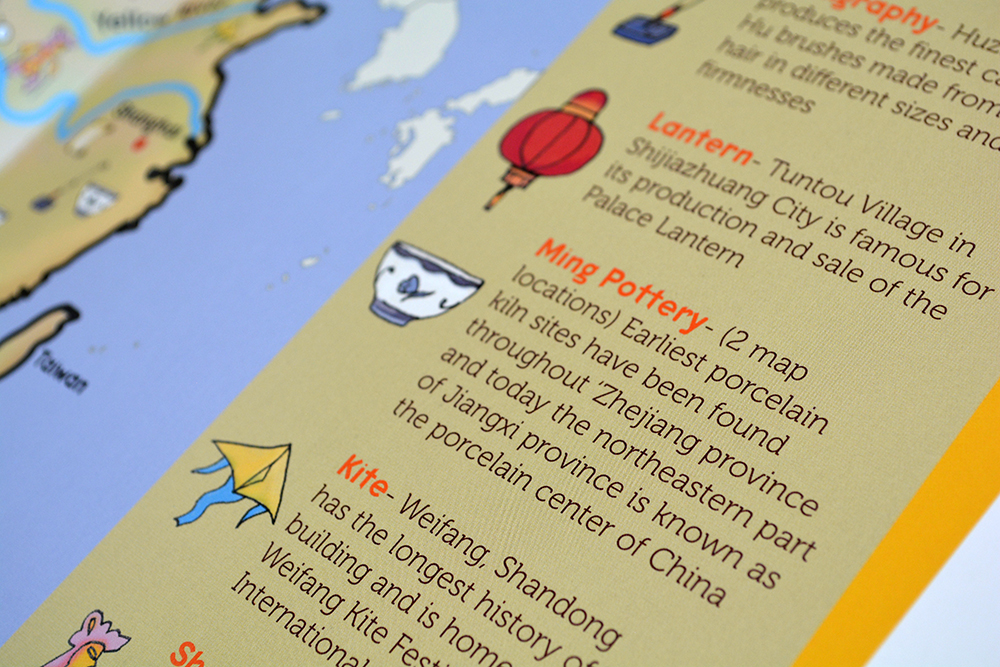
Author Jennifer DeCristoforo has provided clear, illustrated, step-by-step instructions for each project; she also explains how the craft relates to Chinese culture. Throughout the book, “Did You Know?” sidebars entertain and inform, and photographs and art provide insight into traditional art forms.

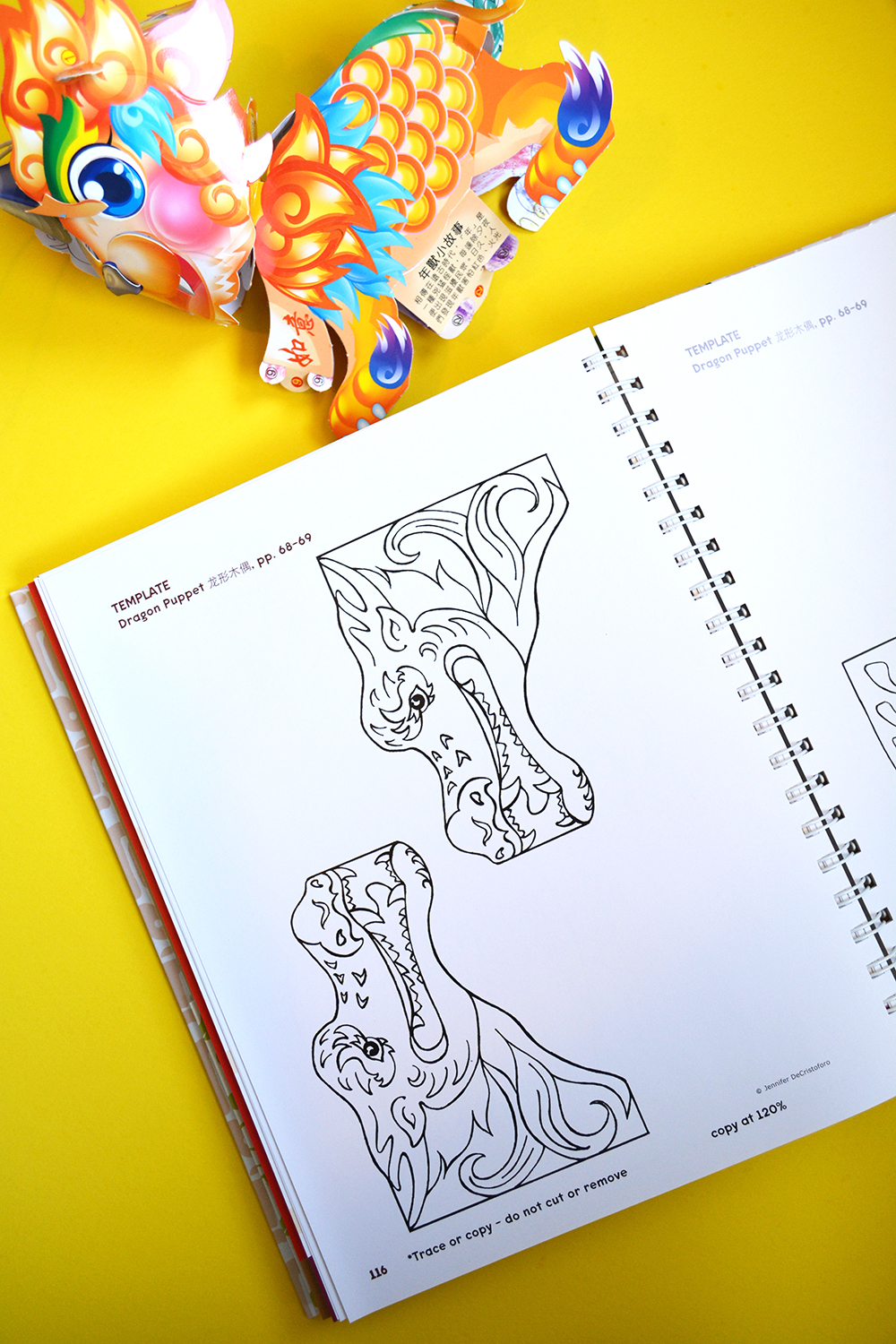
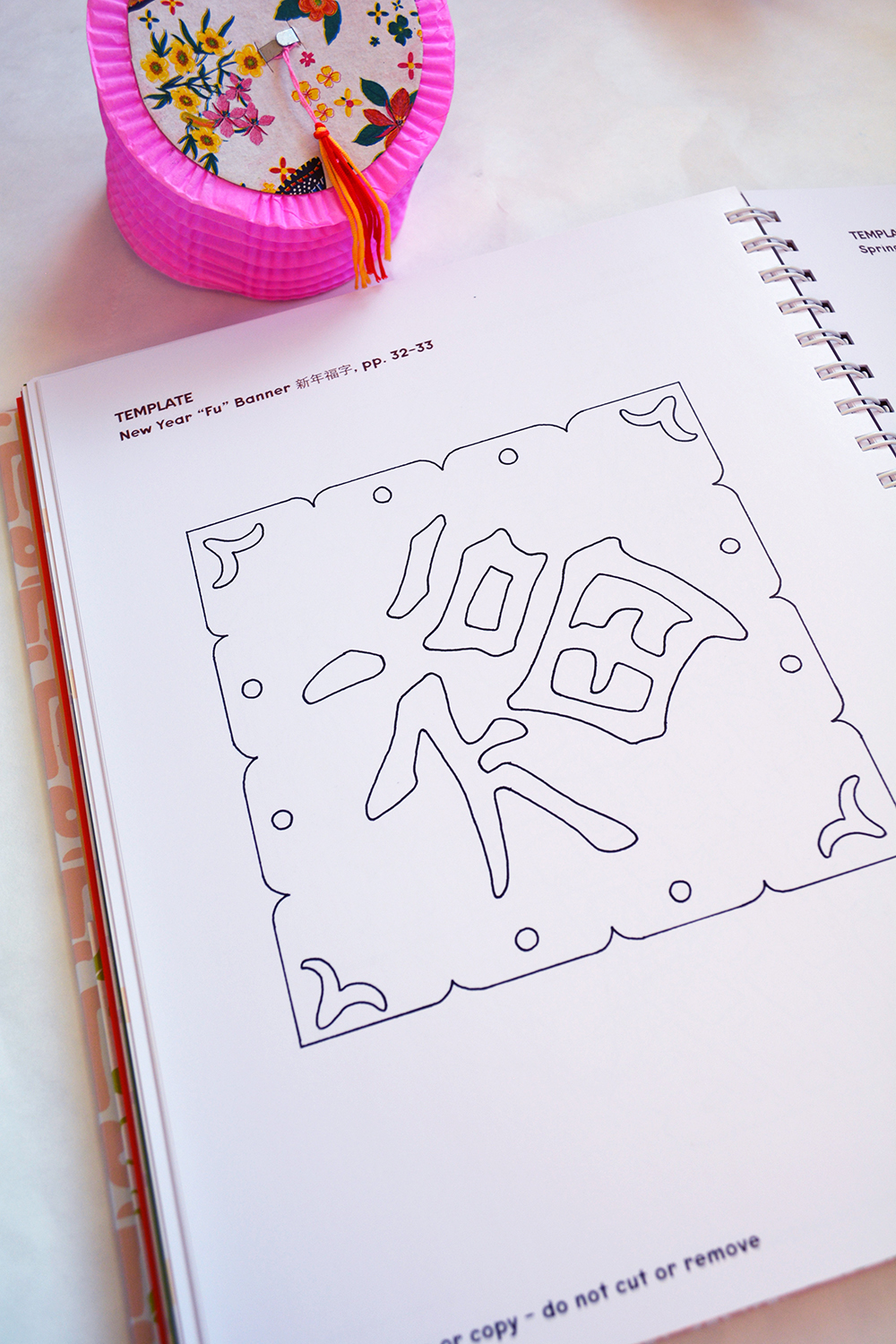
Each craft is given a Level 1 through Level 4 designation to mark the difficulty. Level 1 crafts can be attempted by 3- to 6-year-olds, while a Level 4 activity is ideal for 12- to 15-year olds. Regardless of complexity, the directions remain simple and engaging, with  illustrations and icons to aid the crafter. Where intricate designs — or Chinese characters — are required to complete a project, the book’s appendix contains all the reproducible templates needed (this is a huge plus!)

And the book lends itself well to actual, practical use, because the practical spiral-binding means the book easily stays open and lies flat, and the hardcover and thick, glossy pages hold up against heavy wear.

This book really is a celebration. Jennifer DeCristoforo’s daughter was adopted from China in 2003, and “Lucky Bamboo Book of Crafts: Over 100 Projects and Ideas Celebrating Chinese Culture” is a beautiful tribute to her heritage.

You can purchase the “Lucky Bamboo Book of Crafts” on Amazon, or order directly from Jennifer, so more of the proceeds go to the author and not to Amazon. ;)

If you want to see even more book recommendations, follow my Instagram account, @oaxacaborn, and watch for the #oaxacabornreads hashtag. To receive an update in your inbox each time I publish a post, click here.

Happy summer of crafting!

#OAXACABORNREADS // The Lucky Bamboo Book of Crafts: Over 100 Projects and Ideas Celebrating Chinese Culture

#OAXACABORNREADS // The Lucky Bamboo Book of Crafts: Over 100 Projects and Ideas Celebrating Chinese Culture

#OAXACABORNREADS // The Lucky Bamboo Book of Crafts: Over 100 Projects and Ideas Celebrating Chinese Culture

#OAXACABORNREADS // The Lucky Bamboo Book of Crafts: Over 100 Projects and Ideas Celebrating Chinese Culture

#OAXACABORNREADS // The Lucky Bamboo Book of Crafts: Over 100 Projects and Ideas Celebrating Chinese Culture

WEB_13_Oaxacaborn_Lucky-Bamboo-Book-of-Crafts_Chinese-Crafts

WEB_4_Oaxacaborn_Lucky-Bamboo-Book-of-Crafts_Chinese-Crafts

#OAXACABORNREADS // The Lucky Bamboo Book of Crafts: Over 100 Projects and Ideas Celebrating Chinese Culture

#OAXACABORNREADS // The Lucky Bamboo Book of Crafts: Over 100 Projects and Ideas Celebrating Chinese Culture

WEB_20_Oaxacaborn_Lucky-Bamboo-Book-of-Crafts_Chinese-Crafts

#OAXACABORNREADS // The Lucky Bamboo Book of Crafts: Over 100 Projects and Ideas Celebrating Chinese Culture

#OAXACABORNREADS // The Lucky Bamboo Book of Crafts: Over 100 Projects and Ideas Celebrating Chinese Culture

#OAXACABORNREADS // The Lucky Bamboo Book of Crafts: Over 100 Projects and Ideas Celebrating Chinese Culture

#OAXACABORNREADS // The Lucky Bamboo Book of Crafts: Over 100 Projects and Ideas Celebrating Chinese Culture

#OAXACABORNREADS // The Lucky Bamboo Book of Crafts: Over 100 Projects and Ideas Celebrating Chinese Culture

#OAXACABORNREADS // The Lucky Bamboo Book of Crafts: Over 100 Projects and Ideas Celebrating Chinese Culture

Did you enjoy this post? Click here for the permalink, and then pin to Pinterest.

We are a participant in the Amazon Services LLC Associates Program, an affiliate advertising program designed to provide a means for us to earn fees by linking to Amazon.com and affiliated sites.

Learning

Homeschooling, Poetry & Words, Theology

Why a Global Perspective is an Essential Part of a Christian Worldview

Gina_Munsey_Sonlight_2Gina_Munsey_Sonlight_5

I’ve always loved maps — the delicate wandering lines, the stars and circles hovering over city centers, the softly-worn paper folds creating ridges and peaks where the creases bisect latitude and longitude.

Maps, to me, are about more than just distance.

Maps hold stories, and remind me how connected we all are.

I’m thrilled to say you can read more of my thoughts on this over on the Sonlight Curriculum blog, where I recently had the chance to talk more about the human connections maps hold, and why I believe a global perspective is absolutely essential for not just homeschoolers, but for all Christians.

Head on over, and leave a comment, if you are so inclined!


Image Credits: Priscilla Barbosa Photography

Homeschooling, Life in Photos, Poetry & Words

Books, Books, Books: the Evolution of the Oaxacaborn Blog

Books, Books Books: The Evolution of the Oaxacaborn blog

When I started blogging publicly — over at Xanga, fourteen years ago! — I was in college, and blogged too many song lyrics and homework details. Then over the years, I moved back and forth across the country, working at sheet metal factory, a juvenile detention center, and an IT department, and wrote about all the ups and downs. When I became a mother, I even went through a phase where I predictably blogged about cloth diapers (I am so sorry). I’ve written about death, beauty, brokenness, joy — and interior design. And you’ve likely noticed that in the last few months, I’ve written a few longer pieces about homeschooling.

My blogging “methodology”, if you can call it that, hardly follows all the blogging advice. It’s always just followed the seasons of my life. But that’s the beautiful thing about life, too — it’s not stagnant.  It moves like a current. It flows, it goes through seasons, through changeable states of being. Way down at the bottom of this blog, in the footer, Anaïs Nin reminds me, “Life is a process of becoming, a combination of states we have to go through. Where people fail is that they wish to elect a state and remain in it. This is a kind of death.”

Books, Books Books: The Evolution of the Oaxacaborn blog

I kind of feel like things are coming full circle for me, and it all has to do with books. As a girl, I devoured books, and read everything I could get my hands on. Now, it’s only April, and Aveline’s already read 130 books since the beginning of the year. So, you’ll probably be seeing a lot more posts about literature and children’s books, and more posts about homeschooling. (Although, this is no surprise if you follow me on Instagram @oaxacaborn). I have so many good books to share with you all, but I’ve been holding back, thinking for some reason that this isn’t the right place for it, and worried about losing followers. Well, that’s kind of ridiculous. Because when it comes right down to, perhaps, like Margaret Atwood said, “Perhaps, I write for no one. Perhaps for the same person children are writing for when they scrawl their names in the snow.”

I’m just thankful some of you keep following along as I scrawl in the snow.

Books, Books Books: The Evolution of the Oaxacaborn blog

To receive an update in your inbox each time I publish a post, click here.

Homeschooling, How To, Theology

Uncovering the Worldview Hidden in your Homeschool Curriculum

Uncovering the Worldview Hidden in Your Homeschool Curriculum
Are you trying to decide what homeschool curriculum is right for you? Homeschool publishers often sort curriculum into secular, neutral, and Christian categories, and further divide science resources into Old Earth Creationism, New Earth Creationism, and evolution. Even with those categories, when you’re faced with dozens of catalogs, or hundreds of enticing vendors, it can be hard to know what a publisher’s worldview really is. The truth is, the nuances of worldview go far deeper than those already weighty topics.

But as a second-generation homeschooler who’s had some close scrapes with fundamentalism, I know first-hand how important it is not to cut corners when evaluating a publisher’s worldview. You have to take the time to uncover what the authors are truly trying to get across.  When I’m trying to unearth the worldview of any given curriculum, I start my search by looking at the author’s perspective on on rules, religion, race, and women.

Here are the seventeen crucial questions I ask when trying to determine a homeschool curriculum’s worldview:

  1. Does this material assume all girls should grow up to be wives and raise children, or does it empower and inspire girls to follow whatever path God calls them to, recognizing that not all women marry, and some struggle with infertility?
  2. Does it highlight women and girls as independent actors?
  3. Does it tell stories of women beyond focusing on their roles in a family?
  4. Does the material promote compliance with a set of rules, or does it allow for freedom and grace?
  5. Does this material present a morality-first viewpoint, emphasizing outward virtues and traits with the goal to get the child to imitate certain character values, or does it recognize that it’s only through a heart surrendered to Jesus that a person can only be truly transformed?
  6. Does the material oversimplify good and evil and present it as an easy-to-spot either-or choice; or does it teach analytical and critical thinking skills, discernment, and problem-solving?
  7. Does the material only present what to learn and/or believe, or does it also provide context and a “why” behind the belief?
  8. Does the material present history predominately from a Western perspective, or does it also present facts from a non-European point-of-view?
  9. Does the material perpetuate the idea of “otherness” by teaching about non-European cultures using stereotypical depictions, or does it allow for each culture to have its own strong, rich, identity?
  10. Does the material mainly contain books with white main characters, or does it offer books with nuanced, fully-developed, non-stereotypical heroes and heroines of diverse backgrounds?
  11. Does the material teach (implicitly or explicitly) that the “primary” actors in history or literature are white? Who does it teach my child to identify and sympathize with?
  12. Does the material attempt to “Christianize” certain historical events, or does it recognize that every event has more than one side?
  13. Have I truly evaluated the content and worldview of this material, or am I simply choosing this material because it’s popular in homeschooler subculture?
  14. Will this material allow my child to be challenged to the best of his/her God-given ability, or am I simply choosing this material because of its price point / ease-of-use / etc?
  15. Will this material equip my child to follow any number of career paths God might have in store for him/her, or am I choosing this material because I want my child to follow the path I have in mind?
  16. Is this material based on fear and reliance on man’s own goodness to combat what is perceived as evil, or does it promote courage and a reliance on Jesus?
  17. Is this material designed primarily to shelter and insulate my child, or is it designed to inform, equip, and empower?

What essential questions would you add?

This list above is excerpted from an interview I originally gave with Amanda of Sicily’s Heart & Home, on the topic of Christian education as equipping, not as sheltering.  

Book Reviews, Curriculum Reviews, Homeschooling, Poetry & Words, Theology

‘Beautiful Feet Books’ History Review, and the Harm of Morality-Based Instruction

'Beautiful Feet Books' Review, and the Harm of Morality-Based Instruction

A lot of different books cross my desk, especially as I work on creating an early elementary reading schedule for U.S. History. When I first started to look into Beautiful Feet’s “Early American History For Primary Grades literature guide for grades K-3, I was intrigued. Once I sat down and actually read through it, though, I knew I wouldn’t be using it or incorporating the lessons into my history schedule.

If you’ve read this blog for any amount of time at all, you know I’m a Jesus-follower; and if you’re searching for reviews on Beautiful Feet curriculum, you likely know it’s purported to be a Christian curriculum.  I wouldn’t say it represents a Christian worldview, though — certainly not my worldview. But before I get into the implications of how the Beautiful Feet guide teaches morality, let’s address two of the books included in the primary literature list, “The Courage of Sarah Noble” and “The Matchlock Gun“.

In “The Courage of Sarah Noble“, Sarah’s courage is praised, but just what is it that Sarah is facing with such bravery? “Indians [who] will eat you.” Sarah is afraid of things in the dark, because they might be Indians. She freezes “still as a rabbit in danger” when Indian children approach. When she finally musters up the much-applauded courage to interact, she can’t be bothered with “the long, long names of the children, so she called the boy Small John and the girl Mary.” To learn more upsetting details, please do read this review of The Courage of Sarah Noble“. There are billions of books in the  world, and ones like this don’t belong anywhere near my bookshelf.

And then we have the “The Matchlock Gun“, which is so horrifyingly unthinkable in its description of Native American people, that I can hardly bring myself to type it here, but I want you to know what these books contain: “They hardly looked like men, the way they moved. They were trotting, stooped over, first one and then the other coming up, like dogs sifting up to the scent of food.” This is stomach-churningly appalling. And why is young Edward, the main character, so celebrated in this book? Why, because he fired the matchlock gun and “killed more [Indians] than the rest of us put together.”

No. This book has no place on my bookshelf. Additionally disheartening here is the fact that Beautiful Feet is not the only publisher to include these two books on their recommended reading lists. But let’s at least take a look at Beautiful Feet’s “Early American History For Primary Grades” study guide itself. The guide was updated and revised in 2014, so it’s more modern in appearance than previous editions. The 37-page softcover book now covers additional material such as the Westward Expansion,  and has full-color images and web links (although, I counted less than ten links in the course of over one hundred lessons). The content itself was less practical than I was hoping for — comprehension questions are given, but no answers are provided. Lesson prompts are vague, at times not much more than “Introduce Columbus” and “Discuss the value of conscience”.  And there’s a lot more written busywork than I expected in a literature-based curriculum designed for kindergarten through second grade; students are instructed to copy entire dictionary definitions into a notebook. I could be persuaded to overlook some impracticalities, if it were not for my deeper concerns about morality-first instruction.

'Beautiful Feet Books' Review, and the Harm of Morality-Based Instruction

Throughout the guide, the child is asked to interpret every historical figure by measuring the person against a list of character traits, and then make a determination of the person’s virtue. Nearly every one of the 106 lessons instructs the child to extrapolate the good character traits from a biographical segment of a person’s life, and then make an effort to apply these same character traits to his or her own life. This might seem innocent enough at the outset, but little mention is made of the heart itself, or of the transforming power of the gospel (which transforms from the inside out, not the outside in), or of what it means to actually follow Jesus. Perhaps this is because each lesson simply encourages the student to follow a list of moral character traits, not Jesus Christ himself. The hope, it seems, is that through emulating morality from the outside, one might become pure on the inside.

This isn’t a problem exclusive to Beautiful Feet guides alone; there is a tremendous amount of curricula and instructional material framed this way. But there are problems with this approach. When a child is repeatedly, lesson after lesson and year after year, asked to give examples of how a revered historical figure stacks up against a list of Christian virtues, several things are bound to happen. First, this approach ignores the basic fact that every single person who ever lived was inherently complex. So by reducing complex individuals  to one-dimensional figures, heroes inevitably become white-washed, because the focus is always placed on their abundant virtues. The child forms a worldview in which heroes have a lengthy list of abundant positive character traits, and “the bad guys” have very few positive traits. Life, of course, is not this binary. Going into life’s tricky situations believing you will easily be able to spot good vs. evil in either-or terms is not even safe! Teaching that people are good because they exhibit outward traits teaches nothing of the heart (although it does teach how to act “perfectly Christian” on the outside).

Another thing is bound to happen, too, when a child is asked to emulate the outward qualities of heroes who have almost exclusively positive character traits. When the child first encounters a sense of failure in his or her private life, the child is very likely to see even a minor struggle as a massive moral failure. After all, the child has never known any “good person of Christian virtue” to have struggles or moral failings — so the child concludes that he/she must not be good, either. When discernment between good and evil is determined by actions and accomplished by checklist, one too many moral failings on the checklist will automatically shift a person over into the “bad guy” category. And if “goodness and badness” are assessed based on a self-imposed list, what room is there for grace?

This curriculum guide also instructs children to memorize “The Conscience Poem”, several rhyming stanzas devised  by Rea Berg, who co-authored this guide with Joshua Berg. At first, I hoped this poem could easily be overlooked as an inconsequential side-note, but that’s not the case. “The Conscience Poem” is a central focus of the lessons, and is used in lessons 8 through 51 . The poem explains conscience as the inner “voice” or “light” by which a child “understand(s) God’s justice, truth, and love”, and ends with these lines, ”…and this is the confidence I will have / that God is pleased with me.”

No.

This is so damaging. First of all, one’s inner voice isn’t even a Biblical concept! God’s still small voice, yes. Ours? No. We simply cannot teach children that their own thoughts are the sole determination of God’s displeasure or pleasure. We can’t teach that their worth and value is determined by how they feel about themselves, or by how they imagine God might be thinking about them on any given day.  God already made that clear in John 3:16, “For God so loved...” Not that “For man was so wretched…” or “For man knew God was so angry…”, but “For God so loved…

We don’t need to keep self-assessing God’s love for us. We don’t need to keep wondering what God thinks of us. He already demonstrated that. His bloodshed and resurrection settled that question once and for all. When Jesus died on the cross, He said, “It is finished.” He was the sacrifice, the Lamb of great price, and we do not need to struggle daily to apply virtues in order to guarantee God’s favor. That’s not the gospel! And it’s not what I want to teach my daughter.

It’s also worth noting that for all its talk of Christian virtue, the character traits in this guide aren’t even taken from Scripture. One would expect, at least, this character-driven type of of morality-based education to be centered around the fruits of the spirit found in Galatians 5 — love, joy, peace, patience, kindness, goodness, faithfulness, gentleness, self-control — but this list is never mentioned in this guide. Instead, the ambiguous ideals of “industry”, “virtue”, and “moral sense” are emphasized, as is an excerpt from Tennyson’s Oenone which praises “self-respect, self-knowledge, and self-control”. (Of course, it would not change the spirit of the curriculum even if the list of virtues had been taken directly from the Bible; even the fruits of the spirit are not a way to achieve righteousness. )

Overall, the guide teaches that a person’s goodness is measured by moral tendencies or lack thereof, and teaches that a child’s value and God’s pleasure are measured and determined by how well the child thinks he/she has applied a list of moral virtues. Contrast this with the perspective Rich Mullins sang about in “Let Mercy Lead:

“Aidan, you’re young
but Aidan, you’re growing fast…
…and you’ll need something more
to guide your heart
as you grow into a man

Let mercy lead
Let love be the strength in your legs,
and in every footprint that you leave,
there’ll be a drop of grace.

If we can reach
beyond the wisdom of this age
into the foolishness of God,
that foolishness will save
those who believe…

…Aidan the day will come
you’ll run the race
that takes us way beyond
all our trials and all our failures,
and all the good we dream of.
But you can’t see yet where it is you’re heading,
but one day you’ll see
the face of love...”

It’s about mercy, always. It’s about grace, always. It’s about God’s endless love, always. Mercy, grace, and love can’t be quantified. They can’t be put on a checklist, and applied to life. Morality doesn’t set anyone free. Perfection doesn’t set anyone free. Good character doesn’t set anyone free. Only Jesus — the face of love — can do that.
When you’re presenting the world for the first time to five-, six-, or seven-year-olds (the Beautiful Feet guide is intended for grades K-3), you have a serious responsibility. This responsibility is not just to shelter their tender hearts from the violent darkness all around us, but to show them the world and equip them with courage and with faith. I want to teach my daughter that the most courageous people in history were not those with the highest stack of character traits, but those who believed God could overcome darkness. Morality does not overcome darkness. Virtue does not overcome darkness. Only God can do that. And we have to be careful not to oversimplify life to the point that we end up teaching false doctrine.

So perhaps, as my strong and sensitive daughter grows up in this big ol’ world, I’ll say to her as Frederick Buechner said best —

 “Here is the world. Beautiful and terrible things will happen. Don’t be afraid.”

'Beautiful Feet Books' Review, and the Harm of Morality-Based Instruction

Adoption, Humanitarian

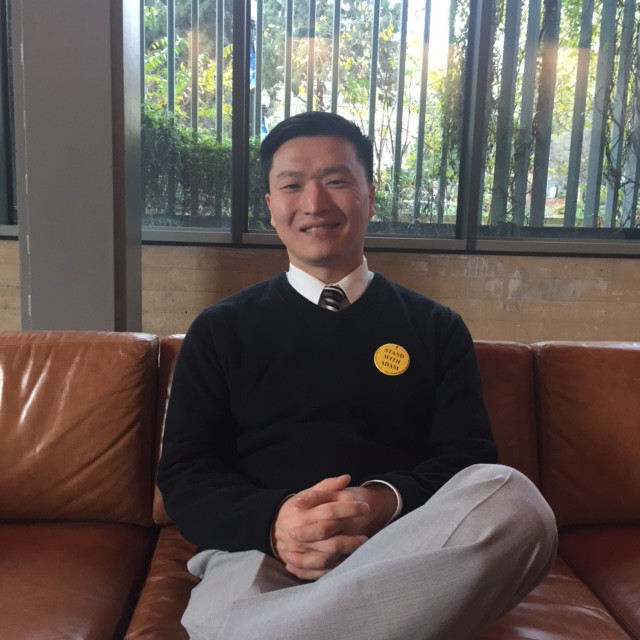
I STAND WITH ADAM :: Korean Adoptee in ICE Custody, Faces Deportation

STANDWITHADAM

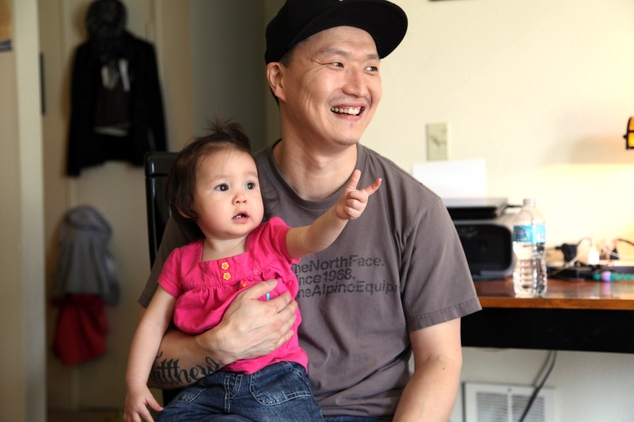
If you are connected with me on Facebook at all, you’ve seen my outrage at immigration officials over the despicable treatment of Adam Crapser, the Korean adoptee whose abusive adoptive parents failed to file for his U.S. citizenship.  Adam, now 40 and married with children, is facing deportation to South Korea.

This is outrageously and unequivocally wrong.

Adam Crapser is a victim, and should not be held responsible for the wrongful actions of two different sets of adoptive parents while he was still a minor.

Adam’s story is long and tragic, full of horrific abuse and injustice. Left at an orphanage in South Korea at age three, Adam’s first set of adoptive parents surrendered him to the state of Oregon after years of abusing him. His second set of adoptive parents “choked, beat and burned Adam; the physical, emotional and sexual abuse of Adam and his foster siblings was so severe the Crapsers served jail time for 11 counts of child abuse.” [1] While Adam was sixteen, drifting in and out of homeless shelters in Oregon, he returned to the Crapser’s home to retrieve his Korean Bible and a pair of rubber shoes he’d worn at the orphanage. The court considered this burglary, and Adam was sentenced to twenty-five months in prison. [2]

The Crapser parents withheld the adoption paperwork and documentation rightfully belonging to Adam, something that’s not uncommon in abusive situations. In 2012, Adam finally obtained his own adoption documents from the Crapsers and began the process of filing for a green card, in an attempt to straighten out his legal status.

Screen Shot 2016-02-19 at 2.28.55 PM

But his initiative was not taken kindly by immigration officials.

To the Department of Homeland Security and to Immigration and Customs Enforcement officials, it does not matter that Adam was a victim of abusive parents who failed to ever file the paperwork necessary for him to become a naturalized citizen. Immigration officials do not care that Adam was already a legal adult by the time the Child Citizenship Act of 2000 automatically enacted automatic naturalization for adopted children under the age of eighteen. They do not care that Adam took it upon himself to file for legal status, something his parents never had.

To immigration officials, Adam Crapser is a simply an illegal immigrant non-citizen with a criminal record, and they can’t wait to get him out of this country.

On February 8th 2016, he was taken away from his wife and children by ICE (Immigration and Customs Enforcement), and placed him in the Tacoma Detention Center, where he waits to find out if he’ll be deported to South Korea.

Screen Shot 2016-02-19 at 2.31.16 PM

I want to say the threat of deportation is unfounded.

I want to say it’s unlikely that he’ll be deported.

I want to say Adam Crapser’s case is an anomaly, an aberration.

But the truth is, adoptees have been deported before. [34] Thanks to immigration reform in 1996, any adoptee whose parents failed to file for citizenship is view as a non-citizen immigrant, and if a run-in with the law results in a prison sentence — even for non-violent crimes — they’re subject to deportation. (Remember Adam’s twenty-five month prison sentence for burglary, a.k.a. retrieving his Korean Bible and shoes from his parents’ home?)

Kairi Abha Shepherd’s adoptive mother died, never having filed for her to become a naturalized citizen. Kairi was deported to India. [5]

Jennifer Edgell Haynes’ adopted father sexually abused her, and never filed for her to become a naturalized citizen. Jennifer, who has multiple sclerosis, was deported to India. [67]

Joao Herbert’s adoptive parents didn’t file naturalization papers until he was seventeen, and the process wasn’t completed in time. Joao was deported to Brazil, where he was murdered. [89]

John Gaul III’s adoptive parents also didn’t file in time. John was deported to Thailand, and can never enter the US again. [10]

Rudi Richardson was born in a German prison. His birth father was a U.S. serviceman. He was adopted into an American family, but they never filed for him to become a naturalized citizen. Rudi even served in the U.S. military, but age forty-seven, he was deported to Germany. [11]

Monte Haines a.k.a Ho-kyu Han served in the U.S. military, too. But his adoptive parents never filed for him to become a naturalized citizen either, and he was deported to South Korea. [12]

These are all complex cases — and sadly, there are so many more. But they all have one thing in common: irresponsible adoptive parents who failed to file the paperwork necessary for their children to obtain U.S. citizenship. Over 18,000 adoptees from South Korea alone still aren’t U.S. Citizens.

These children are victims, not perpetrators.

And in the case of Adam Crapser, he has been a victim many times over. Not only did his adoptive parents — both sets! — neglect to file for citizenship, they also horrifically abused him. And now the United States, the only country whose language he knows, is ready to boot him out forever, separating him from his wife and children. Won’t you join me in standing up to Immigration and Customs Enforcement officials, and let them know you  STAND WITH ADAM?

Demand that Adam Crapser be removed from deportation proceedings.

Demand that “Adam and all international adoptees adopted by U.S. citizens should be granted U.S. citizenship immediately.”

SIGN THE PETITION 

or 

SEND A LETTER TO JUDGE JOHN C. ODELL AT THE TACOMA DETENTION CENTER

We can’t sit back and do nothing as Adam’s human rights are violated. We can’t do nothing as his family is torn apart. This is no time for apathy as immigration officials life is destroyed even more.

This is happening on our watch, and we must act.

Crapser


For more information on the Adoptee Rights Campaign organized by the NAKASEC (National Korean American Service & Education Consortium), click here.