Poetry & Words, Theology

She’s outside of time. We’re in it.

One week and three days. That’s how long it’s been since Holly left this earth. Thirty years she lived on this side of eternal life.

“We are not alone /Β We are more than flesh and bone /Β What is seen will pass away /Β What is not is going home…” –Andrew Peterson
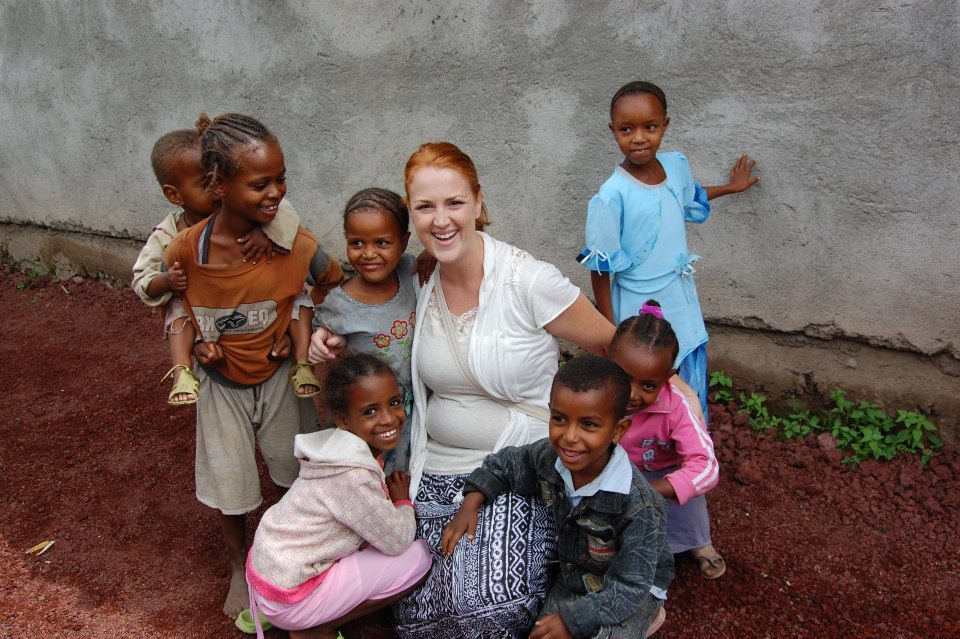
Donations to Ethopian school  Ziway Adami Tulu in memory of Holly Lutterman[Donate in Holly’s memory to theΒ The Ziway + Adami TuluΒ Project]

And now, she’s home.

She’s dancing in the pure Light, healed.Β 

She’s outside of time. We’re in it. She’s free, and we’re trapped,Β feeling deeplyΒ the ebb and flow of new grief, constantly aware of life’s frailty.

The thing about death, you know, is that the living keep on living.

“The living can’t quit living,” Wendell Berry writes.Β “They can’t because they don’t. The light that shines into darkness and never goes out calls them on into life. It calls them back again into the great room. It calls them into their bodies and into the world, into whatever the world will require. It calls them into work and pleasure, goodness and beauty, and the company of other loved ones.”

And so we can’t quit. We don’t. We keep on, changed. Our perspectives shift, our priorities shift, our vision is altered. But we don’t quit.

We mourn, but not without hope. We grieve, but not without hope.

Hope is the anchor.

Hope points me to theΒ “holy shores of uncreated light“, and the One who lights the way.

“‘Praise, Praise!’ I croak. Praise God for all that’s holy, cold, and dark. Praise him for all we lose, for all the river of the years bears off. Praise him for stillness in the wake of pain. Praise him for emptiness. And as you race to spill into the sea, praise him yourself, old Wear. Praise him for dying and the peace of death.

…Now that I can hardly walk, I crawl to meet him there. He takes me in his chilly lap to wash me of my sins. Or I kneel down beside him till within his depths I see a star.

Sometimes this star is still. Sometimes she dances. She is [Holly]’s star. Within that little pool of Wear she winks at me. I wink at her. The secret that we share I cannot tell in full. But this much I will tell. What’s lost is nothing to what’s found, and all the death that ever was, set next to life, would scarcely fill a cup.” -Frederick Buechner

Poetry & Words, Theology

It is early in the days of new grief

The grief will change usIt is early in the days of new grief, and the sorrow comes in waves, tidal, like the roaring surge of surf just before the crash, just before the sea glass scatters, rearranged, just before the shelled critters scurry backwards into the sand.
I lie awake in the stillness, awake until just before the periwinkle dawn. I’m afraid to close my eyes because I don’t want to forget. In the morning, I blink, I sit up, and for eight fleeting, transitory seconds, I’ve forgotten. Then the grief crashes in, then I remember, and the flood of tears roll down.

Maybe the grief will always come like the ocean’s tide, glistening like December topaz, glistening like the salty water that rearranged the Klamath coast every year. The river ran through it, always shifting, always flowing, always shaping the earth around it. Some years the driftwood arranged itself into gentle patterns and the sands fell smooth, sloping down gently into the brackish river. And some years the dunes rose high, and the winds whipped, and the gnarled branches of petrified wood were tangled in between the constant rise and fall of frothy waves.

Like the river against the stones, the ocean against the glass, and the mouth of the ocean against the changing shore, the grief will change me.

It will change us.

Every year, it will look different.

The river will continue to ebb and flow, the shoreline will be carved and smoothed, the waters will rise and fall, the glass will be broken and polished, the winds will breathe in and out.

He makes all things beautiful in His time.

Poetry & Words, Theology

The thing about life is how fragile it is

The thing about life is how fragile it is

The thing about life is how fragile it is.

We don’t realize it.

We’re too busy pumping up humanity and climbing Everest and launching ourselves into orbit. We collect accolades and list our achievements and add antennas atop towers in an effort to make it all seem bigger, better, taller than it is. We love the stories that are larger than our collective humanity, the people who muster brute strength to do the one thing that no one else can even imagine.

We’re obsessed with strength.

We’re fascinated by human success. We can form armies, we can stop rivers. We’re so busy being strong, we sometimes forget that for all our sky-high buildings and conquered Everests and technological masterpieces, we can’t stop a cell from marching.

We can’t push oxygen where it needs to go. We’re no life-givers.

And in these moments when our frailty becomes the largest thing in the room, we see. We see the veil, thinner than we ever knew it could be. We see the Milky Way and we see the oceans and we see our souls and we see the sky as a canopy over us.

And the wind rushes in, and the curtain lifts up for one ethereal moment and then falls — and we gain a glimpse, and know that in all ourΒ trembling bravery and brawn, it was always His hand holding us up.

And we cling to that.

Adoption, Poetry & Words, Theology

The Hague Convention is not Enough

If you’re friends with me on my personal Facebook account, I know, I’m sorry. I’ve been over all this before.Β But when I saw the positive reaction online to the news this morning — Japan just became the 91st country to ratify the Hague Convention — I’ve decided I need to talk about it here, too.

Because it matters.

I’m not going to talk about whether or not there were good intentions behind the Hague Convention in the beginning. I’m going to talk about now.

We’ve seen it over and over and over again: the Convention adds an unnecessary layer of bureaucracy and red tape to the countries which ratify the treaty. It piles on the list of requirements, and in many cases the countries don’t have the infrastructure, the funding or the ability to comply with the new regulations. And in the wake of the Hague Convention — not always, but often — international adoptions grind to a near-halt.

Take a look at the Hague Convention’s complicated legacy in Guatemala.


I don’t have the answers, but I know there’s more to international child advocacy than the Hague Convention. Β It’s not enough to push a nation to ratify, and then walk away.

If you want to take a more in-depth look at the way the international adoption system is broken, I’d highly recommend watching the STUCK documentary. Β (At the time of this post, you can stream STUCK for free if you have a Netflix account. If you don’t have a way to access Netflix, email me, and I can send you a different link to stream the film.)

Poetry & Words, Theology

“Where does the light goes?”

Oaxacaborn blog

“Where does the light goes?” she asks. “Where does it goes?”

No one really knows, we say. It’s all packets and photons and waves. But, this we know. It’s always there, even when it’s dark, because the darkness is no match for light. Light swallows the dark, and the dark will never triumph over light.

She presses her forehead against the glass, and looks out at the solid sheet of afternoon clouds. She asks, “It still a sunny day? It not night?”

It’s called daylight, we say. Even when we can’t see sunshine, we’re still wrapped in light.

It’s almost sunset. The sphere of light is edged in coral, sliding down behind the ridge just across the highways. “Where da sun go now? It move in da sky?” she asks.

It is we who move, we say. The light is always there, an anchor. We move around it, our faces to it, our eyes fixed on it.

“Leave my farkle [sparkle] light on?” she asks. “Leave it on?”

We have to turn it out, we say. It’s time to sleep.Β It’s dark, but just for a little while.Β The morning will come. And it will be light again.

Poetry & Words, Theology

2014

 January 2014 - Oaxacaborn blog

We’re starting off 2014 with all kinds of 3’s. Right away, this month, it’s three and thirty for the three of us. Three for her, and thirty for Josiah and me — and my birthday is even on the thirtieth.

Beyond that, I really have zero idea what’s going to happen this year. And that’s kind of exciting! Especially when it’s the Lord of the universe who guides our way.

By day theΒ LordΒ went aheadΒ of them in a pillar of cloudΒ to guide them on their way and by night in a pillar of fire to give them light, so that they could travel by day or night. Neither the pillar of cloud by day nor the pillar of fire by night leftΒ its place in front of the people.” (Exodus 13:21-22)

No better place to be, don’t you think?

Poetry & Words, Theology

The Snow Covers It All

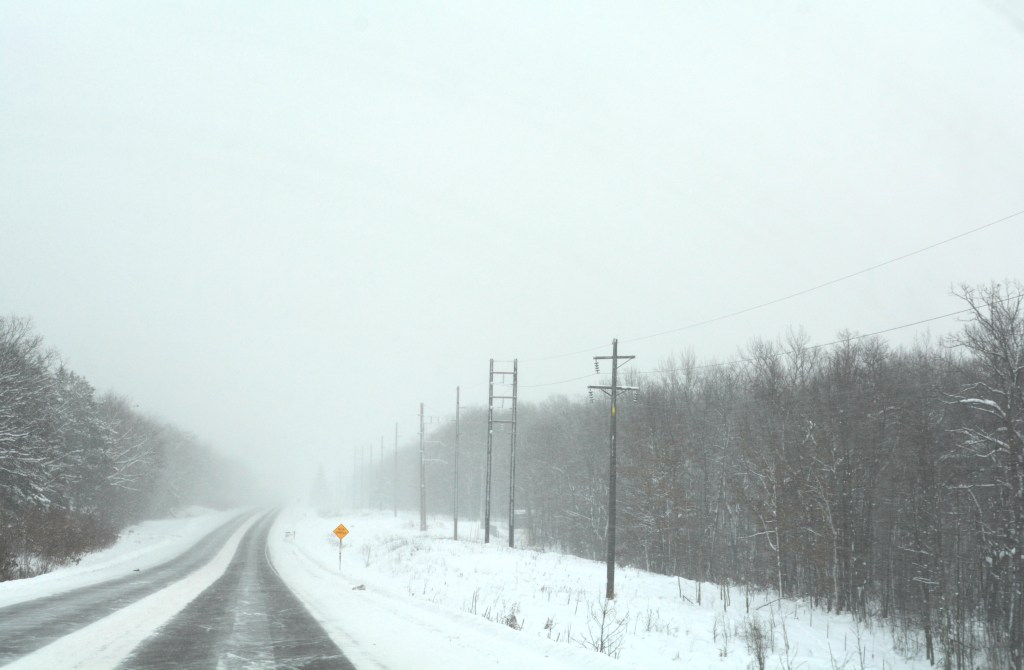
Upper Michigan Blizzard

This is it: the great frozen north, separated from the great white north by an icy body of water that the Song of Hiawatha calls “Gitche Gumee, that shining Big-Sea-Water.” For me, it’sΒ a land of family history. My parents grew to adulthood here, as did their parents before them.Β When you climb the branches of my family tree, the only place that comes before the great frozen north is the Old Country itself — or countries, rather — Italy, Slovenia, Russia, Finland, Sweden, and Poland. Between the Old Country, and me, there is nothing but this great frozen north.

Even I lived here; not for long — just two years — but I did it.Β And I was cold. From the upstairs of a 1920s house, I was within earshot of the shining Big-Sea-Water, within earshot of the fog horns and the ice-breaking tugboats and the winds that pulled the water from the Lake and twisted it and stretched it and smoothed it like a icy blanket over the naked branches and undulating streets.

But the Lake isn’t all of the north. Like Longfellow wrote,
Dark behind it rose the forest,
Rose the black and gloomy pine-trees,
Rose the firs with cones upon them…

And it’s these inland woodlands that grew up around my parents as children, that grew around me summer after summer and that grow up around my own child now as we visit. It is these woodlands and these tired old towns, once humming with industry and iron mines, but now battered and listing, with every winter leaning further away from the future. It would be wrong to say time has stood still here, for had it stood still it would have left a kinder mark on the crumbling foundations and the aging rooftops.

Stepping here feels like stepping between the pages of the National Geographic photo essays I loved as a child; in the glossy photos I see the live bait and chainsaw repair shops, the blaze orange, the Stormy Kromers, the ice augers, and chatter aboutΒ choppersΒ (not airborne flying machines but leather-and-shearling mittens).

Here is where we Christmased, this year; here in the waves of gray that slowly sweep from sky to earth in great snowy sheets that obscure the horizon, layer after another until there is no more sense of up or down but only a single color painted in a single swath.

And in that horizon, I see only the lights of Christmas and hear only the laughter of everyone I know, andΒ I forget the heat and forget the noise and forget the traffic and forget the tropical gales.

The snow covers it all.

Poetry & Words, Theology

It’s Okay to be Happy with a Calm Life

It's Ok to be Happy with a Calm Life by Julie Kuberski

(Print via Julie Kuberski on Society6)

Are you comparing your life this morning with someone else’s? Perhaps you’re comparing yourself with someone you don’t know, except through perfect(ly edited) peeks (via social media). Maybe you feel discouraged this morning because, compared to all the pins and posts, your life is boring. Flat. Not bursting with adventure.

You’re not jetting off to some corner of the world. You’re not having your coffee in a wood+brick+ceramic cafe in the Pacific Northwest or brunching on a Mediterranean veranda. You’re not doing anything exciting. There’s nothing wrong with your own set of circumstances this morning except for the fact you feel they’re a bit…boring.

Don’t be discouraged.

There are a seasons of whirlwind and seasons of calm; there are people who need 4 hours of a sleep a night and people who need 9, and there are those who are called to be surrounded by others, and those who are called to seasons of repose.

Don’t let comparison steal away your joy.

Don’t be dragged down asking, “Am I doing as much as ___ is able to accomplish in a day?”; but rather, rest in this: “Am I doing what He has called me to do in this moment?”

Be encouraged.

“For as his share is who goes down to the battle, so shall his share be who stays by the baggage; they shall share alike.” (I Samuel 30:24)

It’s ok to be happy with a calm life.