Poetry & Words, Theology

“What Does Mercy Mean?” How to Answer a Child’s Question

What Does Mercy Mean? How to Answer a Child's Question | How can I explain to a three year-old child the concept of mercy? I don't feel like I can reduce these mysteries to a sentence.  I'm worried I'll go wrong somehow.

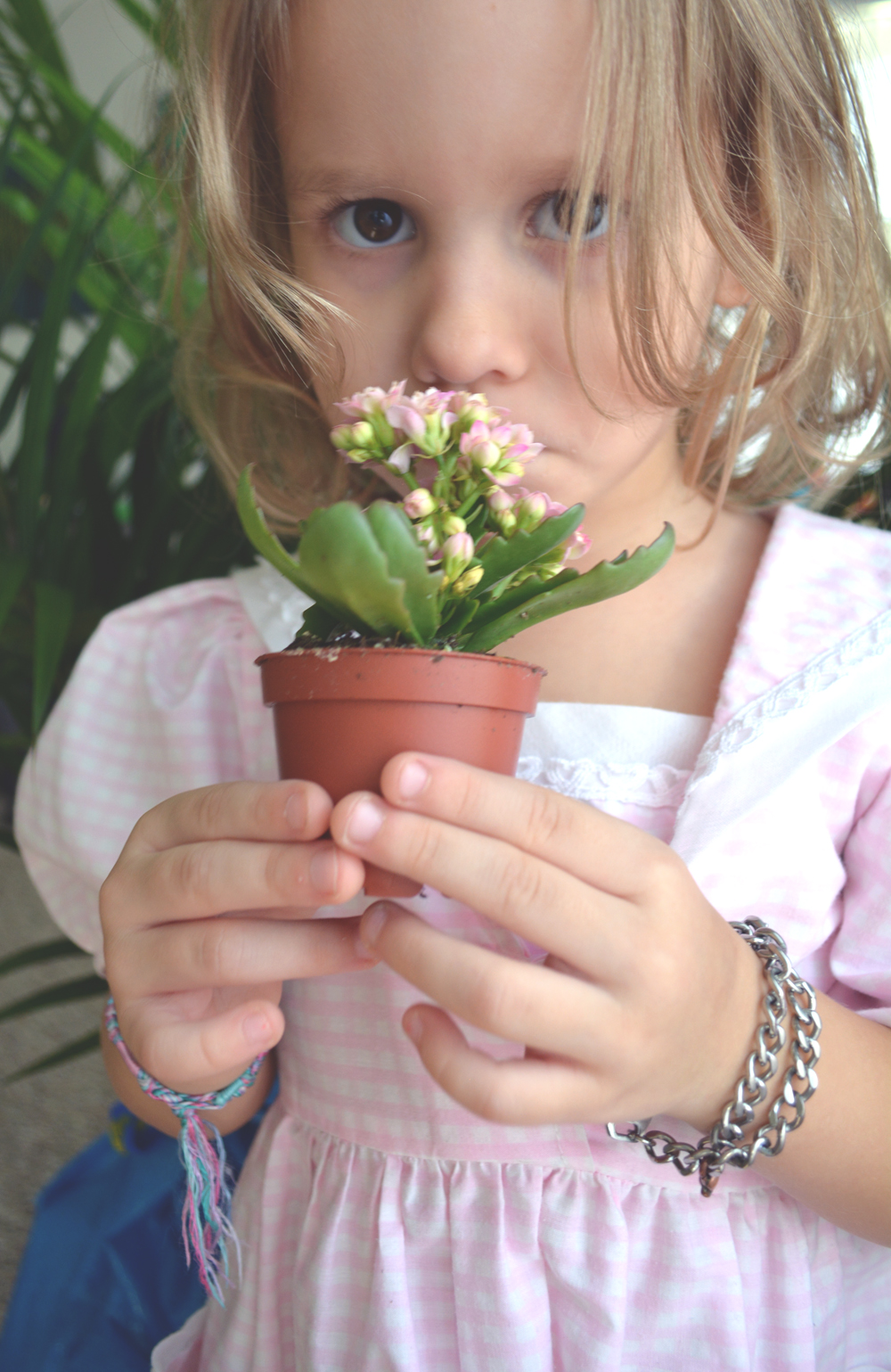
“Do you love Bible?” She looks up at me with those big eyes of hers. “And does Papa love Bible too? Because I love it. So much.” It’s spontaneous, this declaration of hers. She keeps talking, looking up at me as she pushes her unruly honey-colored hair out of her face. “Where’s God now?” “What is a soul?” “What is mercy? Read more Bible, mumma.”

We just returned from seeing Fernando Ortega in concert, and she is humming the songs as she asks me these questions. “Why,” she asks earnestly, “Why did dat man say dat song about da fire of angels is sad? Why is it sad, mumma?”

I sing to myself before I answer. I think of all the nights I fell asleep with this melody in my soul:

“I never knew the dusk could seem so sad,
an empty aching in my soul.
In this bright hour I speak your name in the wind,
the shining world outlasts us all.

Even the mountains seem to know you’re gone,
the foothills shimmer where they stand.
The sky is still and much too beautiful,
and I am missing you again.

Lift me over the San Gabriels, leaning into the southern sky.
The foothills burning in the afterglow, an angel fire passing by…”
[Fernando Ortega, Angel Fire]

At three, her tender heart knows nothing of the aching in one’s soul. “It is sad, baby, but it’s beautiful too, though, isn’t it, that song?” I can feel the tears begin to burn. How can I untangle these questions, when even I don’t understand why people slip away and leave behind the empty foothills, burning in the light?

How can I explain to a three year-old the concept of mercy, when I still can’t wrap my head around the marvel of it all?

And what is this intangible thing inside me, this soul of mine?

She stands in front of me, eagerly, waiting for answers.
What Does Mercy Mean? How to Answer a Child's Question

I don’t feel like I can reduce these mysteries to a sentence.  I’m worried I’ll go wrong somehow. But I know Jesus told us to learn what mercy means [1]. And I know love and mercy is how everything — all of this, this big, overgrown mess of earth and humanity — is made whole. Death is swallowed up[2], and the old system of law is fulfilled [3, 4].

So I tell her what I know. I tell her about His love.

My words aren’t perfect, but it doesn’t matter.

“We must try to speak of His love. All Christians have tried but none has ever done it very well. I can no more do justice to that awesome and wonder-filled theme than a child can grasp a star. Still by reaching toward the star the child may call attention to it and even indicate the direction one must look to see it. So as I stretch my heart toward the high shining love of God someone who has not before known about it may be encouraged to look up and have hope.” [A.W. Tozer, Knowledge of the Holy]

And when it comes right down to it, it’s that high shining love and mercy He crowns us with [5], not rules. The rules can never redeem, transform, make whole. And so I point her to that great Love, toward Him, and I take her hand as we run toward the rain.

…[she] grew up in that Florida rain
They were carried along like leaves on a river of faith
They’d float
All the way home…
And they walked in the rain of His mercy
Let it soak them down to the bone
And they splashed in its puddles
And danced in its streams as they’d go
And, oh, they walked in the rain of His mercy
All the way home….”
[Andrew Peterson, All the Way Home]
What Does Mercy Mean? How to Answer a Child's Question

what_is_mercyFB

Poetry & Words, Theology

Rich Mullins, the Homeless Man

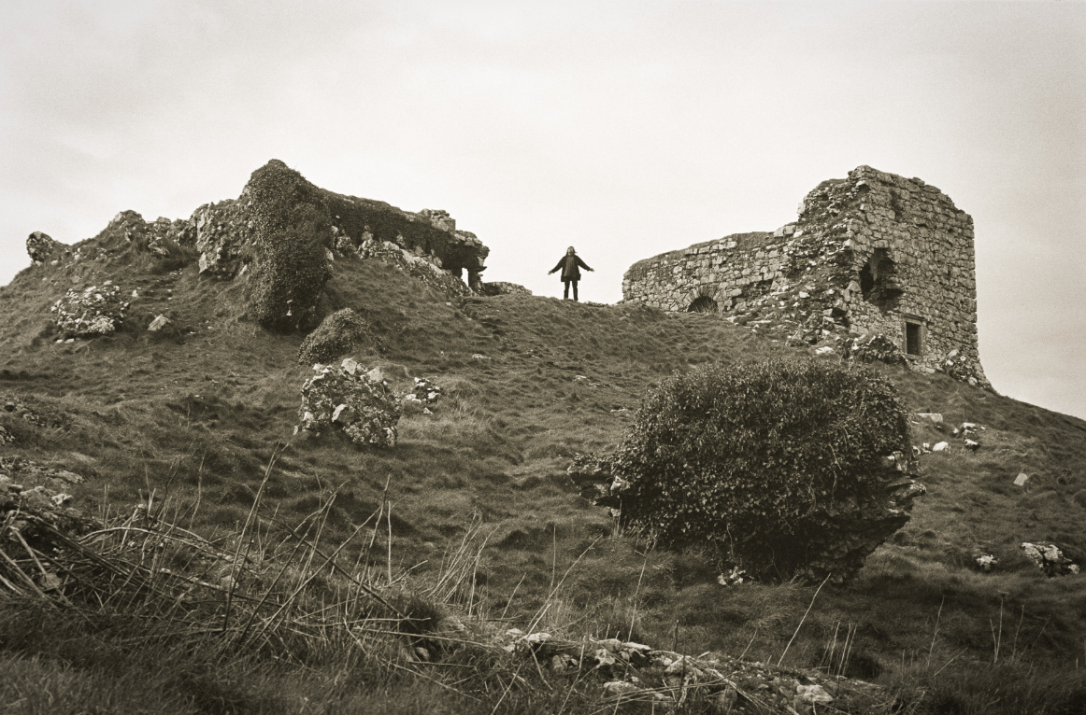
Rich Mullins, Ireland, Photograph by Ben Pearson
Image Credit: Ben Pearson

September 19, 1997. Seventeen years ago. Seventeen years ago, Rich Mullins walked right out of this earth and slipped out of his body and right up through the veil that the Cross had already split apart for him and for us all. Seventeen years ago he went “out like Elijah, with a whirlwind in a chariot of fire”, just like he used to sing.

It was seventeen years ago, and I remember exactly where I was standing in the kitchen in the middle of a tiny town in Wisconsin, and how the words echoed out of the little fridge-top radio when I heard that he had flown. And I remember how I was just a teenager and just figuring things out, and how I wore out my Rich Mullins cassette tapes that year, until you couldn’t even hear the scratchy songs anymore. A little later, I sat in the basement of a tiny church and listened to Mitch McVicker, who was with Rich in the fatal car accident, sing songs from Rich’s posthumous album, The Jesus Record. Tears streamed down my face and into my heart and I knew Jesus was my own deliverer, my very own, and I knew right then and forever, “He will never break His promise, He has written it upon the sky.” And then later still, when I was yet again a little older but still figuring things out, I didn’t even get a chance to wear out An Arrow Pointing to Heaven because I kept giving my copy away and buying another one.

I can’t even tell you what passages or words or songs of his mean the most, because how can you pull out one line from a poet’s canon and separate it out from all the rest and say, “This is it.” You can’t. It doesn’t work that way. In the documentary “Homeless Man: The Restless Heart of Rich Mullins“, Father Simon said, “And I think that’s one thing that Rich and Saint Francis had in common is that they were both poets. They both had a vision and they were both willing to live that vision. Their poem was their life, not so much what they wrote.”

When Rich sang of Abraham “how one star he saw had been lit for me, he was a stranger in this land, and I am that, no less than he,” I could see the sojourning thread that ties us all together. Being one of Abraham’s stars and having roots all over, but none deep in one place, can sometimes feel like the edge of being from nowhere, the edge of not belonging. But we’re pilgrims, all. Rich was a sojourner and Jesus was a sojourner — and if the Son of Man sometimes didn’t have a place to rest His head and that detail didn’t mess up redemption one bit, then I know that anything that happens to me is gonna be okay, too.

And this man — who was once mistaken for homeless outside a church before one of his concerts — this man really was the single most influential person I’ve never met. He’s where I learned that this life is a little crazy and it’s a little hard; but nothing, really nothing, of earthly value worth holding on to that tightly, anyway. We’re not put here to pretend to be perfect, and piece together these unblemished lives and create a nice bubble for ourselves, we’re here to be real.

And to be alive.

And love and live with wild abandon.

And stand up loudly in the land of our sojourn, not caring what anyone thinks, and just be those wild arrows, pointing straight to heaven.

Nobody tells you when you get born here
How much you’ll come to love it
And how you’ll never belong here
So I call you my country
And I’ll be lonely for my home
And I wish that I could take you there with me

…When the old world started dying
And the new world started coming on
And I’ll sing His song, and I’ll sing His song
In the land of my sojourn

In the land of my sojourn
And I will sing His song
In the land of my sojourn.”

And in that new world, I think, music will be danced out across the strings of a hammered dulcimer.

LISTEN NOW to Land of my Sojourn, I’ll Carry On, and Elijah.

Theology, Uncategorized

Don’t Let Darkness Cause You to Hide From Beauty

Don't Let the Darkness Make You Shink From Beauty

There was a lot less rambling here, this summer. Because there was a lot more of this, and this, there and there and there and everywhere.

And so I wrote less.

Because it’s so heavy to know, and yet not know what to do.

Because it’s so heavy to hear all about the death and the disease and the abandonment and the starvation and the cries, and be so heart-wrenchingly aware that you still just stand here with the ability to just turn it off and stop listening.

And so I wrote less and showed up here less often, and shared fewer pretty things, and stopped saying, please, just would you look at the sunrise? And would you just look at the person next to you, and realize how alive they are? And I stopped coming here to nudge you to see the beauty in the clouds and in the rain, and in your cold coffee and in your traffic jams and in your sleeplessness.

But that’s not right.

When a mountain top is ravaged by wildfire, and the stones crumble and the trees turn to powder and ash and the blackness covers everything, when in that trembling heap a small green stem unfurls and pushes through and raises his brave head to show us his brightly colored petals, wet with dew — when that happens, we don’t turn away because there is ash all around. No, we lock eyes with the flower. We see the sun shining on it, we see the contrast between death and life, and we embrace that little jewel of life with all the strength our weak arms can grasp.

We’re not afraid that loving the flower means we don’t grasp the seriousness of the ravages of disaster.  We don’t ever worry that our voice, tiny in this world, calling out “Look! There is beauty! See it burst through!” makes the burnt mountain worse — we just love every precious delicate petal and call out and cry out and cling to the light and the beauty and the hope of it all.

So maybe that’s why some of us are put here on this earth. We see the fear and the disaster and the starvation and the longing for Hope, and we also see the flower pushing through the rubble of it all. And maybe some of us are put here to be voices calling others to look to the Light. Look to the Hope.

There is Beauty still.

Poetry & Words, Theology

Another Little Sojourner Heart

Little Sojourner Heart

Aveline watched Fiddler on the Roof this weekend for the first time. I think she’s discovered a new love, musicals (are any of us really that surprised?) This afternoon, we listened to the soundtrack at her request, and she burst into tears listening to “Far from the Home I Love”.

Dat girl, she was singing she wanted to go to da home she loved and she got on da train instead!

She gets it, this kid. She feels the pull that tugs hearts in many directions. Only three years old and already so many trips to our various homes to be with the people we love, and always leaving, to go back to Florida again.

Another little sojourner. <3

Poetry & Words, Theology

Five Months Ago, She Slipped Away

photo (16)

Five months ago, she was met with the loudest hallelujahs.

I didn’t hear any of them.

Five months ago, she slipped free from this realm.

I’m still earthbound.

These five months have been the longest, and the shortest.  It feels like I should be able to walk backwards, at any time, and fall right back into where I was when we were all a decade younger and a decade louder and only a decade away from the day when she’d fly home, right there, in front of all of us.

Oh, if we would have known then that those Friday nights were once-in-a-lifetime, if we would have known then that’s all we were given on this side of the sky. But we didn’t know, of course; we never knew and we still don’t know. Today we might very well be sitting inside the same kind of golden moment that will we’ll look back on from the next decade, the same golden moment that we will look back on through the fading edges of time. We’ll want to grab it; but we won’t be able to.

But we can hold on to this moment we’re sitting inside of now.

We can hold onto it now, and hold on to our people, and hold onto it all while we can, hold onto it with open arms and wild abandon and the kind of joy that’s poured out of heaven’s lap itself — we can hold onto it all until it’s time to let go. And then we’ll hold onto our God, and he’ll hold onto us, and he’ll hold us there in the storm so we won’t fold over when the winds grows fierce and the winds rip up the roots and the winds change it all.

And in the quietness and in the roar, through the tears and the laughter and the journeys that make up everyday living, I can sing —

— it is well

it is well

it is well with my soul.


Poetry & Words, Theology

Sojourning is not a rhythm

IMG_4920 IMG_4902 IMG_4853

The words get lost in the days, lost in the shuffle between high tide and low tide — the choreographed swap of sand and sea — lost in the couch cushions, like copper coins, lost in the fray, lost in the routine between breakfast and sunset.

This, of course, is exactly when I should be writing. Words are spun from the gossamer threads which wrap around our days. I can see them, glinting, drenched from the downpour, drenched from the puddles, drenched from the spray.

“You write while you are alive”, Anaïs Nin said. “You do not preserve them [living moments] in alcohol until the moment you are ready to write about them.”

And so, alive, I write.

We stick pins in a map and wonder which one will hold. We squint at the horizon and see mountains through the mirage, and yet, the pillar stands still. The life of a sojourner is not a rhythm of motion and stillness, like the poets would have you believe. Sometimes, there is no rhythm. Sometimes it is abrupt, sometimes it is whiplash, sometimes it is an awkward slow dance, a holding pattern at best. Sometimes, you fold up your belongings into a square, and load the truck, and don’t look back when every inch of you longs to cling to the roots you tried to push into the broken ground. But most of the time, you stand.

You stand even when your feet so dearly ache to run.

Adoption, Humanitarian, Poetry & Words, Theology

I was a stranger & you invited me in

Image Credit: LifeSong for Orphans - Zambia Children's Choir / Celebrate Life Concert Tour
Image Credit: LifeSong for Orphans – Zambia Children’s Choir / Celebrate Life Concert Tour

Last night, I sat in a church and listened to Zambian children sing. And I heard something I’ve never heard before. No, not the sound of a drum sans drumsticks, not the sound of the soaring notes. 

Actually, it wasn’t a song at all.

Each of the kids — students at the Lifesong for Orphans school in Zambia — shared their favorite school subjects, dreams, and favorite passages of Scripture. It was an endearingly real moment — stuttering, laughter, forgetting words. One girl recited Psalm 23 from beginning to end, another quoted Romans.

But then it was the smallest boy’s turn to speak. And he leaned into to the microphone and looked into the crowd. “My favorite verse is Matthew 35 verse 25”, he said in halting English. “For I was hungry and you gave me something to eat, I was thirsty and you gave me something to drink, I was a stranger and you invited me in.”

Oh, my heart!

It’s one of those verses we’ve read a hundred times, isn’t it? But honestly? When was the last time you heard a friend say it was their favorite verse? It’s a passage we’re familiar with, but not a passage we’re accustomed to seeing highlighted and memorized and repeated and claimed as a personal promise and emblazoned on t-shirts and bookmarks and greeting cards.

But this is Jesus. This is real. He’s among us — feeding, loving, caring, doing.

Sometimes, I think we lose that connection between Jesus-the-Ethereal-Being and Jesus-the-Man. I think we lose the connection between hypothetical love and practical, get-your-hands-dirty, work-hard love. We over-spiritualize it. We complicate it and organize it and delegate it and analyze it and create ministries for it and philosophize about it and invent words about it.

But it was a real, I’m-right-there-with-you, here-is-a-meal, here-is-a-bed  kind of love that spoke to this boy’s heart.

It’s what Jesus’ love,
made human
and tangible
and touchable
and present, looks like.

And I never want to forget it.

“Sometimes the best way to bring good news to the poor is to bring actual good news to the poor. It appears a good way to bring relief to the oppressed is to bring real relief to the oppressed. It’s almost like Jesus meant what He said. When you’re desperate, usually the best news you can receive is food, water, shelter. These provisions communicate God’s presence infinitely more than a tract or Christian performance in the local park. They convey, ‘God loves you so dearly, He sent people to your rescue.'” -Jen Hatmaker

Life in Photos, Poetry & Words, Theology

After the Deluge

30 April 2014- Daydreaming Afternoon Rain

Monday’s post about choosing joy in the rain was barely posted when I had the opportunity to live it. That’s the way it works, isn’t it? It’s like telling God you’d like to be a more patient person — and then ::wham!:: many opportunities to practice patience appear before your eyes.

April went out with a monsoon, inside and outside. Outside, a diluvial sheet of water bent and twisted and contorted, darkening the sky, punctuated with electric bursts of thunder. Inside, an email quietly said no to something we all had hoped for.

Inside, outside, inside, outside.

It wasn’t until after the Flood that hope arrived. It wasn’t until everything drowned and the rains stopped and the earth heaved under the weight of the water that the rainbow appeared. It wasn’t until then that the olive branch soared across the horizon and into view.

“Now let the music keep
our spirits high
And let the buildings keep
our children dry
Let creation reveal its secrets
by and by, by and by
When the light that’s lost within us
reaches the sky

…And when the sand was gone
and the time arrived…
And in attempts to understand a thing
so simple and so huge
believed that they were meant to live
after the deluge.
” -Jackson Browne