Poetry & Words, Theology

Where I was when the Berlin Wall fell

November 9, 1989 —  I’ll never forget that day 25 years ago — well, I didn’t hear the news until Friday morning, the 10th, over breakfast in West Germany. The night before, East German Communist Party spokesperson Günther Schabowski suggested, without much oomph — almost accidentally, it seemed — that travel between East and West could happen “from now”. [1]

Humanity surged toward the barrier, climbing over it, smashing at it with axes and hammers, and waiting in endless lines at the now-open gates, disbelief in the air. It’s emotional for me even now to think about this exodus, the pieces that held up the regime crumbling, the people locked in for years.

People died trying to cross that wall.

In a giant cloud of exhaust fumes of two-stroke engines, hundreds of East German cars wait bumper to bumper in front of the West German checkpoint Helmstedt to enter the west, Nov. 11, 1989. In front of the eastern checkpoint, the cars wait in line for a distance of 30-40 kilometers, a West German policeman said. The ride from Berlin to Helmstadt (about 200 kilometers) would last about 11 hours. (AP Photo/Claus Eckert)

“So it was the other side of the roughcast concrete barrier that mattered, the side that people did not spray with aerosol cans but had risked their lives to climb over. The emotional quality of this liberation can only be captured if you can imagine what it was like to live behind that ‘anti-fascist protection rampart’ (its mendacious official name) for all your life, never setting foot in the western half of your own city, and with the expectation that this would continue for years to come.

Here is the other thing that even the finest historians struggle to recover: the sense of what people at the time did not know. To those who lived behind it, the Berlin Wall had become something almost like the Alps, a seemingly unchangeable fact of physical geography. Even when things began to change so dramatically in Poland and Hungary, most people just did not believe the Alps could crumble. After all, there was a nuclear-armed empire holding them up. ” [2]

People now tell me I couldn’t have understood what was happening when November 10th dawned. I begin to tell my story, and they quickly interrupt. No, I couldn’t have known the significance of the day. I wasn’t yet six years old, they remind me.

In a way, they are right. I can never fully understand what it was like to have lived under East German rule. During that time, I did not live in Berlin. I lived in the former Yugoslavia — officially, the Socialist Federal Republic of Yugoslavia. And I was on the Western side of the wall when it fell.

But unlike many six-year-olds, I knew about the secret police. I knew about the checkpoints. I knew about smuggling, and borders, and visas and papers and freedom. And on November 10th, I could feel the wild mix of jubilation, uncertainty, and the thrill of the unfettered unknown.

People who’ve always lived in freedom don’t always know how to describe it. And people who’ve always lived in fetters can’t always articulate the lack of freedom, either.

“It is almost impossible to recreate the emotional intensity of the moment of liberation. For that intensity came from having lived for most, if not all, your life with the aching certainty that something like this was, precisely, impossible.” [Read More: The Berlin Wall: What it Meant to Be There]

Oh, I remember. There is no doubt about that.

And there’s something else: I am going to keep remembering, and keep telling this story. Because I don’t want to forget.

I don’t ever want any of us to forget.

Adoption, Poetry & Words

POETRY & WORDS :: A cure for #firstworldproblems

We all need something to keep our priorities in order. Something to keep us grounded, for lack of a better word, something to prevent us from wallowing in our #firstworldproblems.

Sometimes, all it takes is to stop focusing on ourselves. I’m preaching to myself here. My daily complaints do NOT constitute suffering.

Not when Naghmeh Abedini has to tell us this about her husband, Saeed [Saeed Abedini is an American citizen from Utah, imprisoned in Iran for his faith.]

Not when these sixty-seven people have nothing left.

Not when I have a family to call my own, and this girl (shown below) has none.

adriana2

Almost every day, a story about a child lands in my inbox, and every time, I read it. Not because I love sad things. Not because I want to have pity. But because the broken parts of this world will never change if we’re too busy holed up in our comfortable little havens. Because the broken pieces will never be picked up if we’re too busy creating ourselves a safe little bubble.

I want to look up. I want to look outward. I want to make a difference.

Because every child matters.

RESOURCES a.k.a. a partial list of the blogs and newsletters I read.

Gladney Center for Adoption’s Waiting Child (Blog)
Subscribe by Email: Click here and you will see the subscription field in the upper right hand corner of your screen

* Taiwan Xi En (Website) 
Subscribe by Email: Click here; only the red ’email’ field is required

*Bringing Hope to Children (Facebook)
Subscribe by Email: Click here

* Show Hope (Website)
Subscribe by Email: Click here

* And of course, the Ziway + Adami Tulu Project in partnership with Lifesong for Orphans — the organization through we which we sponsor children.

Life in Photos, Poetry & Words

LIFE IN PHOTOS :: Blanket Fort

WEB_Quiet_Moments_Fort_and_Window
Anoka_County_Fair_July_2014
WEB_Cactus_SOTC
WEB_Peeking_Fort

I have to stop and remind myself: I don’t get these moments in the frenzy.

I don’t get moments like this if I’m consumed with the tyranny of the urgent, if I’m lost in the self-made chaos, if I measure my worth against how much I’ve achieved or accomplished in the last twenty-four hours.

We’re to run this race with perseverance, yes, but our strength is in quietness and rest. The heart never stops beating, yes, but the stillness between every heartbeat is essential to staying alive.

And I see that stillness in the the way the sun filters through the smudged glass. The way a horse stands motionless in the cool darkness of the county fair, refusing to fear the racket rattling from the midway outside. The way the living room chairs are pushed together, the blankets are tugged from the beds, and her mischievous face peeks up at me through the ramshackle fort.

These are the moments — and yes, He is the God — I want to choose, seek, and hold.

O Thou who art my quietness, my deep repose,
My rest from strife of tongues, my holy hill,
Fair is Thy pavilion, where I hold me still.
Back let them fall from me, my clamorous foes,
Confusions multiplied;
From crowding things of sense I flee, and in Thee hide.
Until this tyranny be overpast,
Thy hand will hold me fast;
What though the tumult of the storm increase,
Grant to Thy servant strength, O Lord, and bless with peace.
– Amy Carmichael

Poetry & Words, Theology

“What Does Mercy Mean?” How to Answer a Child’s Question

What Does Mercy Mean? How to Answer a Child's Question | How can I explain to a three year-old child the concept of mercy? I don't feel like I can reduce these mysteries to a sentence.  I'm worried I'll go wrong somehow.

“Do you love Bible?” She looks up at me with those big eyes of hers. “And does Papa love Bible too? Because I love it. So much.” It’s spontaneous, this declaration of hers. She keeps talking, looking up at me as she pushes her unruly honey-colored hair out of her face. “Where’s God now?” “What is a soul?” “What is mercy? Read more Bible, mumma.”

We just returned from seeing Fernando Ortega in concert, and she is humming the songs as she asks me these questions. “Why,” she asks earnestly, “Why did dat man say dat song about da fire of angels is sad? Why is it sad, mumma?”

I sing to myself before I answer. I think of all the nights I fell asleep with this melody in my soul:

“I never knew the dusk could seem so sad,
an empty aching in my soul.
In this bright hour I speak your name in the wind,
the shining world outlasts us all.

Even the mountains seem to know you’re gone,
the foothills shimmer where they stand.
The sky is still and much too beautiful,
and I am missing you again.

Lift me over the San Gabriels, leaning into the southern sky.
The foothills burning in the afterglow, an angel fire passing by…”
[Fernando Ortega, Angel Fire]

At three, her tender heart knows nothing of the aching in one’s soul. “It is sad, baby, but it’s beautiful too, though, isn’t it, that song?” I can feel the tears begin to burn. How can I untangle these questions, when even I don’t understand why people slip away and leave behind the empty foothills, burning in the light?

How can I explain to a three year-old the concept of mercy, when I still can’t wrap my head around the marvel of it all?

And what is this intangible thing inside me, this soul of mine?

She stands in front of me, eagerly, waiting for answers.

What Does Mercy Mean? How to Answer a Child's Question

I don’t feel like I can reduce these mysteries to a sentence.  I’m worried I’ll go wrong somehow. But I know Jesus told us to learn what mercy means [1]. And I know love and mercy is how everything — all of this, this big, overgrown mess of earth and humanity — is made whole. Death is swallowed up[2], and the old system of law is fulfilled [3, 4].

So I tell her what I know. I tell her about His love.

My words aren’t perfect, but it doesn’t matter.

“We must try to speak of His love. All Christians have tried but none has ever done it very well. I can no more do justice to that awesome and wonder-filled theme than a child can grasp a star. Still by reaching toward the star the child may call attention to it and even indicate the direction one must look to see it. So as I stretch my heart toward the high shining love of God someone who has not before known about it may be encouraged to look up and have hope.” [A.W. Tozer, Knowledge of the Holy]

And when it comes right down to it, it’s that high shining love and mercy He crowns us with [5], not rules. The rules can never redeem, transform, make whole. And so I point her to that great Love, toward Him, and I take her hand as we run toward the rain.

…[she] grew up in that Florida rain
They were carried along like leaves on a river of faith
They’d float
All the way home…
And they walked in the rain of His mercy
Let it soak them down to the bone
And they splashed in its puddles
And danced in its streams as they’d go
And, oh, they walked in the rain of His mercy
All the way home….”
[Andrew Peterson, All the Way Home]

What Does Mercy Mean? How to Answer a Child's Question

what_is_mercyFB

Poetry & Words, Theology

Rich Mullins, the Homeless Man

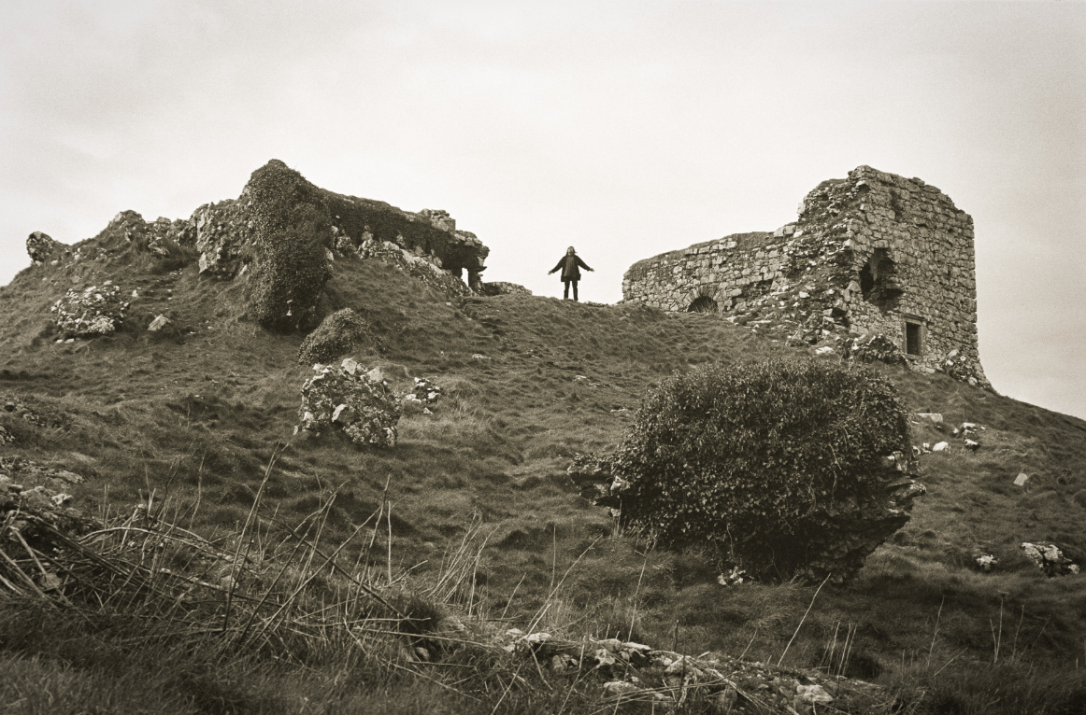
Rich Mullins, Ireland, Photograph by Ben Pearson
Image Credit: Ben Pearson

September 19, 1997. Seventeen years ago. Seventeen years ago, Rich Mullins walked right out of this earth and slipped out of his body and right up through the veil that the Cross had already split apart for him and for us all. Seventeen years ago he went “out like Elijah, with a whirlwind in a chariot of fire”, just like he used to sing.

It was seventeen years ago, and I remember exactly where I was standing in the kitchen in the middle of a tiny town in Wisconsin, and how the words echoed out of the little fridge-top radio when I heard that he had flown. And I remember how I was just a teenager and just figuring things out, and how I wore out my Rich Mullins cassette tapes that year, until you couldn’t even hear the scratchy songs anymore. A little later, I sat in the basement of a tiny church and listened to Mitch McVicker, who was with Rich in the fatal car accident, sing songs from Rich’s posthumous album, The Jesus Record. Tears streamed down my face and into my heart and I knew Jesus was my own deliverer, my very own, and I knew right then and forever, “He will never break His promise, He has written it upon the sky.” And then later still, when I was yet again a little older but still figuring things out, I didn’t even get a chance to wear out An Arrow Pointing to Heaven because I kept giving my copy away and buying another one.

I can’t even tell you what passages or words or songs of his mean the most, because how can you pull out one line from a poet’s canon and separate it out from all the rest and say, “This is it.” You can’t. It doesn’t work that way. In the documentary “Homeless Man: The Restless Heart of Rich Mullins“, Father Simon said, “And I think that’s one thing that Rich and Saint Francis had in common is that they were both poets. They both had a vision and they were both willing to live that vision. Their poem was their life, not so much what they wrote.”

When Rich sang of Abraham “how one star he saw had been lit for me, he was a stranger in this land, and I am that, no less than he,” I could see the sojourning thread that ties us all together. Being one of Abraham’s stars and having roots all over, but none deep in one place, can sometimes feel like the edge of being from nowhere, the edge of not belonging. But we’re pilgrims, all. Rich was a sojourner and Jesus was a sojourner — and if the Son of Man sometimes didn’t have a place to rest His head and that detail didn’t mess up redemption one bit, then I know that anything that happens to me is gonna be okay, too.

And this man — who was once mistaken for homeless outside a church before one of his concerts — this man really was the single most influential person I’ve never met. He’s where I learned that this life is a little crazy and it’s a little hard; but nothing, really nothing, of earthly value worth holding on to that tightly, anyway. We’re not put here to pretend to be perfect, and piece together these unblemished lives and create a nice bubble for ourselves, we’re here to be real.

And to be alive.

And love and live with wild abandon.

And stand up loudly in the land of our sojourn, not caring what anyone thinks, and just be those wild arrows, pointing straight to heaven.

Nobody tells you when you get born here
How much you’ll come to love it
And how you’ll never belong here
So I call you my country
And I’ll be lonely for my home
And I wish that I could take you there with me

…When the old world started dying
And the new world started coming on
And I’ll sing His song, and I’ll sing His song
In the land of my sojourn

In the land of my sojourn
And I will sing His song
In the land of my sojourn.”

And in that new world, I think, music will be danced out across the strings of a hammered dulcimer.

LISTEN NOW to Land of my Sojourn, I’ll Carry On, and Elijah.

Poetry & Words, Theology

Another Little Sojourner Heart

Little Sojourner Heart

Aveline watched Fiddler on the Roof this weekend for the first time. I think she’s discovered a new love, musicals (are any of us really that surprised?) This afternoon, we listened to the soundtrack at her request, and she burst into tears listening to “Far from the Home I Love”.

Dat girl, she was singing she wanted to go to da home she loved and she got on da train instead!

She gets it, this kid. She feels the pull that tugs hearts in many directions. Only three years old and already so many trips to our various homes to be with the people we love, and always leaving, to go back to Florida again.

Another little sojourner. <3

Life in Photos, Poetry & Words

LIFE IN PHOTOS :: The greatest miracle of them all

Aveline, a portrait on www.oaxacaborn.com

Sometimes, in the middle of the hustle and bustle that ranges from chaotic noise to the mundane, I look over at her and

time

just

stops.

It stops, and for that split second — for that little sliver of a spin around the sun — the earth is still and I breath it in and my heart can hardly hold the miracle of it all. I am overwhelmed by the overwhelming reality of what we call life, all this breathing, moving, walking, seeing, feeling.

And simply to be here right now, present and alive — well, isn’t that the greatest miracle of all?

Inspiration, Poetry & Words

INSPIRATION :: Mary Oliver on Writing

“I want to write something so simply about love or about pain that even as you are reading you feel it and as you read you keep feeling it and though it be my story it will be common, though it be singular it will be known to you so that by the end you will think— no, you will realize— that it was all the while yourself arranging the words, that it was all the time words that you yourself, out of your heart had been saying.”

Mary Oliver, that beautiful poet soul, expresses exactly how I feel about the words I weave. I want to give wings to the secret voice you, the reader, cannot — or are unable to — utter. I want to weave these threads together so you can hear your unspoken words in mine.

I want to write something so simply about love or about pain that even as you are reading you feel it and as you read you keep feeling it and though it be my story it will be common, though it be singular it will be known to you so that by the end you will think —- no, you will realize -— that it was all the while yourself arranging the words, that it was all the time words that you yourself, out of your heart had been saying.” -Mary Oliver