Poetry & Words

Dear Internetz, I’m Done with the Negativity

Dear Mommy Blogs, I'm done with the negativity. I choose joy.

Dear Internetz Dwellers of the Mothering SubGenre,

I know, I know. I’ve read your weblogs. Mothering is hard. Our small people spill the milk, squeeze the juice boxes until they resemble Old Faithful, chew the corners of favorite books, and keep hours that make us wonder if they have second jobs as miniature convenience store clerks. There are too many choices when we shop, our kids won’t eat their leftovers and we went out with a melted Cheerio stuck to our heads again.

In the last decade, dear Internetz, I’ve watched your weblogs shift from GeoCities to LiveJournal to Xanga, and now to insta-infinity and beyond. And I’ve noticed something. I’ve noticed the chronicles slide down the negative path. Now, from where I stand in 2014, it seems the Mothering SubGenre is firmly entrenched in despair, doom, and dirty diapers — with a side of crude talk and bodily functions.

Haven’t you noticed, Internetz dwellers? The written pieces with the most clicks and comments — the ones your Facebook friends are sharing and your wifi-enabled friends are scrolling through while they’re sitting next to you — are the very blog posts raking the coals in the smoldering Mommy Wars. I watch as mothers sort themselves into teams; home vs. hospital vs. pool. vs cesarean section vs. octagonal hand-tanned artisanal reindeer leather yurts, then draw lines in the strewn toys and lob posts back and forth, back and forth, back and forth, until the child in the woven sling vs. structured carrier vs. five point harness vs. car? flex fuel? peddle bike? organic donkey of burden-seat screams in frustration. (And editors of mothering publications? I’ve seen the guidelines and the pitch suggestions for the kinds of articles you want us to write. You’re fanning the flames.)

I’ve been listening, dear Internetz Dwellers of the Mothering SubGenre. I’ve been listening, and I’ve been reading, and I’m done.

I’m done clicking into the negativity.

I want no part of the lie that mothering is nothing but a sticky-fingered, foul-mouthed, angering pile of negativity.

I’m done, and I raise you an armful of joy.

No, not the kind of joy you mock when you blog about that woman in your playgroup who smiles a lot. Real, honest-to-goodness joy that spills down from the heavens and over all of us and over our homes and over our child(ren). Real joy, joy with roots, roots that run deeper than the storms and deeper than the pain and deeper than these momentary tribulations which are preparing for us an absolutely incomparable eternal weight of glory [1].

There is enough real horror in the world without manufacturing negativity. There’s enough actual tragedy in the world without perpetuating artificial debates. I don’t know about you, Internetz of the Mothering SubGenre, but when I read that Meriam Ibrahim’s tiny newborn daughter is permanently injured because Meriam gave birth in chainsin chains! — there wasn’t a single ounce of my strength that had any will to raise up a stink about plastic vs. wooden toys. There wasn’t any strength left in me to do anything but cry out, “Oh Lord! Have mercy on this bruised and battered and fallen world!” Hearing how this woman — our sister — brought life into this broken world while shackled, should scream louder into our collective consciousness than BPA-free plastic, the Golden Arches, and the woe-is-me laments of our gilded excess.

Friends, the world is broken. The world is full of pain, and there is more abject suffering outside our circles than most of us, thank God, will ever know. There’s more than enough lifetimes of tragedies to break our hearts thousands and thousands of times over.

But despite this all, because of this all, as for me and my house, I choose joy. As for me and my house, I choose to rejoice — choose to search out the hidden joys, lift them up, and shout — without shame, condemnation, guilt.

This doesn’t mean my heart doesn’t cry out for the hurting and the broken. This just means I know the brokenness can’t win. The Healer has already triumphed. This doesn’t mean I deny the suffering around me. This just means I know that the darkness can’t win. The light has already triumphed.

And so I choose joy.

What about you? “Will you come with me to the mountains? It will hurt at first, until your feet are hardened. Reality is harsh to the feet of shadows. But will you come?” -C.S. Lewis

Poetry & Words, Theology

Five Months Ago, She Slipped Away

photo (16)

Five months ago, she was met with the loudest hallelujahs.

I didn’t hear any of them.

Five months ago, she slipped free from this realm.

I’m still earthbound.

These five months have been the longest, and the shortest.  It feels like I should be able to walk backwards, at any time, and fall right back into where I was when we were all a decade younger and a decade louder and only a decade away from the day when she’d fly home, right there, in front of all of us.

Oh, if we would have known then that those Friday nights were once-in-a-lifetime, if we would have known then that’s all we were given on this side of the sky. But we didn’t know, of course; we never knew and we still don’t know. Today we might very well be sitting inside the same kind of golden moment that will we’ll look back on from the next decade, the same golden moment that we will look back on through the fading edges of time. We’ll want to grab it; but we won’t be able to.

But we can hold on to this moment we’re sitting inside of now.

We can hold onto it now, and hold on to our people, and hold onto it all while we can, hold onto it with open arms and wild abandon and the kind of joy that’s poured out of heaven’s lap itself — we can hold onto it all until it’s time to let go. And then we’ll hold onto our God, and he’ll hold onto us, and he’ll hold us there in the storm so we won’t fold over when the winds grows fierce and the winds rip up the roots and the winds change it all.

And in the quietness and in the roar, through the tears and the laughter and the journeys that make up everyday living, I can sing —

— it is well

it is well

it is well with my soul.


Poetry & Words

POETRY & WORDS :: Patriotic Eagle Hawk-Birds who Invisibly yet Condescendingly Guard the Gate

Orlando, Florida, the South, Trader Joe's and Hipsters

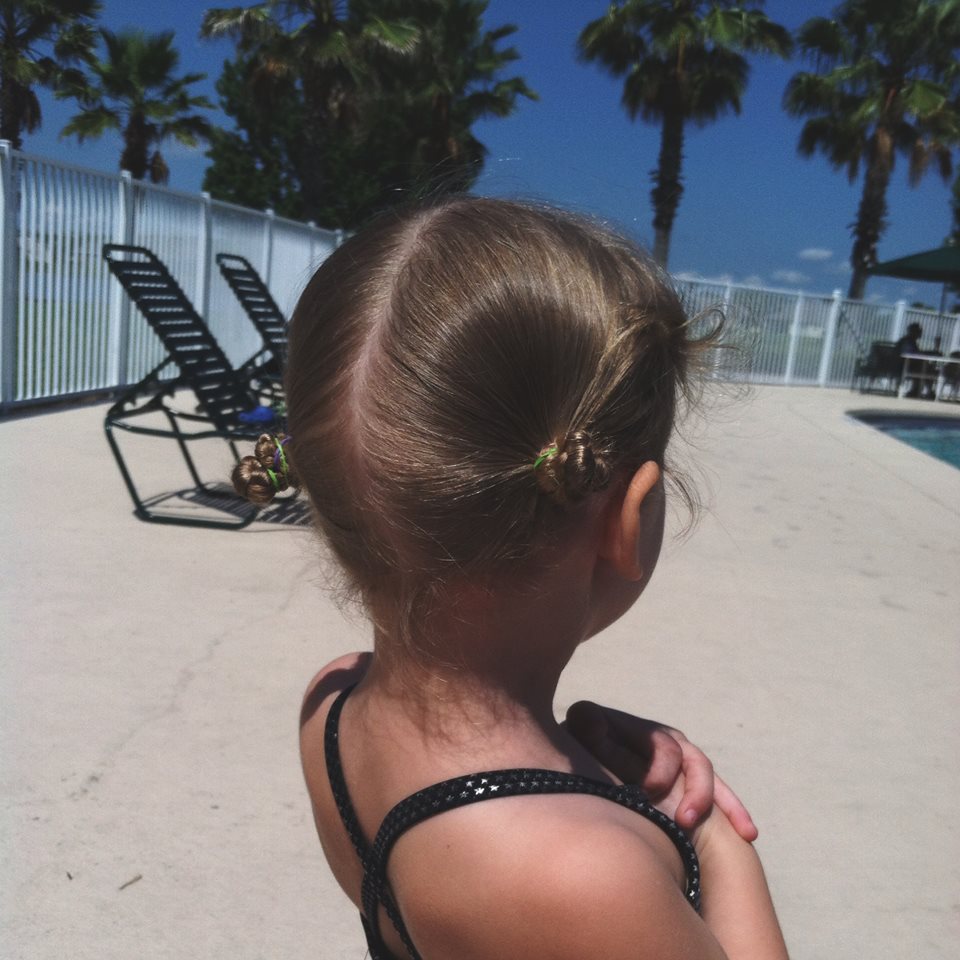
Aveline is in swim class now. This means, for 30 minutes every other day, I sit on a plastic chair pool-side,  and sweat buckets of water. It still a mystery to me how a human body physically can produce beads of sweat when the air around said body is already 100% saturated with water. Given the excessive humidity, it’s something of a physiological miracle. I’m not to dangle any appendages in the pool, because I’m not a resident of Exclusive Subdivision, and therefore unclean. So, I sit, sweat, and squint in the sun’s general direction, trying to suppress my motherly instincts and my own fear of treading water while Aveline sinks like a rock and the teacher (bless her heart) patiently shows her again how to do All the Things You’re Supposed to do to Avoid Looking Like a Penguin Attempting to Dog Paddle.

I live in the same zip code as Exclusive Subdivision. Well, it’s not actually called Exclusive Subdivision. People around here call it Patriotic Eagle Hawk-Birds who Invisibly yet Condescendingly Guard the Gate. It’s about 2 blocks from Lakes of the Large Stoic Aquatic Bird, next to Excellence in Everything School, which is just across the boulevard from where I live, Grassy Plains of the Imaginary National Monument (press two for English).

Neighborhoods here are funny. Even at the public parks, the official man on the golf cart can kick you out if you don’t live nearby. No, wait. That statement might be confused with something that actually makes a modicum of sense. The official man on the golf cart can kick you out if you’re not carrying a paper card, issued by the community office, which duplicates the address already printed on your driver’s license. These fanc-eh paper cards have a clip-art image of a crested tropical bird, and are only available at the town hall and the grocery store, next to the cigarettes and the whooping cough vaccines.

This spring, when I tried to sign Aveline up for Pee-Wee-Super-Tiny-Bordering-on-Ridiculous Soccer  (the soccer balls used vary between the size of large spring peas and large tomatoes), the soccer organization told me they weren’t permitted to run a soccer team in my neighborhood. The neighborhood association was concerned, they said. Kids without clip-art cards might try to join.

I’ve managed to live here for a few years now without getting a biodegradable ID card, but I do kind of have to duck and run whenever the official man on the golf cart starts trawdling* in my direction. [*not actually a word.]

The ironic thing is, this community isn’t actually high-brow. (I say this with a smidge of authority, since I’ve lived in approximately 4,028 different neighborhoods in my three decades on earth.) In fact, the newspapers here have been buzzing about the latest terror sweeping the streets: Trader Joe’s is coming to town. Being a Californian and interested in such things, I tried reading the news stories about the impending Grand Opening this month. I only got as far as (and I quote), “it’s a hellscape of scarf-wrapped hipsters.”

Apparently nothing strikes fear into the hearts of Patriotic Eagle Hawk-Birds who Invisibly yet Condescendingly Guard the Gate residents like chocolate-covered almonds and seaweed snacks.

Well, I know what I’m noshing on during Aveline’s next swim class.

I’ll leave the scarf at home, though.

Life in Photos, Little Style, Poetry & Words

LIFE IN PHOTOS :: June is always full of hope

Tropical Blooms, Sidewalks of June Tropical Blooms, Sidewalks of JuneTropical Blooms, Sidewalks of June Tropical Blooms, Sidewalks of June Tropical Blooms, Sidewalks of JuneTropical Blooms, Sidewalks of June Tropical Blooms, Sidewalks of June

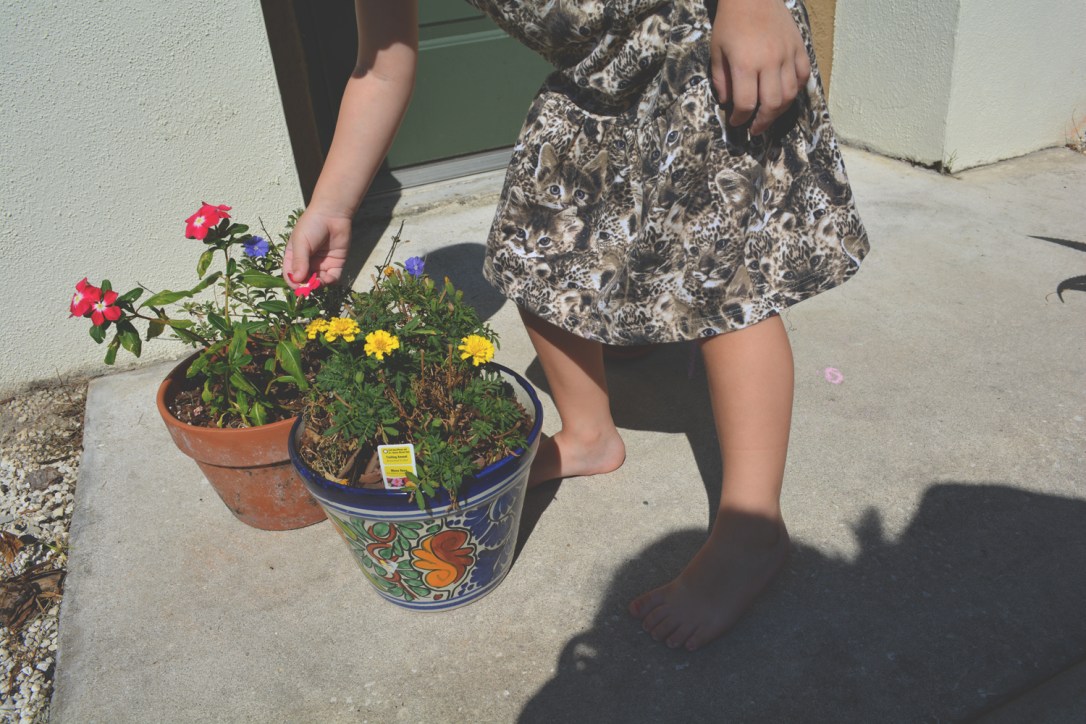
More so than January, June always seems poetic, young, full of promise. Even in the tropics, where there is no line of demarcation between winter and spring, between brown and green, between cold and warm — even here, June is full of hope. I turn the calendar page, and I hear it sing.

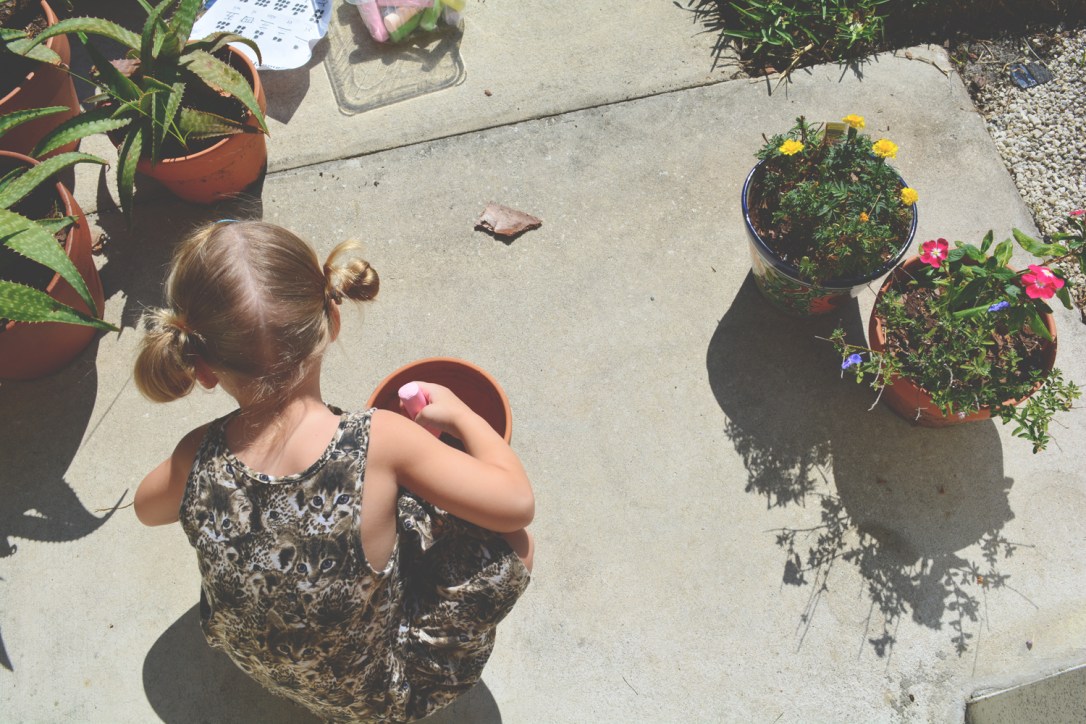
“Did it grow flowers yet? Did it grow flowers?” she asks of crumbling earth and tiny seeds and an old clay pot.

“No”, I tell her. “Not yet.”

But maybe this will be the year.

Poetry & Words

POETRY & WORDS :: Writing Every Morning

An Exercise in Writing Daily“It is by sitting down every morning to write that one becomes a writer,” says Gerald Brenan. “Those who do not do this, remain amateurs.”

I do not want to remain an amateur.

And so, this ordinary morning, with my bowl of ordinary cereal, with the sounds of an ordinary washing machine swish-swishing in the background, I sit down to write.

I do not have hours to type, I do not have hours to think. I do not have a quiet room and an empty day holding nothing but blank pages and shifting letters. Instead, I have the luxury of a room bursting with life, bursting with shouts and squeals and sliding-off-the-couch thumps. I have a morning with coffee and a three-year-old, the latter holding more energy than the former promises.

And so, I write.

And I walk out into the heat, into the sweltering summer, toward my wild-child’s first swimming class, and into this new habit of daily writing.

We can both try something new.

Poetry & Words, Theology

Sojourning is not a rhythm

IMG_4920 IMG_4902 IMG_4853

The words get lost in the days, lost in the shuffle between high tide and low tide — the choreographed swap of sand and sea — lost in the couch cushions, like copper coins, lost in the fray, lost in the routine between breakfast and sunset.

This, of course, is exactly when I should be writing. Words are spun from the gossamer threads which wrap around our days. I can see them, glinting, drenched from the downpour, drenched from the puddles, drenched from the spray.

“You write while you are alive”, Anaïs Nin said. “You do not preserve them [living moments] in alcohol until the moment you are ready to write about them.”

And so, alive, I write.

We stick pins in a map and wonder which one will hold. We squint at the horizon and see mountains through the mirage, and yet, the pillar stands still. The life of a sojourner is not a rhythm of motion and stillness, like the poets would have you believe. Sometimes, there is no rhythm. Sometimes it is abrupt, sometimes it is whiplash, sometimes it is an awkward slow dance, a holding pattern at best. Sometimes, you fold up your belongings into a square, and load the truck, and don’t look back when every inch of you longs to cling to the roots you tried to push into the broken ground. But most of the time, you stand.

You stand even when your feet so dearly ache to run.

Adoption, Humanitarian, Poetry & Words, Theology

I was a stranger & you invited me in

Image Credit: LifeSong for Orphans - Zambia Children's Choir / Celebrate Life Concert Tour
Image Credit: LifeSong for Orphans – Zambia Children’s Choir / Celebrate Life Concert Tour

Last night, I sat in a church and listened to Zambian children sing. And I heard something I’ve never heard before. No, not the sound of a drum sans drumsticks, not the sound of the soaring notes. 

Actually, it wasn’t a song at all.

Each of the kids — students at the Lifesong for Orphans school in Zambia — shared their favorite school subjects, dreams, and favorite passages of Scripture. It was an endearingly real moment — stuttering, laughter, forgetting words. One girl recited Psalm 23 from beginning to end, another quoted Romans.

But then it was the smallest boy’s turn to speak. And he leaned into to the microphone and looked into the crowd. “My favorite verse is Matthew 35 verse 25”, he said in halting English. “For I was hungry and you gave me something to eat, I was thirsty and you gave me something to drink, I was a stranger and you invited me in.”

Oh, my heart!

It’s one of those verses we’ve read a hundred times, isn’t it? But honestly? When was the last time you heard a friend say it was their favorite verse? It’s a passage we’re familiar with, but not a passage we’re accustomed to seeing highlighted and memorized and repeated and claimed as a personal promise and emblazoned on t-shirts and bookmarks and greeting cards.

But this is Jesus. This is real. He’s among us — feeding, loving, caring, doing.

Sometimes, I think we lose that connection between Jesus-the-Ethereal-Being and Jesus-the-Man. I think we lose the connection between hypothetical love and practical, get-your-hands-dirty, work-hard love. We over-spiritualize it. We complicate it and organize it and delegate it and analyze it and create ministries for it and philosophize about it and invent words about it.

But it was a real, I’m-right-there-with-you, here-is-a-meal, here-is-a-bed  kind of love that spoke to this boy’s heart.

It’s what Jesus’ love,
made human
and tangible
and touchable
and present, looks like.

And I never want to forget it.

“Sometimes the best way to bring good news to the poor is to bring actual good news to the poor. It appears a good way to bring relief to the oppressed is to bring real relief to the oppressed. It’s almost like Jesus meant what He said. When you’re desperate, usually the best news you can receive is food, water, shelter. These provisions communicate God’s presence infinitely more than a tract or Christian performance in the local park. They convey, ‘God loves you so dearly, He sent people to your rescue.'” -Jen Hatmaker

Life in Photos, Poetry & Words, Theology

After the Deluge

30 April 2014- Daydreaming Afternoon Rain

Monday’s post about choosing joy in the rain was barely posted when I had the opportunity to live it. That’s the way it works, isn’t it? It’s like telling God you’d like to be a more patient person — and then ::wham!:: many opportunities to practice patience appear before your eyes.

April went out with a monsoon, inside and outside. Outside, a diluvial sheet of water bent and twisted and contorted, darkening the sky, punctuated with electric bursts of thunder. Inside, an email quietly said no to something we all had hoped for.

Inside, outside, inside, outside.

It wasn’t until after the Flood that hope arrived. It wasn’t until everything drowned and the rains stopped and the earth heaved under the weight of the water that the rainbow appeared. It wasn’t until then that the olive branch soared across the horizon and into view.

“Now let the music keep
our spirits high
And let the buildings keep
our children dry
Let creation reveal its secrets
by and by, by and by
When the light that’s lost within us
reaches the sky

…And when the sand was gone
and the time arrived…
And in attempts to understand a thing
so simple and so huge
believed that they were meant to live
after the deluge.
” -Jackson Browne