Poetry & Words, Theology

A Secret about Community: Finding Worship and Purpose in the Mundane

A Secret about Community: Finding Purpose and Worship in the Mundane | Oaxacaborn blog

It’s autumn, and I think it must be conference  season, too.  Everywhere I turn, the internet is awash with experts converging into a single wooded area or brightly-lit urban spot on the map, reciting advice, organizing workshops, writing blog posts, handing out business cards and reminding everyone of the importance of taking part in community. In other words, #community is trending.

And sometimes, this can feel lonely.

But I don’t think a weekend retreat is the only place you can grab a piece of community. I don’t think you can sell tickets for it, and then proclaim it sold-out. I don’t think our God-given longing for communion and community can be solved as easily as all that.

And this is good news for you, dear reader, you precious soul who feels left out, you who are faithfully toiling away at home or at a desk. It is good news for you who are living your life with your little family, far away from extended family; good news for you who feel alone, you who feel like you’re not a part of something special, you who feel the cries of the baby and the husband’s expectation for dinner and the demands of the children and the endless mundanity of life are keeping the ingredients for community just out of reach.

But the ingredients are not out of reach.

They are in front of you. They are front of me.

They are wherever two or three are gathered. [1]

I think sometimes in our cycle of the mundane we think we can somehow capture community and rest in the quiet halls of a monastery, where the only sound is the scratch of a quill against vellum. I think sometimes in the middle of arguing with our children over lunch choices we think we can somehow capture community and devotion in the orderly schedule of an Amish farm.  I think sometime we think we can somehow capture community and service in being half-way around the world, feeding the poor. But this is an incorrect perspective. We are missing something crucial. We are missing the reality that for the monastic scribe, the scratching quill and endlessly copied words are his mundanity.  For the Amish mother, hanging laundry on an outside clothesline is her mundanity. For the overseas worker, stirring up another huge pot of soup is her mundanity.

It’s not the task itself that’s categorized as mundane or profound.

It’s our attitude toward it.

Once we realize this, we have a choice. We can either meet God in these ordinary tasks, or we can see our everyday responsibilities as an obstacle keeping us from true devotion.

Tozer wrote much of this secular-sacred divide, of our human tendency to see “dull and prosaic duties” as keeping us from the really important and holy tasks. He writes, “It is not what a man does that determines whether his work is sacred or secular, it is why he does it. The motive is everything. Let a man sanctify the Lord God in his heart and he can thereafter do no common act.”

He can thereafter do no common act! What a life-giving, joy-inducing truth.

Maybe you’re in a place where your children’s needs keep you from joining the latest and greatest retreat or the urgently-needed humanitarian service trip. Maybe it’s finances. Maybe it’s geography. Maybe it’s all of the above. Maybe you feel like you’re swallowed up in ordinary tasks while everyone else is off doing extraordinary things for God and for each other.

Oh, friend. Let us see these chores and responsibilities not as hindrances, but as prayers. Let our ordinary lives be our worship.

Next time everyone is off on a women’s retreat, and you are peeling potatoes — my friend, that is your offering. Next time all your Instagram friends are posting selfies with conference speakers and authors while you are folding the 37 pairs of underwear your toddler wore this week — my friend, that is your offering.

And it is no less precious.

All of your least favorite chores, all of your most exhausting battles, all your lean years where friends seem few, all the darkest of dark days — these all can be your offering.  These can be be my offering. These can be our offerings. In the times when it is impossible for you to join the missionaries and the speakers and the authors and the experts and everyone else who seems to be holding out a neatly-packaged key to community, remember; you are not alone.

And can I tell you a quietly-kept secret about community? I think it’s often smaller and quieter than we realize. I think it’s already happening when two or three are gathered. [1] I think it’s less advertised, more humble, forged often more in the lonely fires of trial than in the spotlights of popularity. I think you — and I — already maybe hold all the ingredients for it.  We just might have to do a little digging, a little unearthing, a little bit of getting our hands dirty, a little bit of turning our eyes back home after longingly gazing over the fence. And when we find those pieces, we’ve found great jewels, priceless treasures — here, now, in whatever quiet little place God has carved out for us.

It's not the task itself that's categorized as mundane or profound. It's our attitude toward it. Once we realize this, we have a choice. We can either meet God in theseΒ ordinary tasks, or we can see our everyday responsibilities as obstacles keeping us from true devotion.

Homeschooling, Life in Photos, Poetry & Words

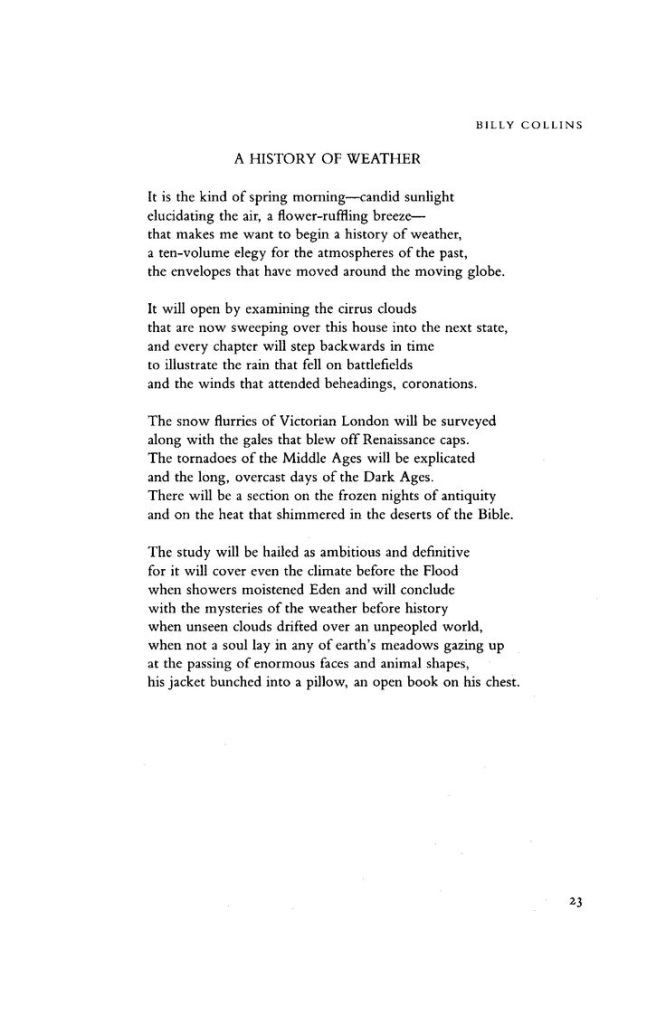
POETRY & WORDS :: A History of Weather

Life in Photos :: Sonlight Science A :: Biology, Botany and Physics :: Homeschooling on the Oaxacaborn blog

Life in Photos :: Sonlight Science A :: Biology, Botany and Physics :: Homeschooling on the Oaxacaborn blog

Life in Photos :: Sonlight Science A :: Biology, Botany and Physics :: Homeschooling on the Oaxacaborn blog

Life in Photos :: Sonlight Science A :: Biology, Botany and Physics :: Homeschooling on the Oaxacaborn blog

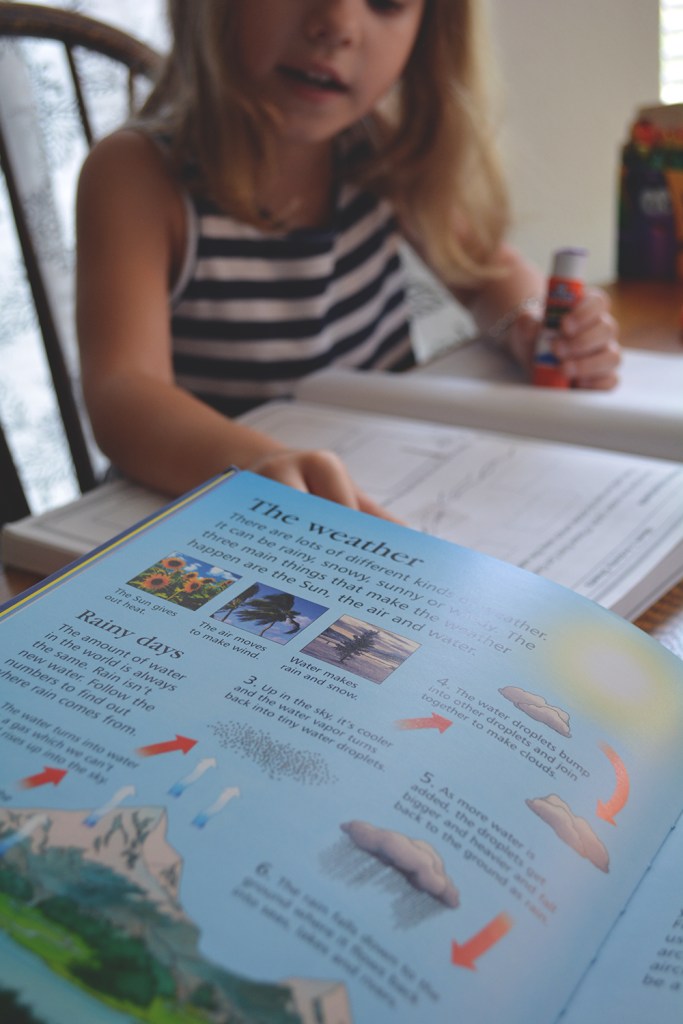
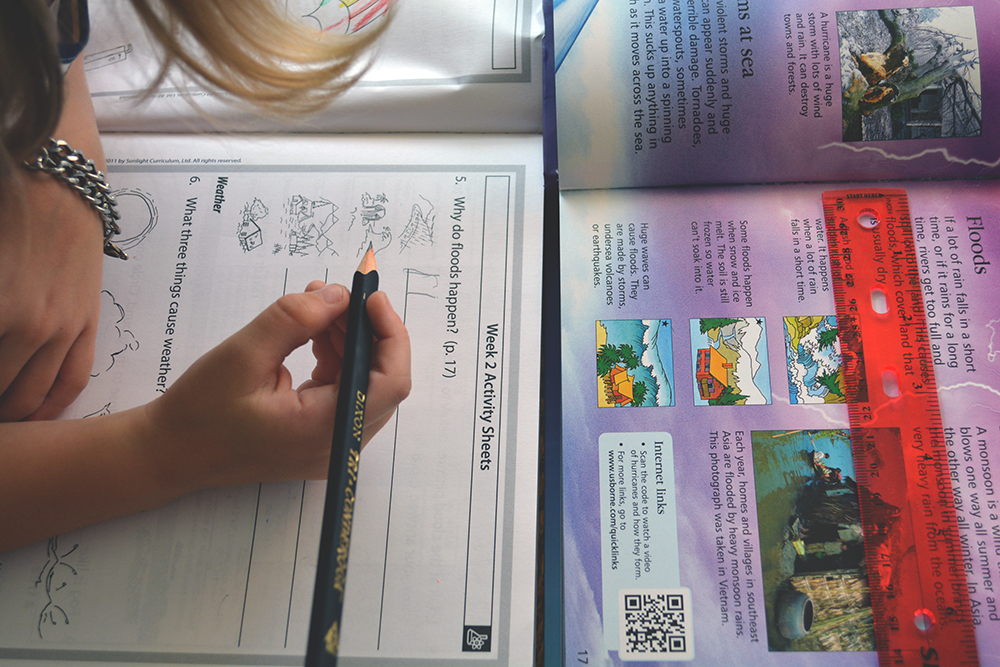
We spend the mornings together, side by side, she a constant inquisitive spirit, eager, joyful, full of wonder. We sit at the table together, the sun casting shadows through the curtains and across the stacks of books. Sometimes sheΒ slowly exclaims “Wow!” and sometimes she shrieks “Tell me more about it!” But always she wants to know more.

I read, she listens. She reads, I listen.

Civilizations.
Atoms.
Voyages and discoveries, Β light and darkness.

We turn the pages together. We marvel at the lines in the paintings of the mastersΒ together. Β We look up into the vast distance of the galaxies together. Β We talk of good and evil. We talk of beauty. She asks for more about Moses, more about Joshua, more about Sarah, more about these men and women who walked before. Her voice recites truths, her fingers are just beginning to dance across the piano keys, her little self is flying through books like there is no end to adventure.

Because there is no end to adventure.

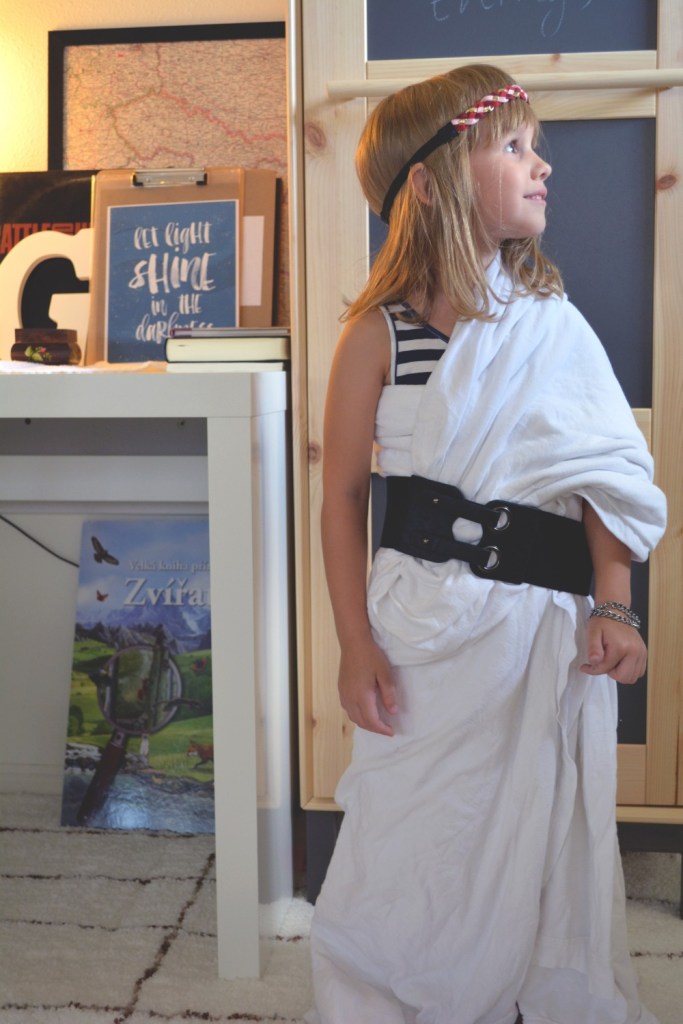
Life in Photos :: Sonlight Core A :: An Intro to World Cultures :: Ancient Romans :: Homeschooling on the Oaxacaborn blog

billy_collins_history_of_weather

Life in Photos :: Sonlight Science A :: Biology, Botany and Physics :: Homeschooling on the Oaxacaborn blog


Poetry & Words, Theology

Yes, she is my only one

Yes, she's my only one -  A Post on the Oaxacaborn blog

As much as I share here in this public space, there’s much, much more IΒ don’t talk about.

For a long time, Aveline was young enoughΒ that I didn’t have to talk about it.Β For a long time, her age served as some sort of barrier to postpone the questions and contain the curiosity. But as Aveline has gotten older, peoples’Β curiosityΒ isΒ stretched thinner and thinner and thinner.Β The manners are starting to fade, and the collectiveΒ curiosity is like a wall of water behind a crumbling dam.

On any given dayΒ there are fewer and fewer people left who consider the when? and the why? behind herΒ sibling-less status as private information.

I have an only child.

I’m homeschooling an onlyΒ child.

And I’veΒ never been more acutely aware of the stigma in those sentences, or how many sets of neatly-boxed little assumptions exist about this fact.

I’m not here to defend anything.

I’m not here to explain a choice. My redemption lies in my Jesus, not in the number of people in my family.

Instead, I’m here to gently remind you that before you judge someone’s choice, remember that we humans don’t even always hold the power of a choice.

I’m here to remind the curious questioners that in almost every situation under the sun, there’s more. Β More beneath the surface. More desperate clinging to hope where you think there’s just indifferent apathy. There’s more to a family than the sum of their numbers. There may be sorrowΒ behind the smile. There may be silent prayersΒ that go unseen. There’s always more to the story than you’ve heard.

What you don’t know, is that my daughter Aveline Alenka was a miracle. Her name, Aveline, from theΒ old IrishΒ Aibhilin,Β isn’t just a name. It means —

l o n g e d Β  f o r
w i s h e d Β  f o r
l o n g – a w a i t e d Β  c h i l dΒ 

— and every ounce of that is true.

She is a miracle. She is, like her Slovene middle name Alenka, “a radiant light”.

Yes, she's my only one -  A Post on the Oaxacaborn blog

See, whatΒ you don’t know, is that when I was in my early twenties, my hormonesΒ were operatingΒ at a menopausal level. What you don’t know, is that I was looked right in the eye and told my body was the functional equivalent of a sixty-year-old woman.

You don’t know this, because I don’t talk about this.

When my long-awaited child was born, it was four weeks before I could cross the room without holding onto the walls.

You don’t know this, because I don’t talk about this.

When she was six weeks old,Β I was back in the emergency room, with a group of doctors huddled around me while she was asleep on my chest and I was in agony.

You don’t know this, because I don’t talk about this.

When she was two years old, I was sitting in a specialist’s office discussing the ongoing pain from nerve damage.

You don’t know this, because I don’t talk about this.

I’m not telling you now because it’s an easy or a comfortable thing to talk about (it’s not). Β I don’t tell you this because I think I am particularly tragic, or unusual (it’s not), or because I think my story is deserving of either pity or applause (it isn’t). Β And I’m certainlyΒ not writing this because I think it’s good blog fodder (it definitely isn’t).

I’m not even sharing this now because of me.

I’m sharing this because there’s more to all of our stories.Β There’s more to what we say and what we do and who we are.Β There’s more to all of us than what is visible toΒ supermarket strangers and inquisitiveΒ acquaintances.

I’m not writing this about me. I’m really not even writing this about only children.

I’m writing this for every single person God has ever created, from every walk of life and every nation and every socioeconomic status.Β I’m writing this for every single person you come into contact with.

I’m writing this because of one truth, one constant, one vitally important principle: everyone has a story.Β Sometimes that story is silent, and sometimes it’s spoken.Β Sometimes you can see a peek of it, and sometimes it’s all hidden.Β But there’s one thing that never changes…

…there’sΒ always more to the story than you can see.

Yes, she's my only one -  A Post on the Oaxacaborn blog

The world is full of love that goes unspoken. It doesn’t mean that it is felt less deeply or that separation leaves a cleaner wound. Its beauty…and its pain are in its silence. Some of us are not blessed with revelations or confessions. Love cannot be spoken, only shown.” -Call the Midwife

Homeschooling, Poetry & Words

POETRY & WORDS :: Homeschooling Kindergarten

Velveteen_May_Aveline_ALE_2

It’s grown on me, this place, this place of swamps and heavy air and tangled underbrush rustling with the sound of lizards, great and small. Oh, the monsoons and the swirling hurricanes on either side of this peninsula don’t do anything for me. And with all the orange-beaked egrets in the world are nothing to the beauty that is theΒ thirsty earth, the hills of golden grasses, andΒ the twisted, reachingΒ oaks of Sacramento Valley. There’sΒ thick damp mist, here, that rests solidly and perpetually across the marsh; but there is nothing in the low cloudsΒ that can compare to theΒ distinctiveΒ September aroma of scorched earth and wildfire, and nothing in the flatlands that compare to the piles upon piles of tall clouds stacking up against the Sierra ridge, acrossΒ the horizon. One man’s hazard is another man’s beauty.Β Tectonic plates shift and the earth shakes on one edge of the world, and the low water tables rises and the earth sinks on the other edge of the world. There is no place safe.

But it’s grown on me, this place.

This place with all its oddities and all its weird news headlines and its slow, endless stares.

Billy CollinsΒ knew about the stares. They’re ubiquitous here. Even the animals look, slowly,Β here in the place where there is “no more snow…no hexagrams of frost…no black sweater”, only “those birds with long white necks”, who “swivel their heads /Β to look at me as I walk past /Β as if they all knew my password /and the name of the city where I was born.”[1]

Velveteen_May_Aveline_ALE_4

But, I’m carving out my place here. This little one is carving out her place here. This little one who’s been raised here — this little one who thinks 72 degrees is winter, this little flatlander who thinks overpasses are such freakishly huge mountains, they necessitate shrieking each time we drive across — she’s been helping me see my place here.

Maybe I’ve shrieked a little, too, as I’ve metaphoricallyΒ driven over high areas that seemed scary to me, areas where it was hard to keep my focus on the middle of the road and not at the unknownΒ droppingΒ off at either side. Just over a year ago, we suddenly started schoolΒ because my three-year-old wouldn’t stop begging for “more worksheets, p’ease!” and I had no idea where it was gonna go. I wasn’t planning on a particularΒ homeschool path, really. I just waded in to the waters, wishing they were clear, wishing I could see the bottom, wanting to turn back and sit with my feetΒ dug into the shore, but knowing my little one was literally begging for “more school, p’ease”.

But now, a year later, we’re all in.

This little one justΒ finished aΒ full year of once-a-week Chinese language school (andΒ Chinese folk dance). And she’s almost done with her first semester of Yamaha piano and voice. She finished the stack of preschool books ages ago, learned to read Chinese first, then she learned to read English. Now, theΒ crazy kid is half-way through Kindergarten math, and just finished Kindergarten Science. She cried during Spring Break (“No school?!”) and cried when she found outΒ summerΒ meantΒ no school.Β 

But in Florida, she’s not legally old enough for Kindergarten.

I did hours of research, and toured the private Christian school near us anyway, to see what pre-kindergarten would offer. I wanted it to work; the teachers and administration tactfully told me it probably wouldn’t.

So, friends, we’re all in.Β We’re all in, despite all the experts sayingΒ it’s too early for formal academics.

We’veΒ grown into homeschooling, just like we’ve grown into seeing the beauty in the rain-soaked jungle around us. <3

Velveteen_May_Aveline_ALE_5

Aveline is wearing the Ale Dress in Earth Poplin from Velveteen

Poetry & Words, Theology

Because I Await Redemption

I write because I await redemption.Everyone has an opinion about blogging. Thirteen years ago, when I started writing online — we called it web journaling then — people didn’t have as much of an opinion.
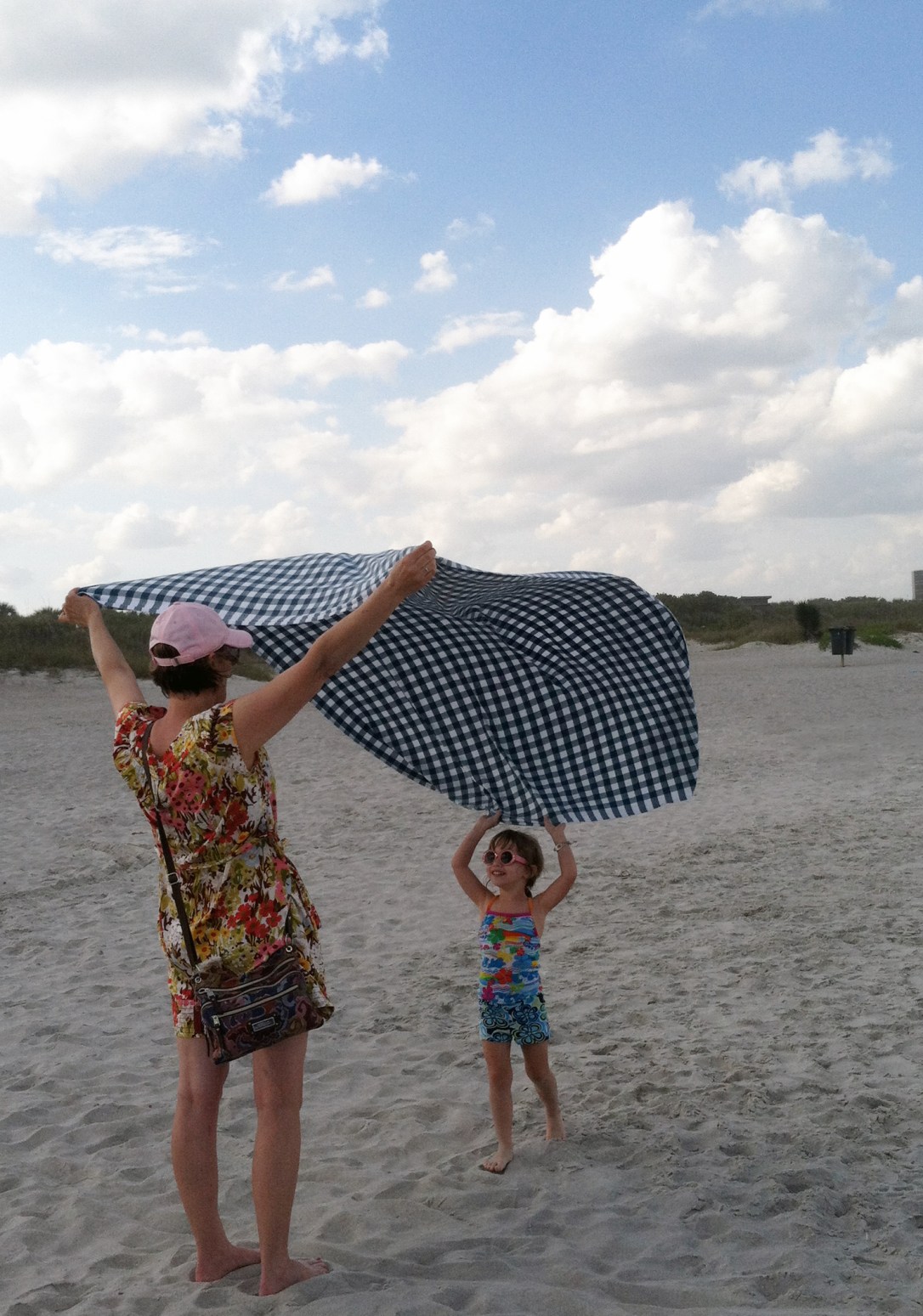
But now, everyone is an expert: Write more about struggles, so you can be transparent. Don’t write too much about struggles, so you won’t be depressing. Take more pictures of reality, so you don’t deceive your readers. Don’t take too many pictures of reality, because that’s just not artistic. Write more about the good, because you should be uplifting. Don’t write too much about the good, because that’s not reality.

If there’s one thing I’ve learned after thirteen years of blogging, is that I can’t please everyone. Actually, I can’t please very many people at all. And if I wrote these words in this little space to please people, what a sorry endeavor it would be.

Sometimes I write about beauty, and sometimes I write about brokenness.

Sometimes I write about hope, and sometimes I write about death.

Sometimes, I write about joy.

And sometimes, I write about all of those things — all together, all twisted up and tangled together — because really, isn’t that what life is? A bittersweet mixture of all that is good and all that is evil and all that is Hope and all that is Him and all that has been buried and planted and is yet to blossom, “pressed down, shaken together and running over” [1], awaitingΒ redemption?

I write because I await redemption.

I write because God gave us beauty. Sometimes that beauty is so searingly bright, we can’t evenΒ humanly handle the sheer weight of glory. Sometimes that beauty is a promise, seen only through a glass dimly [2], through clouded tears. But always, there is beauty, because always, God is in our midst.

β€œAnd that is enough to raise your thoughts to what may happen when the redeemed soul, beyond all hope and nearly beyond belief, learns at last that she has pleased Him whom she was created to please. There will be no room for vanity then. She will be free from the miserable illusion that it is her doing. With no taint of what we should now call self-approval she will most innocently rejoice in the thing that God has made her to be, and the moment which heals her old inferiority complex forever will also drown her pride… Perfect humility dispenses with modesty.” -C.S. Lewis

Poetry & Words, Theology

That’s the one thing you can’t do, when you’re a sojourner

The one thing you cant do when you're a sojourner (a post on #grief from the Oaxacaborn blog)

When you’re a sojourner, you miss milestones. You miss friends’ graduation open houses, you miss engagement parties, you miss their weddings. You see the highlights, but youΒ miss all theΒ late nights. You miss the unsung momentsΒ that expand gloriously to fill the spaces between each infrequent occasion we mark with a long distance Β text, or an even less-frequent card.

And then, as time passes, you start missing something else, too.

You miss the funerals.

Your friendΒ dies, and you can’t be there for the funeral.

Your friend’s mother dies, and you can’t be there for the funeral.

Your friend’sΒ baby dies, and you can’t be there for the funeral.

It is not true that distance makes the heart grow fonder. Distance actually makes the heart swell with grief, makes ones whole being ache deeply, wearily, at the realization that

you

can’t

be

there.

Distance Β means you can’t be there

to silently hold,

to cry alongside,

to weep together.

They tell you nothing is the best thing to say in the face of grief.

They don’t tell you how impossible it is to fill a blank card with mutual tears, fold it into a stiff envelope, and drop it down down down into the unknown darkness, where it will sail away, carried by unsuspecting hands, and finally land in a faraway box, alone and a bit worn around the edges.

They tell you just to be there.

And that’s the one thing you can’t do, when you’re a sojourner.

Poetry & Words, Theology

Sojourners in Borrowed Spaces

WEB_Sojourners_Borrowed_Spaces_Oaxacaborn_blog

The dehumidifier broke the other day, and with it went the off-kilter rattle, wheeze and hum to which I’d grown so accustomed. The new machine is better — gathers more of this peninsula’s ever-presentΒ moisture, runs more efficiently — but it has a quiet gentle hum I barely recognize. The old noise was the backdrop to months worth of midnights, and the new noise is almost unnerving in its calmness.

The house is that way right now too.

For the last week, the walls of this house held extra laughter, extra noise, extra people, and extra fun. Today, mom and dad are driving back through the Georgia rain, headingΒ up pastΒ Tennessee, beyondΒ Illinois, where they’ll slide into the snowy land of Minnesota, home — far away from here.

The house is quiet, and even the sun is subdued.

It’s hard to live far away. They’re not over the river and through the woods; they’re over dozens of rivers and through a thousand miles of woods, and it’s impossible to cross that distance asΒ quickly as a map can fold.

We’ve always been a little far-flung, my family, when it comes to the places we pound our tent stakes. We’ve always been sojourners, the kind of people who put down roots everywhere. We’ve always been this way, since I was a little girl in my first family and now as a wife and mother in my second family. In English, the word “sojourner” means “those who stay somewhere temporarily”; but in Chinese, the word “sojourn” (ε―„ε±…, jΓ¬ jΕ«) translates as the idea of living away from home.

And that’s the kind of people we are. We’re not transient, fleeting travelers, floating hither and thither — no.Β We’re the kind of people who find a place, hammer in the tent stakes with wild abandon, and pour our hearts out onto whatever unfamiliar soil is beneath our feet.Β 

In Chinese, the hermit crab isn’t called a hermit at all. In Chinese, it’sΒ theΒ sojourner crabΒ (ε―„ε±…θŸΉ, jΓ¬ jΕ« xiΓ¨) — the sojourner! This hasΒ nothing at all to do with hiding or burrowing away from everything, but everything to do withΒ seeing the empty shell in front of you, and being all in when it comes to making this unfamiliar borrowed place a home.

This unfamiliar soilΒ feels like a borrowed place, sometimes. But I’m all in.

I’m all in, filling all the corners and fully living, until the time comes to seize another borrowed shell on some other shore.

Inspiration, Life in Photos, Poetry & Words, Theology

Let’s Be the Uncommon Ones

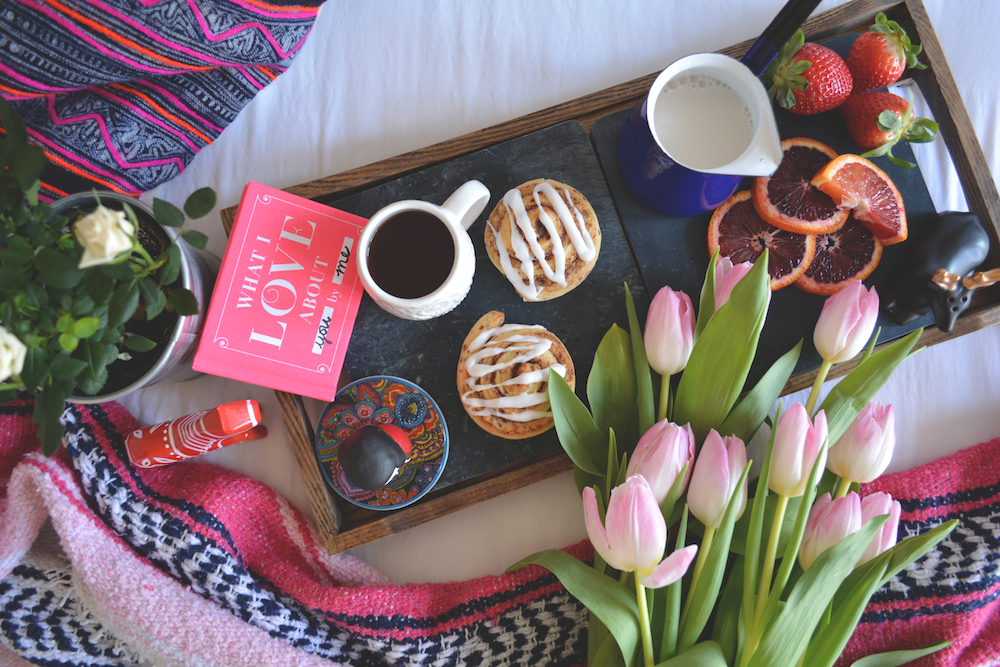
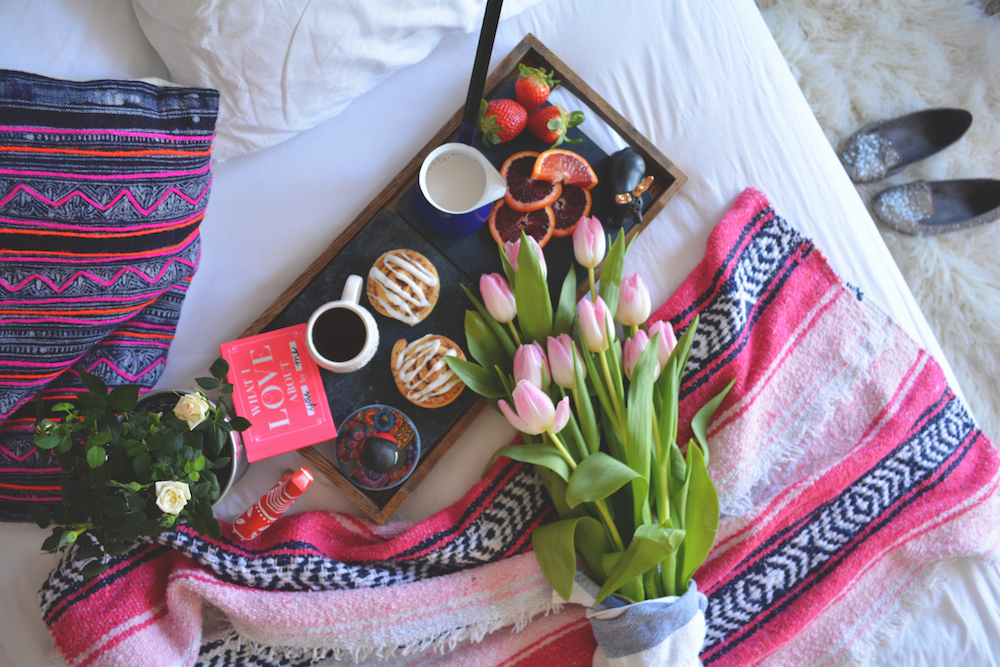
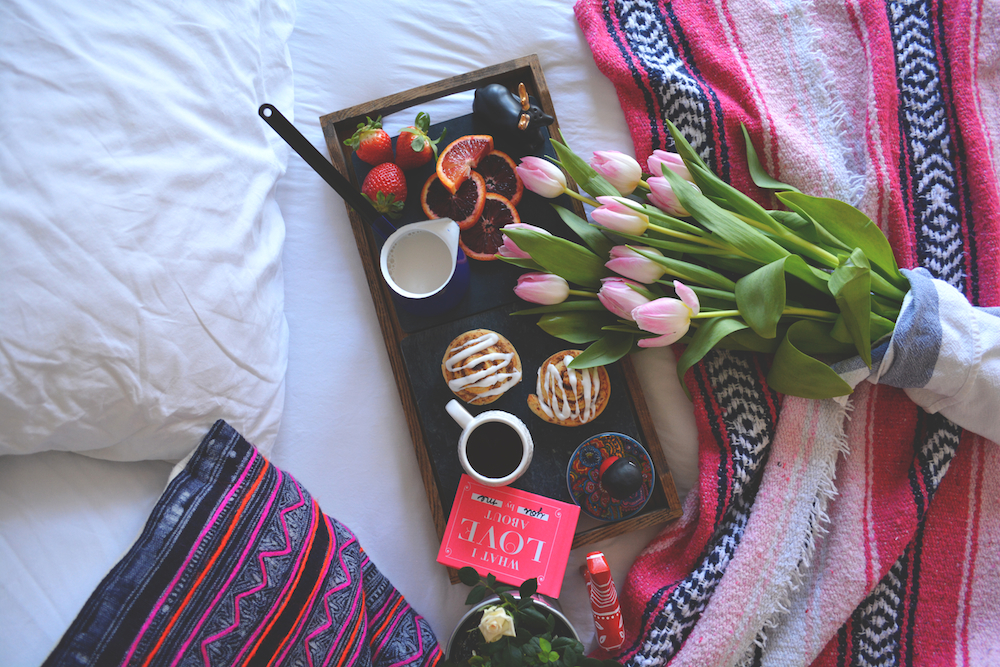
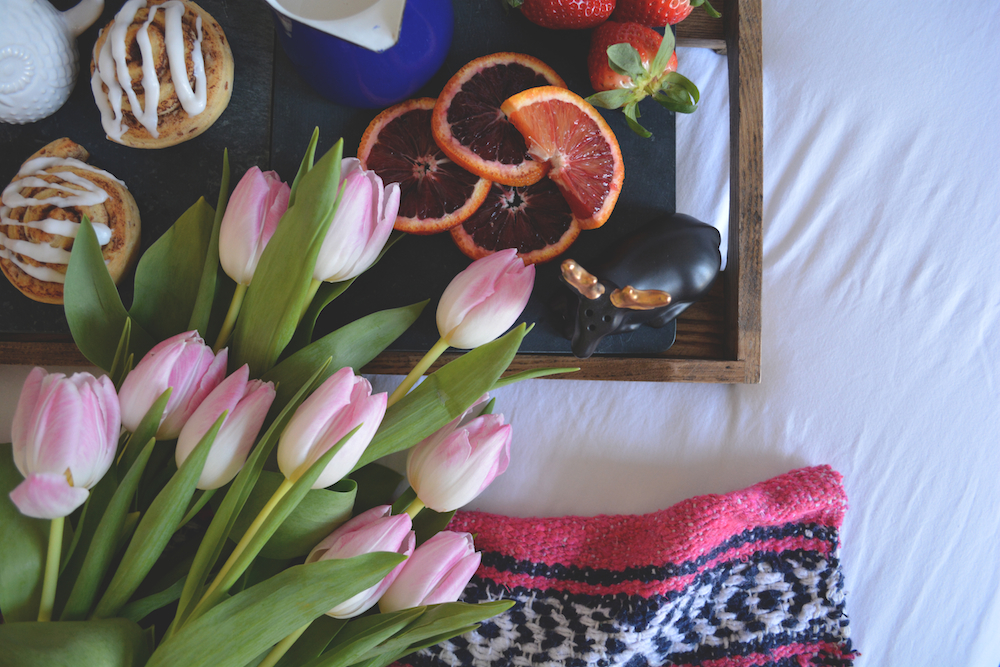
Gina Munsey | Oaxacaborn blog for Uncommon Goods | Fresh Tulips, Mexican Blanket, What I Love About You & Soapstone Platter

I’m hearing it more and more lately, this idea that repeatedly sharing beautiful corners of your life is deceptive, because the viewer isn’t able see what’s hidden around the edges — this idea that the sharer, by selective portrayal, is perpetuating a view of reality that isn’t representative of the human condition.

Gina Munsey | Oaxacaborn blog for Uncommon Goods | Fresh Tulips, Mexican Blanket, What I Love About You & Soapstone Platter

I don’t think I buy it. I think instead, our preoccupation with beauty is precisely because of our human condition.  It is because we are broken that we long for wholeness. It is because of the darkness that we crave the light. It is because of the chaos that we ache for order. It is because of life’s temporal nature and inevitable death that we rejoice when new life comes into the world.

Gina Munsey | Oaxacaborn blog for Uncommon Goods | Fresh Tulips, Mexican Blanket, What I Love About You & Soapstone Platter

I hear women talking, in that sometimes-cruel way women do, mocking the writer whose blog is filled with anecdotes of small joys, mocking the photographer who sees the one sparkling thing while rust and dust ravage on. “It is not realistic,” they chide. “It doesn’t show the whole picture.” “No one really lives like that,” they laugh. “You should see my house.”

But I don’t want to join them.

I’m not an optimist by any stretch of the imagination and yet — I don’t want to join them. Has the world really become so bleak that we need to mock the light?  Has the world really become so dark that we now say the one who points the way to beauty is shallow?

I don’t think that’s the way to live this “one wild and beautiful life”. [1]

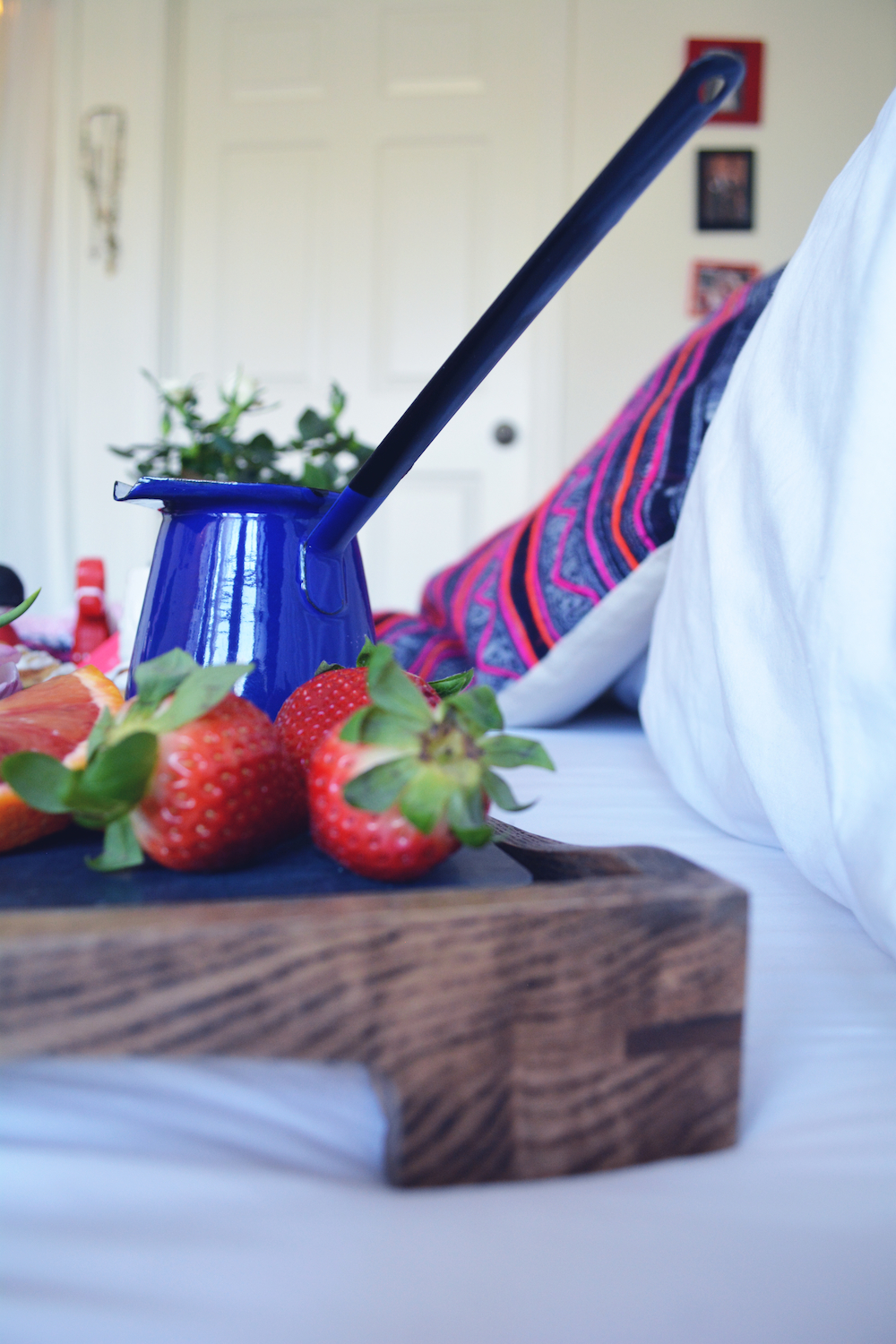
Gina Munsey | Oaxacaborn blog for Uncommon Goods | Enamelware Ladle from Yugoslavia

Gina Munsey | Oaxacaborn blog for Uncommon Goods | Fresh Tulips, Mexican Blanket, What I Love About You & Soapstone Platter

Instead, let’s set out to see beauty. The kitchen sink may be filled with dishes, but the sun is catching the single blossom on the cactus just so, and let’s celebrate that. The corner chair may be heaped with clean laundry, but the wind is pulling at the curtains just the tiniest bit, and the just-budding branches tap against the window with every ebb and flow of the breeze, so let’s celebrate that. Your child maybe screaming and you may be exhausted but just look! She’s alive and she’s miraculous, so let’s celebrate that. And even — oh especially! oh, give me strength!– in the face of death, we can’t erase it. There will still be piercingly bright sun and there will still be blueberry pancakes and the seasons will still change and time will still march on. We can’t reject it all.

It’s ok to see the beauty and the brokenness, side by side.

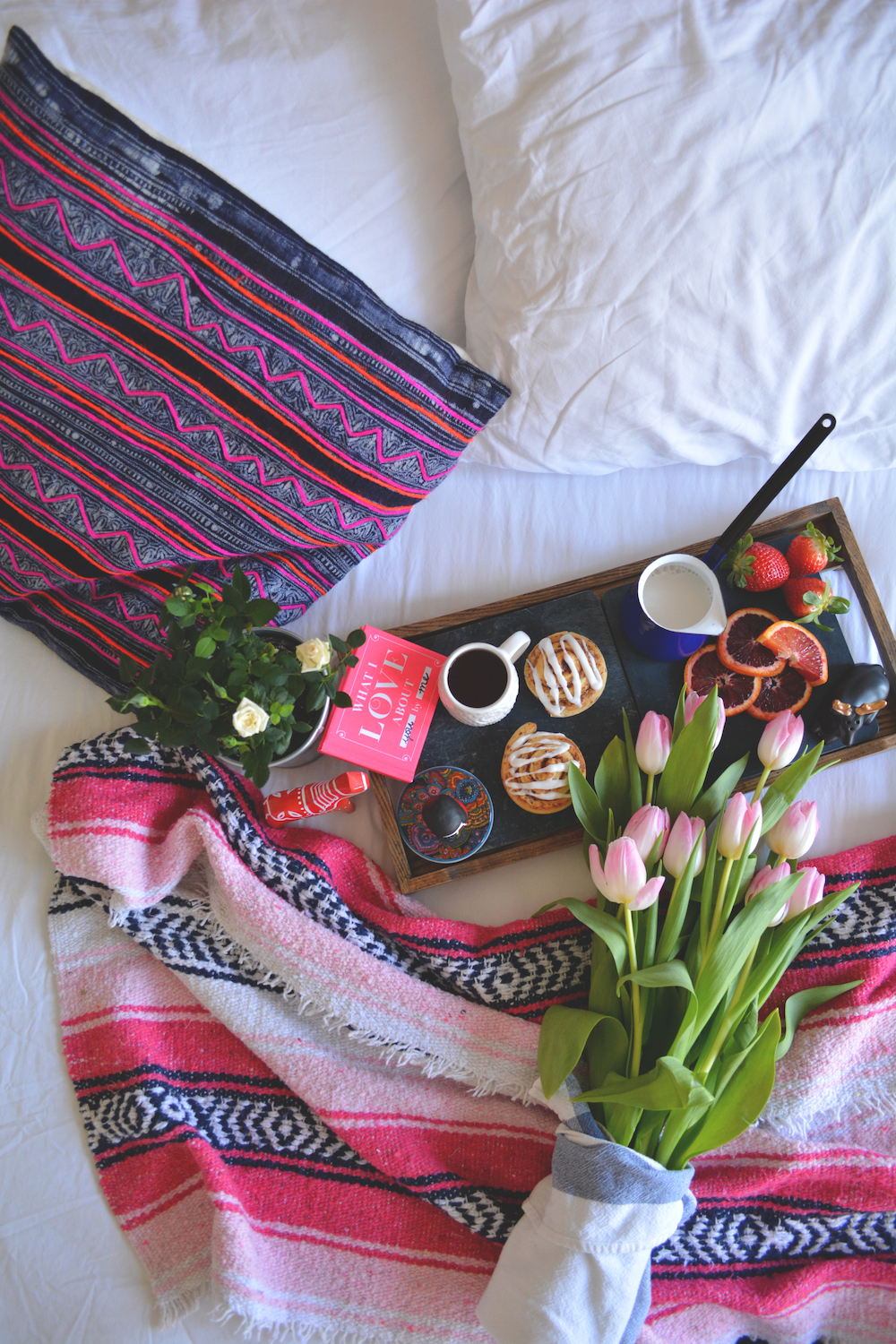
Let’s set out to create beauty. Eat on the living room rug with the nice dishes in the middle of the week — not because it’s been a good day, but because it was a bad day. Serve breakfast in bed even though your kids will definitely climb onto the tray and spill it all, and the people on Instagram might whisper, “No one actually does that.”

But that’s okay.

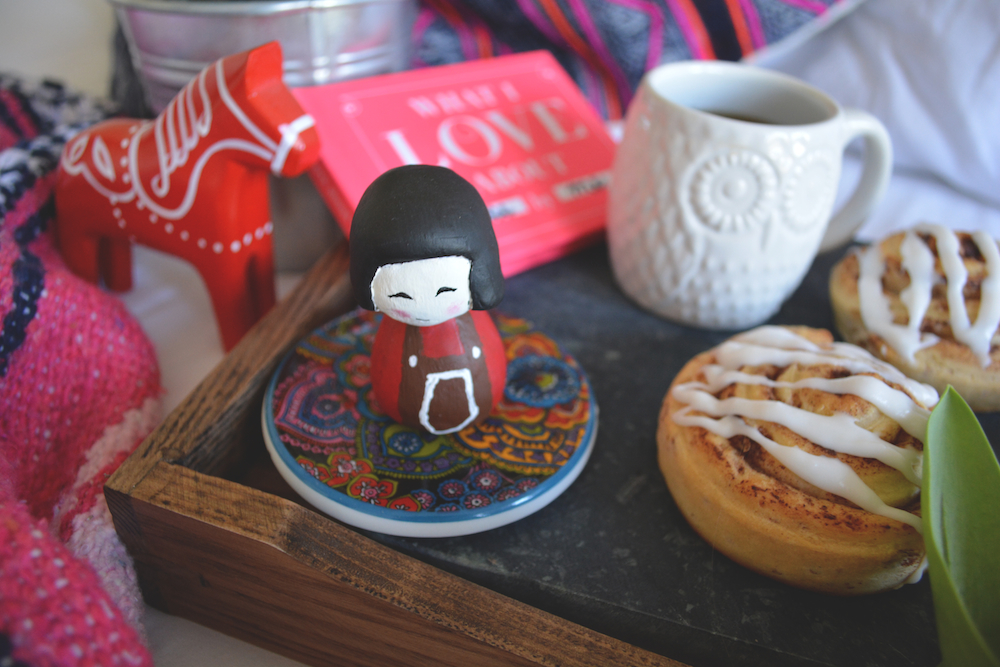
Gina Munsey | Oaxacaborn blog for Uncommon Goods | Kokeshi Ceramics, Dala Horse, What I love About You Book

Let’s be the ones who do the things no one else does.

Let’s be the wild ones. Let’s be the uncommon ones. Let’s be the ones who are a little bit of light, a little bit of crazy, the ones who aren’t afraid to shout “Glory!” at that one glowing cloud on the horizon when the rest of the world is fixated on the storm. <3

Gina Munsey | Oaxacaborn blog for Uncommon Goods | Fresh Tulips, Mexican Blanket, What I Love About You & Soapstone Platter

About Uncommon Goods :: Every purchase you make from Brooklyn-based Uncommon Goods supports one of four non-profit charities, meeting needs from early literacy to supporting survivors of war. The online marketplace is curated with creativity and individuality in mind, partnering with independent designers and artisans around the country to offer a huge range of handmade items, gifts, home goods and art, and other curiosities.

Unique gifts featured in these photographs include the handmade Hot and Cold Soapstone Serving Platter c/o Uncommon Goods [shop more gifts for women here] and the fill-in-the-blank What I Love About You journal c/o Uncommon Goods [shop personalized gifts here].

Gina Munsey | Oaxacaborn blog for Uncommon Goods | Fresh Tulips, Mexican Blanket, What I Love About You & Soapstone Platter

Additional Credits :: Flokati Sheepskin Rug: Shades of Light | Mexican Blanket: Thrifted | Hmong Textile Pillow: Boho Pillow on Etsy | Owl Mug: West Elm via Four Hands Creations on Etsy | Enamelware: Vintage, Made in Yugoslavia | Handmade Kokeshi Doll: See Through the Mist on Etsy | Stencil Art: 26:PM

Uncommon Goods | Website | Facebook | Instagram

Disclosure of Material Relationship: I received products from Uncommon Goods in exchange for publishing this post. I was not required to present or promote any specific products. All the photographs, opinions, and experiences shared here are in my own words and are my own honest evaluation. Please be assured, I only accept sponsorship opportunities for brands I personally use and/or would recommend to close friends and family, and I will always disclose any such relationships.