Homeschooling, Life in Photos, Poetry & Words

Books, Books, Books: the Evolution of the Oaxacaborn Blog

Books, Books Books: The Evolution of the Oaxacaborn blog

When I started blogging publicly — over at Xanga, fourteen years ago! — I was in college, and blogged too many song lyrics and homework details. Then over the years, I moved back and forth across the country, working at sheet metal factory, a juvenile detention center, and an IT department, and wrote about all the ups and downs. When I became a mother, I even went through a phase where I predictably blogged about cloth diapers (I am so sorry). I’ve written about death, beauty, brokenness, joy — and interior design. And you’ve likely noticed that in the last few months, I’ve written a few longer pieces about homeschooling.

My blogging “methodology”, if you can call it that, hardly follows all the blogging advice. It’s always just followed the seasons of my life. But that’s the beautiful thing about life, too — it’s not stagnant.  It moves like a current. It flows, it goes through seasons, through changeable states of being. Way down at the bottom of this blog, in the footer, Anaïs Nin reminds me, “Life is a process of becoming, a combination of states we have to go through. Where people fail is that they wish to elect a state and remain in it. This is a kind of death.”

Books, Books Books: The Evolution of the Oaxacaborn blog

I kind of feel like things are coming full circle for me, and it all has to do with books. As a girl, I devoured books, and read everything I could get my hands on. Now, it’s only April, and Aveline’s already read 130 books since the beginning of the year. So, you’ll probably be seeing a lot more posts about literature and children’s books, and more posts about homeschooling. (Although, this is no surprise if you follow me on Instagram @oaxacaborn). I have so many good books to share with you all, but I’ve been holding back, thinking for some reason that this isn’t the right place for it, and worried about losing followers. Well, that’s kind of ridiculous. Because when it comes right down to, perhaps, like Margaret Atwood said, “Perhaps, I write for no one. Perhaps for the same person children are writing for when they scrawl their names in the snow.”

I’m just thankful some of you keep following along as I scrawl in the snow.

Books, Books Books: The Evolution of the Oaxacaborn blog

To receive an update in your inbox each time I publish a post, click here.

Book Reviews, Curriculum Reviews, Homeschooling, Poetry & Words, Theology

‘Beautiful Feet Books’ History Review, and the Harm of Morality-Based Instruction

'Beautiful Feet Books' Review, and the Harm of Morality-Based Instruction

A lot of different books cross my desk, especially as I work on creating an early elementary reading schedule for U.S. History. When I first started to look into Beautiful Feet’s “Early American History For Primary Grades literature guide for grades K-3, I was intrigued. Once I sat down and actually read through it, though, I knew I wouldn’t be using it or incorporating the lessons into my history schedule.

If you’ve read this blog for any amount of time at all, you know I’m a Jesus-follower; and if you’re searching for reviews on Beautiful Feet curriculum, you likely know it’s purported to be a Christian curriculum.  I wouldn’t say it represents a Christian worldview, though — certainly not my worldview. But before I get into the implications of how the Beautiful Feet guide teaches morality, let’s address two of the books included in the primary literature list, “The Courage of Sarah Noble” and “The Matchlock Gun“.

In “The Courage of Sarah Noble“, Sarah’s courage is praised, but just what is it that Sarah is facing with such bravery? “Indians [who] will eat you.” Sarah is afraid of things in the dark, because they might be Indians. She freezes “still as a rabbit in danger” when Indian children approach. When she finally musters up the much-applauded courage to interact, she can’t be bothered with “the long, long names of the children, so she called the boy Small John and the girl Mary.” To learn more upsetting details, please do read this review of The Courage of Sarah Noble“. There are billions of books in the  world, and ones like this don’t belong anywhere near my bookshelf.

And then we have the “The Matchlock Gun“, which is so horrifyingly unthinkable in its description of Native American people, that I can hardly bring myself to type it here, but I want you to know what these books contain: “They hardly looked like men, the way they moved. They were trotting, stooped over, first one and then the other coming up, like dogs sifting up to the scent of food.” This is stomach-churningly appalling. And why is young Edward, the main character, so celebrated in this book? Why, because he fired the matchlock gun and “killed more [Indians] than the rest of us put together.”

No. This book has no place on my bookshelf. Additionally disheartening here is the fact that Beautiful Feet is not the only publisher to include these two books on their recommended reading lists. But let’s at least take a look at Beautiful Feet’s “Early American History For Primary Grades” study guide itself. The guide was updated and revised in 2014, so it’s more modern in appearance than previous editions. The 37-page softcover book now covers additional material such as the Westward Expansion,  and has full-color images and web links (although, I counted less than ten links in the course of over one hundred lessons). The content itself was less practical than I was hoping for — comprehension questions are given, but no answers are provided. Lesson prompts are vague, at times not much more than “Introduce Columbus” and “Discuss the value of conscience”.  And there’s a lot more written busywork than I expected in a literature-based curriculum designed for kindergarten through second grade; students are instructed to copy entire dictionary definitions into a notebook. I could be persuaded to overlook some impracticalities, if it were not for my deeper concerns about morality-first instruction.

'Beautiful Feet Books' Review, and the Harm of Morality-Based Instruction

Throughout the guide, the child is asked to interpret every historical figure by measuring the person against a list of character traits, and then make a determination of the person’s virtue. Nearly every one of the 106 lessons instructs the child to extrapolate the good character traits from a biographical segment of a person’s life, and then make an effort to apply these same character traits to his or her own life. This might seem innocent enough at the outset, but little mention is made of the heart itself, or of the transforming power of the gospel (which transforms from the inside out, not the outside in), or of what it means to actually follow Jesus. Perhaps this is because each lesson simply encourages the student to follow a list of moral character traits, not Jesus Christ himself. The hope, it seems, is that through emulating morality from the outside, one might become pure on the inside.

This isn’t a problem exclusive to Beautiful Feet guides alone; there is a tremendous amount of curricula and instructional material framed this way. But there are problems with this approach. When a child is repeatedly, lesson after lesson and year after year, asked to give examples of how a revered historical figure stacks up against a list of Christian virtues, several things are bound to happen. First, this approach ignores the basic fact that every single person who ever lived was inherently complex. So by reducing complex individuals  to one-dimensional figures, heroes inevitably become white-washed, because the focus is always placed on their abundant virtues. The child forms a worldview in which heroes have a lengthy list of abundant positive character traits, and “the bad guys” have very few positive traits. Life, of course, is not this binary. Going into life’s tricky situations believing you will easily be able to spot good vs. evil in either-or terms is not even safe! Teaching that people are good because they exhibit outward traits teaches nothing of the heart (although it does teach how to act “perfectly Christian” on the outside).

Another thing is bound to happen, too, when a child is asked to emulate the outward qualities of heroes who have almost exclusively positive character traits. When the child first encounters a sense of failure in his or her private life, the child is very likely to see even a minor struggle as a massive moral failure. After all, the child has never known any “good person of Christian virtue” to have struggles or moral failings — so the child concludes that he/she must not be good, either. When discernment between good and evil is determined by actions and accomplished by checklist, one too many moral failings on the checklist will automatically shift a person over into the “bad guy” category. And if “goodness and badness” are assessed based on a self-imposed list, what room is there for grace?

This curriculum guide also instructs children to memorize “The Conscience Poem”, several rhyming stanzas devised  by Rea Berg, who co-authored this guide with Joshua Berg. At first, I hoped this poem could easily be overlooked as an inconsequential side-note, but that’s not the case. “The Conscience Poem” is a central focus of the lessons, and is used in lessons 8 through 51 . The poem explains conscience as the inner “voice” or “light” by which a child “understand(s) God’s justice, truth, and love”, and ends with these lines, ”…and this is the confidence I will have / that God is pleased with me.”

No.

This is so damaging. First of all, one’s inner voice isn’t even a Biblical concept! God’s still small voice, yes. Ours? No. We simply cannot teach children that their own thoughts are the sole determination of God’s displeasure or pleasure. We can’t teach that their worth and value is determined by how they feel about themselves, or by how they imagine God might be thinking about them on any given day.  God already made that clear in John 3:16, “For God so loved...” Not that “For man was so wretched…” or “For man knew God was so angry…”, but “For God so loved…

We don’t need to keep self-assessing God’s love for us. We don’t need to keep wondering what God thinks of us. He already demonstrated that. His bloodshed and resurrection settled that question once and for all. When Jesus died on the cross, He said, “It is finished.” He was the sacrifice, the Lamb of great price, and we do not need to struggle daily to apply virtues in order to guarantee God’s favor. That’s not the gospel! And it’s not what I want to teach my daughter.

It’s also worth noting that for all its talk of Christian virtue, the character traits in this guide aren’t even taken from Scripture. One would expect, at least, this character-driven type of of morality-based education to be centered around the fruits of the spirit found in Galatians 5 — love, joy, peace, patience, kindness, goodness, faithfulness, gentleness, self-control — but this list is never mentioned in this guide. Instead, the ambiguous ideals of “industry”, “virtue”, and “moral sense” are emphasized, as is an excerpt from Tennyson’s Oenone which praises “self-respect, self-knowledge, and self-control”. (Of course, it would not change the spirit of the curriculum even if the list of virtues had been taken directly from the Bible; even the fruits of the spirit are not a way to achieve righteousness. )

Overall, the guide teaches that a person’s goodness is measured by moral tendencies or lack thereof, and teaches that a child’s value and God’s pleasure are measured and determined by how well the child thinks he/she has applied a list of moral virtues. Contrast this with the perspective Rich Mullins sang about in “Let Mercy Lead:

“Aidan, you’re young
but Aidan, you’re growing fast…
…and you’ll need something more
to guide your heart
as you grow into a man

Let mercy lead
Let love be the strength in your legs,
and in every footprint that you leave,
there’ll be a drop of grace.

If we can reach
beyond the wisdom of this age
into the foolishness of God,
that foolishness will save
those who believe…

…Aidan the day will come
you’ll run the race
that takes us way beyond
all our trials and all our failures,
and all the good we dream of.
But you can’t see yet where it is you’re heading,
but one day you’ll see
the face of love...”

It’s about mercy, always. It’s about grace, always. It’s about God’s endless love, always. Mercy, grace, and love can’t be quantified. They can’t be put on a checklist, and applied to life. Morality doesn’t set anyone free. Perfection doesn’t set anyone free. Good character doesn’t set anyone free. Only Jesus — the face of love — can do that.

When you’re presenting the world for the first time to five-, six-, or seven-year-olds (the Beautiful Feet guide is intended for grades K-3), you have a serious responsibility. This responsibility is not just to shelter their tender hearts from the violent darkness all around us, but to show them the world and equip them with courage and with faith. I want to teach my daughter that the most courageous people in history were not those with the highest stack of character traits, but those who believed God could overcome darkness. Morality does not overcome darkness. Virtue does not overcome darkness. Only God can do that. And we have to be careful not to oversimplify life to the point that we end up teaching false doctrine.

So perhaps, as my strong and sensitive daughter grows up in this big ol’ world, I’ll say to her as Frederick Buechner said best —

 “Here is the world. Beautiful and terrible things will happen. Don’t be afraid.”

'Beautiful Feet Books' Review, and the Harm of Morality-Based Instruction

Homeschooling, Poetry & Words, Theology

On the Epiphany, Dirty Bathrooms, and Hallowed Ground

On the Epiphany, Dirty Bathrooms, and Hallowed Ground

I’m in her bathroom, sighing at the wasted toothpaste carelessly squeezed from the sticky tube,  the splashed water, the dozen unclipped plastic barrettes dropped near the container, the towel on the floor. I don’t see the shaft of light, the breakthrough, the miracle. I only see the stony ground.

But from the living room, I hear her singing the catechism. Her voice soars, light, innocent, and the winged notes swirl and pierce into my blindness, my preoccupation, my heart complaining though manna is raining all around.

I too often see only wilderness with my blinded eyes, but these rust-colored tiles and this lumpy berber — this can be hallowed ground.

The light does not require a perfect vessel in order to shine brightly.

I fold the towel over the rack and wipe off the faucet and bend down closer to the earth and she sings, “Can anyone hide in secret places / so that I cannot see him? / Do not I fill heaven and earth / declares the Lord?”

Here, earth. He fills this place.

This can be hallowed ground.

On the Epiphany, Dirty Bathrooms, and Hallowed Ground

I stoop to retrieve the dropped towel.

She is still singing, “The eyes of the Lord are in every place / He sees their every step / His eyes are on the way of man.”

And I lower my eyes. My heart takes it all in. He is already here. He is waiting, standing next to me always, just patiently waiting for me to turn my eyes to Him and sing His truth.

How often do we, in our self-centered, blind-mole ways,  invite God into our presence, when the opposite should be true? Our lives would be transformed if we stopped repeating by rote — “Lord, be present here” — and turned around and looked up and stretched out hands to the waiting Savior and said, “Lord, open our eyes to your constant presence.” It’s not “Lord, lead us”, as much as it should be “Lord, open our eyes to your leading.”

Make us willing to be led, for You are always willing to lead.

I turn off the bathroom light, ignoring how sticky it is. I think of how we are to be like children if we are to enter His kingdom. (“Where is His kingdom?” she asked me yesterday. “Here and heaven, right, mumma?”) I walk past the last vestiges of Christmas — a strand of lights I’m not yet ready to put away — and I think of how poetess Luci Shaw is always reminding us that infancy was only the beginning of incarnation. We celebrate the infancy with pomp and circumstance, forgetting that it leads to Good Friday, and we mourn Good Friday forgetting that it leads us to the Resurrection.

Redemption does not end at the manger, thank God. The earth-rending story of redemption — begun long before — was brought into view there, set into motion, changing everything forever.

Epiphany reminds us of that. Epiphany, the dramatic appearance. The manifestation. The precursor to the second glorious appearing, which would be rendered powerless without the first. Yet like the travelers on the road to Emmaus, we miss it sometimes. He is in our midst, resurrected, incarnate, hands outstretched, and we look past Him.

Epiphany reminds us that God is flesh. God with us. God is among us. God appears as is His Son, born to be king, born to be pierced, born to die. The Man Jesus acquainted with grief, no stranger to sorrow, rejected by so many. Born to be Light Eternal not just for the Jewish people in that Middle Eastern town, but to be my Redeemer, my Light Eternal too.

And then Epiphany reminds me, too, that he grew.  He stood in the river and spoke to John.  He showed up at Cana, and how could they forget that?  Those who walked shoulder to shoulder with Him, those whose sandals were streaked with the same dust and the same splashes from the River Jordan, they missed Him too. Even when God sent a dove, opened the heavens, and said “Look! Open your eyes. It’s HIM. You’ve been waiting. This one here. He’s the one. Don’t miss Him” — even then, some still missed Him.

And we miss Him, over and over and over and over again. Like the wanderers in the wilderness, like the once-rescued, twice-forgetful, like the disciples, we are stumped and we don’t know where He is and we ask Him —

“But Jesus! Did we ever see You?”

And He says, “When your world was rocking and you were sure you’d drown, I was asleep, right near you, in the very same boat on the very same sea.

And it was I, underneath that dove, in the river, when you were craning your neck elsewhere, searching for Messiah.

It’s Me every time you read, Word-made-Man.

It was Me at Emmaus.

It was Me in the other room, waiting to take your weary burdens, when you were making yourself sick with stress over preparations.

It is Me in the poor, the sick, the imprisoned, the fatherless, the ones with no voice, and the ones with a voice to which you’ve turned a deaf ear.

It was Me, this morning, in your living room, when you were grumbling about the dirty bathroom and your daughter was singing, head tilted toward Me, face up against the veil, in my presence, kneeling on holy ground.

It was Me.

I am.”

And I put away my cleaning rags, and lay down my pride, and walk into the living room, and ask that I, too, might see.

On the Epiphany, Dirty Bathrooms, and Hallowed Ground

Want more updates? Click here to follow along with https://www.facebook.com/oaxacaborn/Oaxacaborn on Facebook.

Christmas, Poetry & Words, Theology

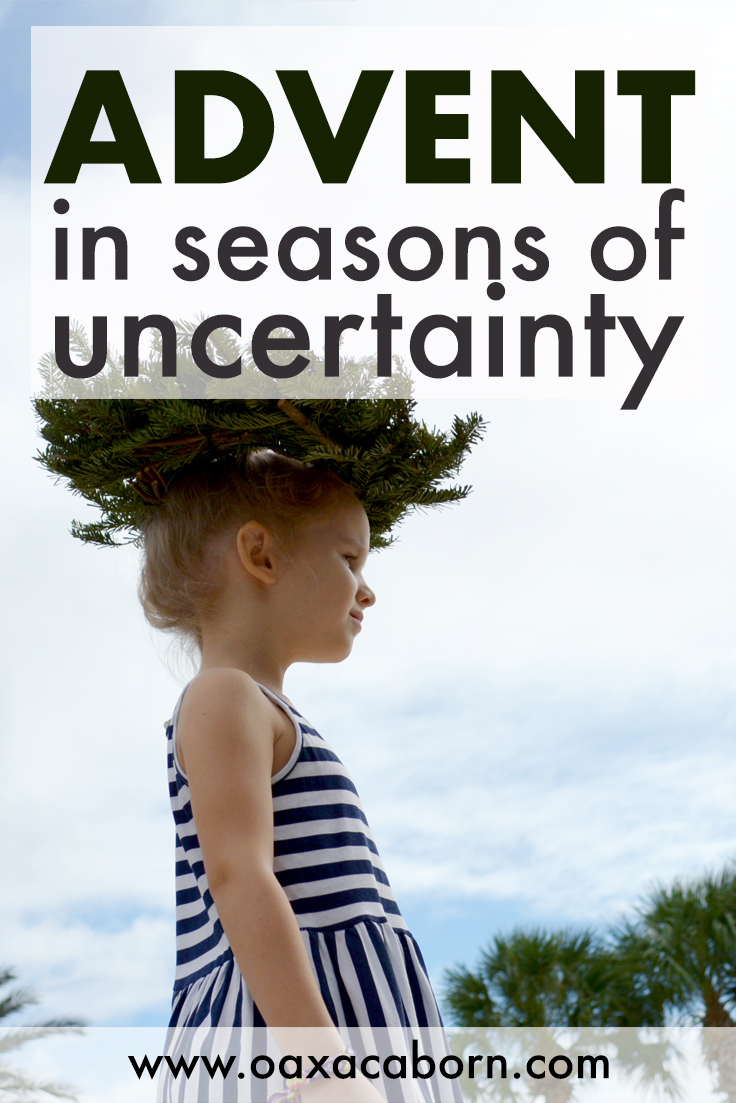
Advent in Seasons of Uncertainty

Advent in Seasons of Uncertainty
Advent in Seasons of UncertaintyAdvent in Seasons of Uncertainty Advent in Seasons of Uncertainty AdventAdvent in Seasons of UncertaintyAdvent in Seasons of UncertaintyAdvent in Seasons of UncertaintyAdvent in Seasons of UncertaintyAdvent in Seasons of Uncertainty

This is from 2015, and yet, I find myself sharing it again this year,  because I find myself once again in a place of uncertainty.

Thanksgiving weekend and Advent Sunday were one this year, like sabbaths multiplied, rolling in with rest for our souls.

And in this low-flung latitude, we stayed together, worshipping in the multitude of Small Things, the blessings given, the blessings withheld until such time as our hearts might hold them, the clouds bunched up, tumbling over and over each other like eager children, walled up against nonexistent mountains, pausing before an abrupt change of mind, dashing away again before falling, like rambunctious children collapsing with laughter despite it all, because of it all, in glorious Light of it all.

And with Thanksgiving and Advent colliding, we give thanks for the gratitudes heaped upon gratitudes.

This unpredictable season, the familiar routines carried out, the sprinkling of anticipation in the air, the hope that fills our hearts against all hope — the Hope that staves off despair, the hope that fights, the hope that holds on, the hope that illuminates joy we otherwise would have passed by.

For this and much more, Father we thank Thee.
For the Hope that springs anew, we thank Thee.
For the incarnation miraculously birthed out of terrified solitude in a stranger’s land, Lord, we thank thee.

For all that we do not know, Lord, we thank Thee.

“Stability is greatly
over-rated,” sings the poet Luci Shaw,
and I listen intently, my knees pulled up to my chest.
“Why would he ever want to sit
still and smug as a rock,
confident, because of his great
weight, that he will not
be moved?
Better to be soft as water,
easily troubled, with
at least three modes
of being, able to shape-      
shift, to mirror, to cleanse,
to drift downstream,
To roar when he encounters
the rock.”
-Luci Shaw

And I see now what she means.

I see that perhaps Advent, like the First Advent, is most deeply celebrated in seasons of uncertainty.

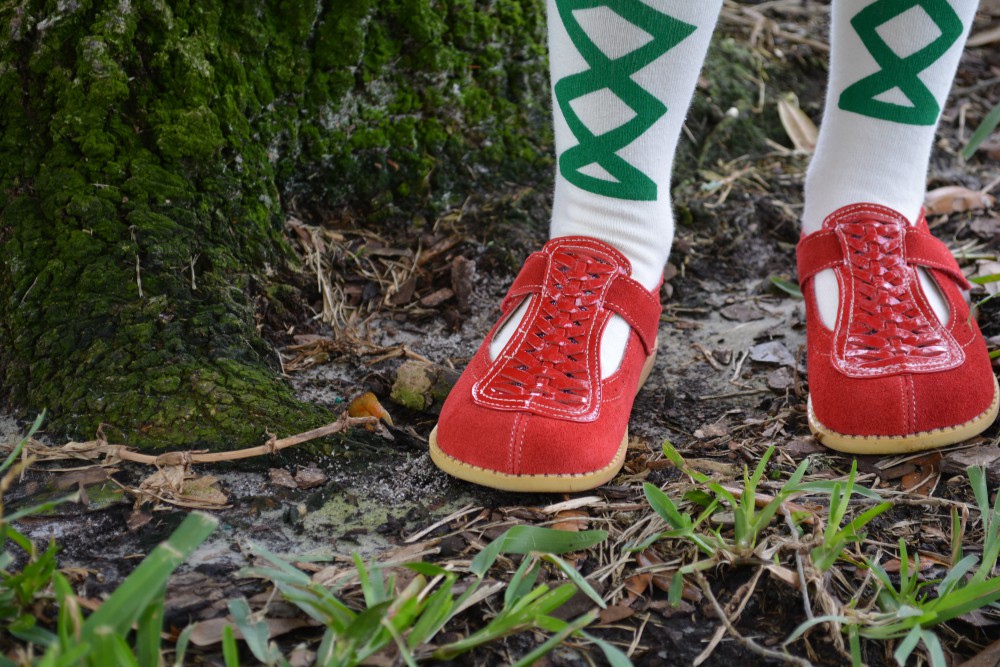
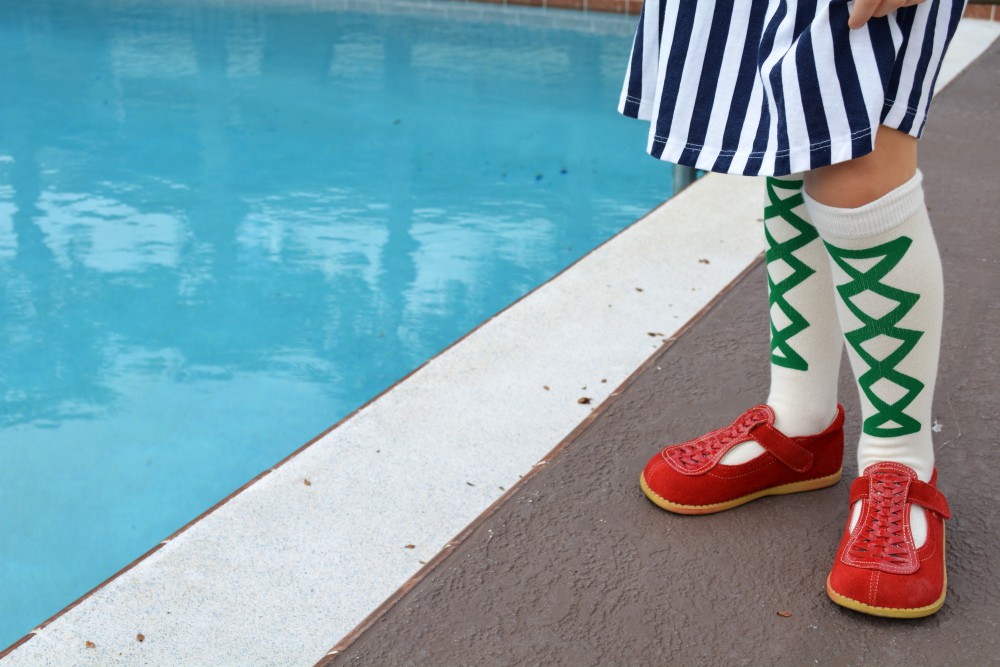
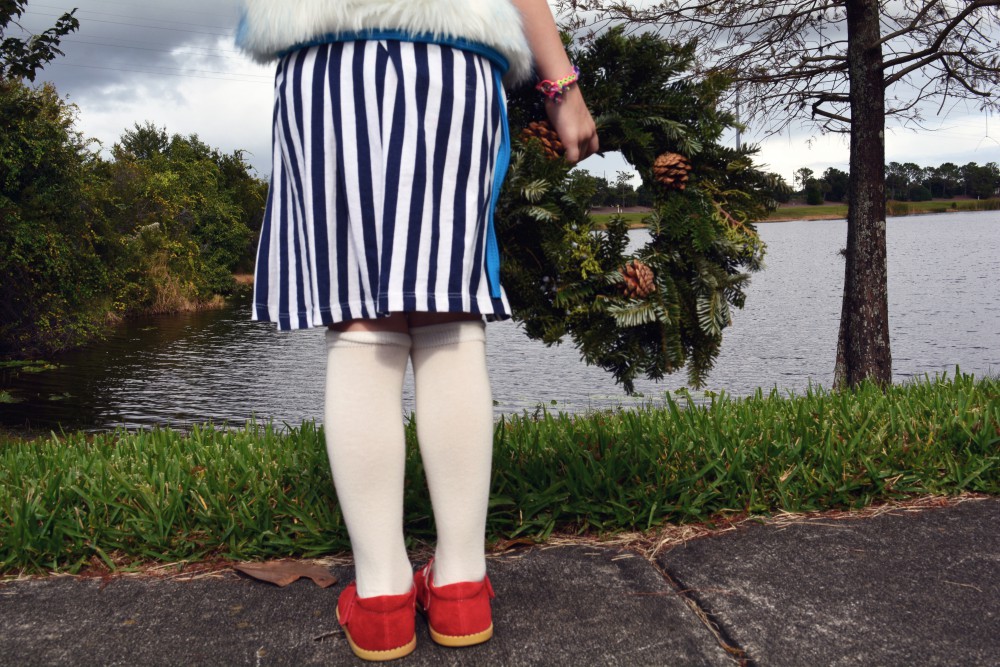
Credits: Red Suede Toi Toi Shoes c/o Livie & Luca 

Shop online at livieandluca.com, or follow @LivieAndLuca on Instagram or on Facebook.

Disclosure of Material Relationship: I received a pair of shoes from Livie & Luca in exchange for publishing this post. All the photographs, opinions, and experiences shared here are in my own words and are my own honest evaluation. Please be assured, I only accept sponsorship opportunities for brands I personally use and/or would recommend to close friends and family, and I will always disclose any such relationships.

Life in Photos, Poetry & Words

POETRY & WORDS :: Chasing Light with Memoky

I wake up with a list in my head, sometimes, not seeing the light, not seeing the shadows shifting through the water-spotted windowpanes, because I’m seeing all the unchecked boxes. I wake up already feeling behind, sometimes, and tumble headlong into it all, very unlike a poet.

memoky_on_oaxacaborn_5

Sometimes, I get up and frantically do, forgetting to be, ignorant to the beauty all around, because the day isn’t going the way I planned.

Because I’m clawing at efficiency.

“We are attempting, all the time,” says Billy Collins, “to create a logical, rational path through the day. To the left and right, there are an amazing set of distractions that we usually can’t afford to follow.  But the poet is willing to stop anywhere.

memoky_on_oaxacaborn_6

memoky_on_oaxacaborn_4

memoky_on_oaxacaborn_14

My four-year-old stops anywhere.  She’s nonstop, she’s scientific, her brain is a perpetual motion machine, and yet she’s a tiny little poet. Why? Because, even in her intensity, she knows how to pause.

She’s intent on the details.

memoky_on_oaxacaborn_2

memoky_on_oaxacaborn_1

memoky_on_oaxacaborn_8

She’s still captivated by all the tiny little pieces that together make up this “one wild and precious life” [1], as Mary Oliver says. At four, she hasn’t yet learned to ignore the shapes the sunrise scatters across the wall at dawn. She hasn’t learned to forget how fleeting they are, and hasn’t been trained to shrug over the fact the light fades in seconds. And so she giggles, chasing the shadows, running across the room to catch them, head thrown back, laughing loudly into the golden air.

memoky_on_oaxacaborn_7

memoky_on_oaxacaborn_12And when the light shifts from yellow to white, she stops and pulls her knees up to her chest and lets the light illuminate the pages. It’s as though she’s already read Wendell Berry’s “How to be a Poet (to remind myself).”

“Make a place to sit down. 
Sit down. Be quiet.”

[Okay, so she doesn’t know a thing about quietness, really.]

“You must depend upon
affection, reading, knowledge,
skill — more of each
than you have — inspiration
work, growing older, patience,
for patience joins time
to eternity…

memoky_on_oaxacaborn_10

memoky_on_oaxacaborn_17

Breathe with unconditional breath
the unconditioned air.
Shun electric wire.
Communicate slowly. Live
a three-dimensional life;
stay away from screens.
Stay away from anything
that obscures the place it is in.
There are no unsacred places;
there are only sacred places
and desecrated places.

memoky_on_oaxacaborn_13

Accept what comes from silence.
Make the best you can of it.
Of the little words that come
out of the silence, like prayers
prayed back to the one who prays,
make a poem that does not disturb
the silence from which it came.”

I knew we can’t all be silent (although sometimes, after answering  279,817 questions before ten, that sounds like the loveliest retreat.) We can’t all pine away at a desk, acting as writers and poets for a living  (although that sounds marvelous too.)

We can’t all be children. It’s not only impractical, it’s impossible. We can’t abandon our responsibilities. We have schedules, work to do, and tasks we simply must complete. We can’t all recline like men and women of leisure, as though life were some still, calm, ancient painting.

memoky_on_oaxacaborn_9

But we can train our hearts to see the joy and the beauty, right? Even in the hectic chaos, can we see snippets of what the poets see?  Can we choose to have hearts like children? (Jesus had a little something to say about grown people becoming as children, I think. [2])

My friend Marie reminds us that “life isn’t always clean and easy. Sometimes it’s messy and fuzzy.” But, she goes on, “There is still beauty and peace if you look hard enough. Find your beauty and share it. This world needs it.

memoky_on_oaxacaborn_3

So can we do that? Can we leave room in our days for wonder? Can we leave margin for awe?  And then when we switch off the alarm in the morning, we can say, like the poet,

Hello, sun in my face.
Hello, you who made the morning
and spread it over the fields…
and into the windows of, even, the
miserable and the crotchety –

good morning, good morning, good morning.
Watch, now, how I start the day
in happiness, in kindness. [3]”

memoky_on_oaxacaborn_11b

About Memoky // Founded in New York City in 2015, Memoky offers an intentional collection of furniture, decor and lighting for the home. Shop online at memoky.com, or follow @MemokyHome on Instagram or on Facebook.

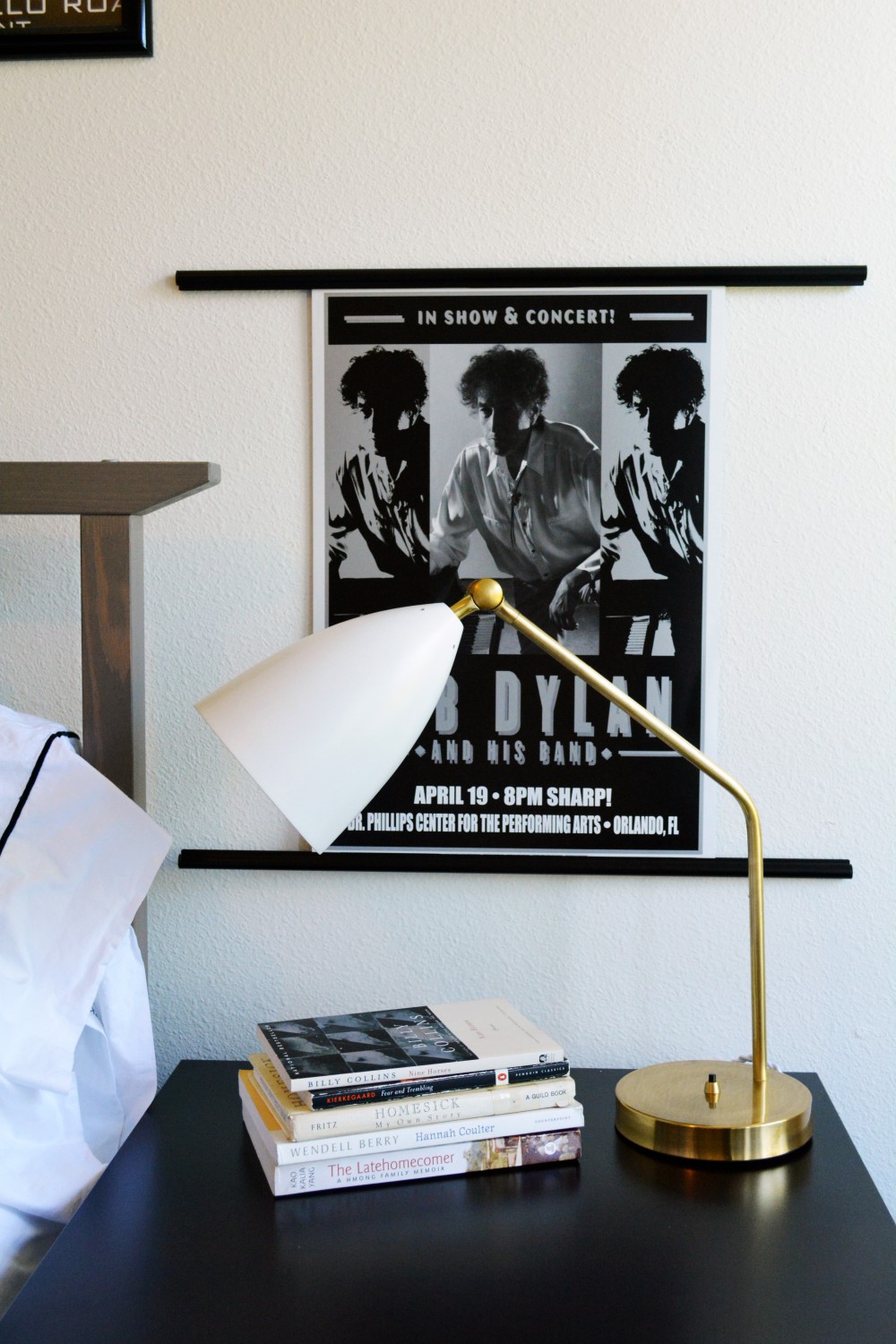
Myhre Table Lamp in White and Brass via the Galla Collection c/o Memoky.

Additional Credits // Flokati Sheepskin Rug: Shades of Light | Side Table, Plywood Chair, Bed: IKEA Orlando |  Tiger Sweatshirt: RUUM | Striped Linen Pants: Leitmotif | Poster Rails: Posterhanger 

Disclosure of Material Relationship: I received a lamp from Memokey in exchange for publishing this post. All the photographs, opinions, and experiences shared here are in my own words and are my own honest evaluation. Please be assured, I only accept sponsorship opportunities for brands I personally use and/or would recommend to close friends and family, and I will always disclose any such relationships.

Christmas, Poetry & Words, Theology

Why Celebrations & Beauty Still Matter in a Broken World

During Advent, lighthearted festivities can conflict with the dark reality of the world. But we shouldn’t give up Christmas. You can’t fight the darkness without light.

Why Celebrations & Beauty Still Matter in a Broken WorldSometimes, people wonder how I can get behind something so trite as Christmas decorations, when I also talk about death and darkness and clinging to a thread of hope when grief colors everything. How can I talk about pretty things when there’s all this brokenness everywhere we turn? Isn’t that incongruent? Doesn’t that make me a hypocrite? Don’t I know the world is dying?

I do know. And because I know, I refuse to give in to the darkness.  I refuse to let the darkness chase us away from all the beauty.

Our God, the same God who demands justice and calls us to love mercy [1], also created beauty. The same God who calls us to defend the fatherless [2], also paints the billowing clouds with fiery indigo, told His ancient people to weave golden threads into gilded curtains and dot the tabernacle with precious stones [3], and turns snowy mountain peaks copper with every rising dawn.  If we have the eyes to notice, our heart is lifted at a solitary bloom alive in a dry and cracked sidewalk, and something in our spirit leaps at the sight of a single lit tree in the darkness, glistening in snow-covered bursts of colored light. Our deep longing for aesthetic beauty echoes the whole, complete beauty that existed in God himself before the Fall of Man. Glimmers of it shine earthside still. Every single thing of beauty on this earth hints at the beauty that waits just beyond the veil [4].

And something else await beyond the veil, too — a celebration [5].

Somewhere along the way in our journey through the monotonous tasks of living, we’ve heard whispers that to be holy is to reject the nonsense of tinsel and lights, and to be an effective servant of God we have to squelch in ourselves our deep-seated craving for beauty.  We’ve heard that to have a heart that really loves mercy, to have a heart that really broken over injustice, we should probably think twice about merrymaking. But beauty and joy and celebrations are not at all antithesis to our identity as Christians. Rather the opposite; celebrations are at the very heart of our Father God. All throughout the Bible we see, over and over and over again, this idea of gathering together in the mutual enjoyment of this wild and beautiful life. And we crave it. We crave beauty, we crave togetherness, and we crave wholeness.

Maybe it doesn’t make sense to live this way. Maybe it’s all more complicated than this. But I think my God is big enough that I don’t have to choose between beauty and truth. I think my God is big enough that I don’t have to reject the beautiful things He’s created in order to love mercy. So instead of understanding it all, I just want to embrace this mystery. The mystery of God, the mystery of this life, the mystery of serving the One who lets all these disparate things — beauty, injustice, death, love — coexist, and even, somehow, weaves them all together with redemption in a tapestry altogether glorious.

So let yourself be freed from legalism this Christmas. Let yourself be free to savor the deep, beautiful goodness of God, and drink in the wonder of His Advent, even if everyone around you is cramming in commercialism until the season nearly bursts with misunderstanding, and even as the news broadcasts keep rolling, and even as there is still work to be done.

“Here is the world”, said Frederick Buechner. “Beautiful and terrible things will happen. Don’t be afraid.”

“You, my brothers and sisters, were called to be free.” [6]

Poetry & Words, Theology

When I was a little girl, I didn’t live on the prairie

when-i-was-little-didn't-live-in-america

When I was a little girl, I didn’t live on the prairie or in the suburbs or in wide-eyed city lit by neon signs. I didn’t know apple pie was supposed to be American. I never saw a baseball game. I didn’t have a picket fence, or a dog, or any of those things that are you supposed to make you American. But I didn’t live in America, either.

When I was a little girl, I lived in the middle of a brown and white house right smack on the edge of a street called Taborska right smack on the edge of a city called Ljubljana. Our front door didn’t have a doorknob. It had a door handle instead, which was long and narrow. It kind of looked like someone had taken a capital L, turned it sideways, and jammed the short side into the door. Our landlady lived downstairs, so we called her Grandma Downstairs. Petra and Alenka, her two granddaughters, lived up the stairs. We called them Petra and Alenka. Much later when I grew up into a lady and lived maybe a million or seven miles from there, I had a daughter too and I named her A. Alenka. It sounds like music. But that didn’t happen yet, because I was still a little girl.

I had one brown-haired mustached dad and one strawberry blonde mom, and a brother who got himself locked in the spare room once. The L-shaped door handles were very good at getting locked and very bad at opening up again, so while I cooked horseradish and dandelion soup in my cardboard kitchen, I prayed for a replacement brother. The original brother was unlocked before I’d finished praying, but God sent me a second brother a few years later anyway.

I didn’t have a dog. Once I had some tadpoles, which sounds nice, but really they looked more like their other name, pollywogs. Sometimes we had a goldfish. He was a very possibly magic goldfish. Sometimes he swam right out of the bowl and was missing for a long time before he popped back into the bowl. My dad was not a goldfish but he had blue eyes on the front of his head and an extra pair of eyes on the back of his head. The extra eyes were just as good at seeing as the forward-facing ones. He had a stack of heavy books next to his bed. Since it was dark when he woke up, I’m not sure which eyes he used to read.

I don’t think my mom and dad could see very far from the middle part of the house where we lived, but as I was still a child and hadn’t yet grown eyes in the back of my head, so I could see for miles. The red clay rooftops sparkled like tiny crests, like little ocean waves in a red sea. Of course, the Red Sea isn’t actually red. I know this because I am very nearly six years old, and I know almost everything there is to know, particularly important truths such as how one person cannot see one’s own face, no matter how tangled up one gets trying to turn one’s eyeballs toward it.  I tasted the sea in Greece once, although I probably shouldn’t have because there was quite a lot of rubbish floating in it. It was a rather green sea. All the books I’d ever read said seawater was supposed to be blue, but I guess they hadn’t been to Greece.

Things don’t always end up the color they set out to be, anyway. There’s a man who sometimes who comes to visit the cats and chickens and sour cherry trees downstairs, and I think his hair started out brown but it’s beginning to have grey bits around the edges. I think to myself that it’s the same kind of grey as the sardines heaped up on the tables near the bridge in the city. The sardines started out with a silvery flash of green, I think, but mostly they end up grey, too. There are big cement columns stuck into the ground at each end of the bridge down by the sardine tables. They are grey, too, like most of the things in our city, but the dragons on the top are a kind of sad, flaky green that looks like it used to be happy. Mom says the dragons are made of copper but I don’t thinks she’s right about that.  I saw a picture of a copper penny once, in an American book, but it wasn’t green at all. Our friend tried to each me about pennies. I didn’t listen. I just looked at her when she talked, and watched my head head bob up in down in the reflection of glasses she wore to cover up her glass eye.

I didn’t need to know about American pennies, anyway. I didn’t live in America. Maybe someday I would, and there would be plenty of time to learn about pennies then.

Poetry & Words, Theology

And I’ll Sing in the Land of my Sojourn

And I'll Sing in the Land of My Sojourn by Gina Munsey on Oaxacaborn, with quotes by Rich Mullins and Frederick BuechnerIt’s quiet, at least as quiet as an afternoon can be on the second floor of an apartment building, perched at the edge, where the gully dips down into rain-soaked grass and back up again to meet the ragged blacktop edge just before the toll booth.  This little corner of earth where residential and interstate meet is not a destination or a landmark, but I think Rich Mullins would have sung about it [1].

I think he’d have seen the gold in the way the sun fights for light here, like a farmer sees hope and life in the tiniest green shoot.

Maybe he’d have heard a melody in the rumble of the trucks which coast and pull their rattling brake just before the bend in the road, like he did when he sang “And the coal trucks come a-runnin’  / With their bellies full of coal  / And their big wheels a-hummin’  / Down this road that lies open like the soul of a woman…” [2]

He saw beauty, somehow, where others only saw the tired corners, where others only saw the afternoon traffic jams and the faded street signs and the plodding of sojourners down the cracked and uneven sidewalks. When you know everything around you lies in shadow, waiting for the great awakening, when you know we’re all living just on the very cusp of seeing clearly and not through a glass dimly, well, then, there’s beauty in everything broken. Because as soon as that Star shown down into the stable and as soon as He was born, well, redemption was set in motion and that was “When the old world started dying / And the new world started coming on”. [3]

There have been sojourners as long as there has been time itself, mendicants wandering [4] yet wandering with purpose, through the dredges that are made holy with that same purpose. Sojourning is different than drudgery. Drudgery is repetition without hope on a horizontal plane. But sojourning! Ah, sojourning takes the repetition in which drudgery despairs, and views it with eyes opened by the God of Wonder Himself.

“If you think you are seeing the same show all over again seven times a week,” Frederick Buechner writes [5], “you’re crazy. Every morning you wake up to something that in all eternity never was before and never will be again. And the you that wakes up was never the same before and will never be the same again.”

And so, in the midst of the traffic chorus outside my window, and the unwashed laundry and  the unanswered emails, in the midst of confronting evil and doubt, in the midst of working long into the night and consoling a child’s fever and answering unspoken fears, in between the lost moments of sleep and the sunrises awash with new mercies and endless grace, in the arms of everlasting love, “I’ll sing my song / and I’ll sing my song / in the land of my sojourn.”[6]