When I started blogging publicly — over at Xanga, fourteen years ago! — I was in college, and blogged too many song lyrics and homework details. Then over the years, I moved back and forth across the country, working at sheet metal factory, a juvenile detention center, and an IT department, and wrote about all the ups and downs. When I became a mother, I even went through a phase where I predictably blogged about cloth diapers (I am so sorry). I’ve written about death, beauty, brokenness, joy — and interior design. And you’ve likely noticed that in the last few months, I’ve written a few longer pieces about homeschooling.
My blogging “methodology”, if you can call it that, hardly follows all the blogging advice. It’s always just followed the seasons of my life. But that’s the beautiful thing about life, too — it’s not stagnant. It moves like a current. It flows, it goes through seasons, through changeable states of being. Way down at the bottom of this blog, in the footer, Anaïs Nin reminds me, “Life is a process of becoming, a combination of states we have to go through. Where people fail is that they wish to elect a state and remain in it. This is a kind of death.”
I kind of feel like things are coming full circle for me, and it all has to do with books. As a girl, I devoured books, and read everything I could get my hands on. Now, it’s only April, and Aveline’s already read 130 books since the beginning of the year. So, you’ll probably be seeing a lot more posts about literature and children’s books, and more posts about homeschooling. (Although, this is no surprise if you follow me on Instagram @oaxacaborn). I have so many good books to share with you all, but I’ve been holding back, thinking for some reason that this isn’t the right place for it, and worried about losing followers. Well, that’s kind of ridiculous. Because when it comes right down to, perhaps, like Margaret Atwood said, “Perhaps, I write for no one. Perhaps for the same person children are writing for when they scrawl their names in the snow.”
I’m just thankful some of you keep following along as I scrawl in the snow.
—
To receive an update in your inbox each time I publish a post, click here.
Are you trying to decide what homeschool curriculum is right for you? Homeschool publishers often sort curriculum into secular, neutral, and Christian categories, and further divide science resources into Old Earth Creationism, New Earth Creationism, and evolution. Even with those categories, when you’re faced with dozens of catalogs, or hundreds of enticing vendors, it can be hard to know what a publisher’s worldview really is. The truth is, the nuances of worldview go far deeper than those already weighty topics.
But as a second-generation homeschooler who’s had some close scrapes with fundamentalism, I know first-hand how important it is not to cut corners when evaluating a publisher’s worldview. You have to take the time to uncover what the authors are truly trying to get across. When I’m trying to unearth the worldview of any given curriculum, I start my search by looking at the author’s perspective on on rules, religion, race, and women.
Here are the seventeen crucial questions I ask when trying to determine a homeschool curriculum’s worldview:
Does this material assume all girls should grow up to be wives and raise children, or does it empower and inspire girls to follow whatever path God calls them to, recognizing that not all women marry, and some struggle with infertility?
Does it highlight women and girls as independent actors?
Does it tell stories of women beyond focusing on their roles in a family?
Does the material promote compliance with a set of rules, or does it allow for freedom and grace?
Does this material present a morality-first viewpoint, emphasizing outward virtues and traits with the goal to get the child to imitate certain character values, or does it recognize that it’s only through a heart surrendered to Jesus that a person can only be truly transformed?
Does the material oversimplify good and evil and present it as an easy-to-spot either-or choice; or does it teach analytical and critical thinking skills, discernment, and problem-solving?
Does the material only present what to learn and/or believe, or does it also provide context and a “why” behind the belief?
Does the material present history predominately from a Western perspective, or does it also present facts from a non-European point-of-view?
Does the material perpetuate the idea of “otherness” by teaching about non-European cultures using stereotypical depictions, or does it allow for each culture to have its own strong, rich, identity?
Does the material mainly contain books with white main characters, or does it offer books with nuanced, fully-developed, non-stereotypical heroes and heroines of diverse backgrounds?
Does the material teach (implicitly or explicitly) that the “primary” actors in history or literature are white? Who does it teach my child to identify and sympathize with?
Does the material attempt to “Christianize” certain historical events, or does it recognize that every event has more than one side?
Have I truly evaluated the content and worldview of this material, or am I simply choosing this material because it’s popular in homeschooler subculture?
Will this material allow my child to be challenged to the best of his/her God-given ability, or am I simply choosing this material because of its price point / ease-of-use / etc?
Will this material equip my child to follow any number of career paths God might have in store for him/her, or am I choosing this material because I want my child to follow the path I have in mind?
Is this material based on fear and reliance on man’s own goodness to combat what is perceived as evil, or does it promote courage and a reliance on Jesus?
Is this material designed primarily to shelter and insulate my child, or is it designed to inform, equip, and empower?
A lot of different books cross my desk, especially as I work on creating an early elementary reading schedule for U.S. History. When I first started to look into Beautiful Feet’s “Early American History For Primary Grades“ literature guide for grades K-3, I was intrigued. Once I sat down and actually read through it, though, I knew I wouldn’t be using it or incorporating the lessons into my history schedule.
If you’ve read this blog for any amount of time at all, you know I’m a Jesus-follower; and if you’re searching for reviews on Beautiful Feet curriculum, you likely know it’s purported to be a Christian curriculum. I wouldn’t say it represents a Christian worldview, though — certainly not my worldview. But before I get into the implications of how the Beautiful Feet guide teaches morality, let’s address two of the books included in the primary literature list, “The Courage of Sarah Noble” and “The Matchlock Gun“.
In “The Courage of Sarah Noble“, Sarah’s courage is praised, but just what is it that Sarah is facing with such bravery? “Indians [who] will eat you.” Sarah is afraid of things in the dark, because they might be Indians. She freezes “still as a rabbit in danger” when Indian children approach. When she finally musters up the much-applauded courage to interact, she can’t be bothered with “the long, long names of the children, so she called the boy Small John and the girl Mary.” To learn more upsetting details, please do read this review of “The Courage of Sarah Noble“. There are billions of books in the world, and ones like this don’t belong anywhere near my bookshelf.
And then we have the “The Matchlock Gun“, which is so horrifyingly unthinkable in its description of Native American people, that I can hardly bring myself to type it here, but I want you to know what these books contain: “They hardly looked like men, the way they moved. They were trotting, stooped over, first one and then the other coming up, like dogs sifting up to the scent of food.” This is stomach-churningly appalling. And why is young Edward, the main character, so celebrated in this book? Why, because he fired the matchlock gun and “killed more [Indians] than the rest of us put together.”
No. This book has no place on my bookshelf. Additionally disheartening here is the fact that Beautiful Feet is not the only publisher to include these two books on their recommended reading lists. But let’s at least take a look at Beautiful Feet’s “Early American History For Primary Grades” study guide itself. The guide was updated and revised in 2014, so it’s more modern in appearance than previous editions. The 37-page softcover book now covers additional material such as the Westward Expansion, and has full-color images and web links (although, I counted less than ten links in the course of over one hundred lessons). The content itself was less practical than I was hoping for — comprehension questions are given, but no answers are provided. Lesson prompts are vague, at times not much more than “Introduce Columbus” and “Discuss the value of conscience”. And there’s a lot more written busywork than I expected in a literature-based curriculum designed for kindergarten through second grade; students are instructed to copy entire dictionary definitions into a notebook. I could be persuaded to overlook some impracticalities, if it were not for my deeper concerns about morality-first instruction.
Throughout the guide, the child is asked to interpret every historical figure by measuring the person against a list of character traits, and then make a determination of the person’s virtue. Nearly every one of the 106 lessons instructs the child to extrapolate the good character traits from a biographical segment of a person’s life, and then make an effort to apply these same character traits to his or her own life. This might seem innocent enough at the outset, but little mention is made of the heart itself, or of the transforming power of the gospel (which transforms from the inside out, not the outside in), or of what it means to actually follow Jesus. Perhaps this is because each lesson simply encourages the student to follow a list of moral character traits, not Jesus Christ himself. The hope, it seems, is that through emulating morality from the outside, one might become pure on the inside.
This isn’t a problem exclusive to Beautiful Feet guides alone; there is a tremendous amount of curricula and instructional material framed this way. But there are problems with this approach. When a child is repeatedly, lesson after lesson and year after year, asked to give examples of how a revered historical figure stacks up against a list of Christian virtues, several things are bound to happen. First, this approach ignores the basic fact that every single person who ever lived was inherently complex. So by reducing complex individuals to one-dimensional figures, heroes inevitably become white-washed, because the focus is always placed on their abundant virtues. The child forms a worldview in which heroes have a lengthy list of abundant positive character traits, and “the bad guys” have very few positive traits. Life, of course, is not this binary. Going into life’s tricky situations believing you will easily be able to spot good vs. evil in either-or terms is not even safe! Teaching that people are good because they exhibit outward traits teaches nothing of the heart (although it does teach how to act “perfectly Christian” on the outside).
Another thing is bound to happen, too, when a child is asked to emulate the outward qualities of heroes who have almost exclusively positive character traits. When the child first encounters a sense of failure in his or her private life, the child is very likely to see even a minor struggle as a massive moral failure. After all, the child has never known any “good person of Christian virtue” to have struggles or moral failings — so the child concludes that he/she must not be good, either. When discernment between good and evil is determined by actions and accomplished by checklist, one too many moral failings on the checklist will automatically shift a person over into the “bad guy” category. And if “goodness and badness” are assessed based on a self-imposed list, what room is there for grace?
This curriculum guide also instructs children to memorize “The Conscience Poem”, several rhyming stanzas devised by Rea Berg, who co-authored this guide with Joshua Berg. At first, I hoped this poem could easily be overlooked as an inconsequential side-note, but that’s not the case. “The Conscience Poem” is a central focus of the lessons, and is used in lessons 8 through 51 . The poem explains conscience as the inner “voice” or “light” by which a child “understand(s) God’s justice, truth, and love”, and ends with these lines, ”…and this is the confidence I will have / that God is pleased with me.”
No.
This is so damaging. First of all, one’s inner voice isn’t even a Biblical concept! God’s still small voice, yes. Ours? No. We simply cannot teach children that their own thoughts are the sole determination of God’s displeasure or pleasure. We can’t teach that their worth and value is determined by how they feel about themselves, or by how they imagine God might be thinking about them on any given day. God already made that clear in John 3:16, “For God so loved...” Not that “For man was so wretched…” or “For man knew God was so angry…”, but “For God so loved…”
We don’t need to keep self-assessing God’s love for us. We don’t need to keep wondering what God thinks of us. He already demonstrated that. His bloodshed and resurrection settled that question once and for all. When Jesus died on the cross, He said, “It is finished.” He was the sacrifice, the Lamb of great price, and we do not need to struggle daily to apply virtues in order to guarantee God’s favor. That’s not the gospel! And it’s not what I want to teach my daughter.
It’s also worth noting that for all its talk of Christian virtue, the character traits in this guide aren’t even taken from Scripture. One would expect, at least, this character-driven type of of morality-based education to be centered around the fruits of the spirit found in Galatians 5 — love, joy, peace, patience, kindness, goodness, faithfulness,gentleness, self-control — but this list is never mentioned in this guide. Instead, the ambiguous ideals of “industry”, “virtue”, and “moral sense” are emphasized, as is an excerpt from Tennyson’s Oenone which praises “self-respect, self-knowledge, and self-control”. (Of course, it would not change the spirit of the curriculum even if the list of virtues had been taken directly from the Bible; even the fruits of the spirit are not a way to achieve righteousness. )
Overall, the guide teaches that a person’s goodness is measured by moral tendencies or lack thereof, and teaches that a child’s value and God’s pleasure are measured and determined by how well the child thinks he/she has applied a list of moral virtues. Contrast this with the perspective Rich Mullins sang about in “Let Mercy Lead“:
“Aidan, you’re young
but Aidan, you’re growing fast…
…and you’ll need something more to guide your heart
as you grow into a man
Let mercy lead Let love be the strength in your legs,
and in every footprint that you leave, there’ll be a drop of grace.
If we can reach beyond the wisdom of this age
into the foolishness of God,
that foolishness will save
those who believe…
…Aidan the day will come
you’ll run the race
that takes us way beyond all our trials and all our failures, and all the good we dream of.
But you can’t see yet where it is you’re heading,
but one day you’ll see the face of love...”
It’s about mercy, always. It’s about grace, always. It’s about God’s endless love, always. Mercy, grace, and love can’t be quantified. They can’t be put on a checklist, and applied to life. Morality doesn’t set anyone free. Perfection doesn’t set anyone free. Good character doesn’t set anyone free. Only Jesus — the face of love — can do that.
When you’re presenting the world for the first time to five-, six-, or seven-year-olds (the Beautiful Feet guide is intended for grades K-3), you have a serious responsibility. This responsibility is not just to shelter their tender hearts from the violent darkness all around us, but to show them the world and equip them with courage and with faith. I want to teach my daughter that the most courageous people in history were not those with the highest stack of character traits, but those who believed God could overcome darkness. Morality does not overcome darkness. Virtue does not overcome darkness. Only God can do that. And we have to be careful not to oversimplify life to the point that we end up teaching false doctrine.
So perhaps, as my strong and sensitive daughter grows up in this big ol’ world, I’ll say to her as Frederick Buechner said best —
“Here is the world. Beautiful and terrible things will happen. Don’t be afraid.”
I’m in her bathroom, sighing at the wasted toothpaste carelessly squeezed from the sticky tube, the splashed water, the dozen unclipped plastic barrettes dropped near the container, the towel on the floor. I don’t see the shaft of light, the breakthrough, the miracle. I only see the stony ground.
But from the living room, I hear her singing the catechism. Her voice soars, light, innocent, and the winged notes swirl and pierce into my blindness, my preoccupation, my heart complaining though manna is raining all around.
I too often see only wilderness with my blinded eyes, but these rust-colored tiles and this lumpy berber — this can be hallowed ground.
The light does not require a perfect vessel in order to shine brightly.
I fold the towel over the rack and wipe off the faucet and bend down closer to the earth and she sings, “Can anyone hide in secret places / so that I cannot see him? / Do not I fill heaven and earth / declares the Lord?”
Here, earth. He fills this place.
This can be hallowed ground.
I stoop to retrieve the dropped towel.
She is still singing, “The eyes of the Lord are in every place / He sees their every step / His eyes are on the way of man.”
And I lower my eyes. My heart takes it all in. He is already here. He is waiting, standing next to me always, just patiently waiting for me to turn my eyes to Him and sing His truth.
How often do we, in our self-centered, blind-mole ways, invite God into our presence, when the opposite should be true? Our lives would be transformed if we stopped repeating by rote — “Lord, be present here” — and turned around and looked up and stretched out hands to the waiting Savior and said, “Lord, open our eyes to your constant presence.” It’s not “Lord, lead us”, as much as it should be “Lord, open our eyes to your leading.”
Make us willing to be led, for You are always willing to lead.
I turn off the bathroom light, ignoring how sticky it is. I think of how we are to be like children if we are to enter His kingdom. (“Where is His kingdom?” she asked me yesterday. “Here and heaven, right, mumma?”) I walk past the last vestiges of Christmas — a strand of lights I’m not yet ready to put away — and I think of how poetess Luci Shaw is always reminding us that infancy was only the beginning of incarnation. We celebrate the infancy with pomp and circumstance, forgetting that it leads to Good Friday, and we mourn Good Friday forgetting that it leads us to the Resurrection.
Redemption does not end at the manger, thank God. The earth-rending story of redemption — begun long before — was brought into view there, set into motion, changing everything forever.
Epiphany reminds us of that. Epiphany, the dramatic appearance. The manifestation. The precursor to the second glorious appearing, which would be rendered powerless without the first. Yet like the travelers on the road to Emmaus, we miss it sometimes. He is in our midst, resurrected, incarnate, hands outstretched, and we look past Him.
Epiphany reminds us that God is flesh. God with us. God is among us. God appears as is His Son, born to be king, born to be pierced, born to die. The Man Jesus acquainted with grief, no stranger to sorrow, rejected by so many. Born to be Light Eternal not just for the Jewish people in that Middle Eastern town, but to be my Redeemer, my Light Eternal too.
And then Epiphany reminds me, too, that he grew. He stood in the river and spoke to John. He showed up at Cana, and how could they forget that? Those who walked shoulder to shoulder with Him, those whose sandals were streaked with the same dust and the same splashes from the River Jordan, they missed Him too. Even when God sent a dove, opened the heavens, and said “Look! Open your eyes. It’s HIM. You’ve been waiting. This one here. He’s the one. Don’t miss Him” — even then, some still missed Him.
And we miss Him, over and over and over and over again. Like the wanderers in the wilderness, like the once-rescued, twice-forgetful, like the disciples, we are stumped and we don’t know where He is and we ask Him —
“But Jesus! Did we ever see You?”
And He says, “When your world was rocking and you were sure you’d drown, I was asleep, right near you, in the very same boat on the very same sea.
And it was I, underneath that dove, in the river, when you were craning your neck elsewhere, searching for Messiah.
It’s Me every time you read, Word-made-Man.
It was Me at Emmaus.
It was Me in the other room, waiting to take your weary burdens, when you were making yourself sick with stress over preparations.
It is Me in the poor, the sick, the imprisoned, the fatherless, the ones with no voice, and the ones with a voice to which you’ve turned a deaf ear.
It was Me, this morning, in your living room, when you were grumbling about the dirty bathroom and your daughter was singing, head tilted toward Me, face up against the veil, in my presence, kneeling on holy ground.
It was Me.
I am.”
And I put away my cleaning rags, and lay down my pride, and walk into the living room, and ask that I, too, might see.
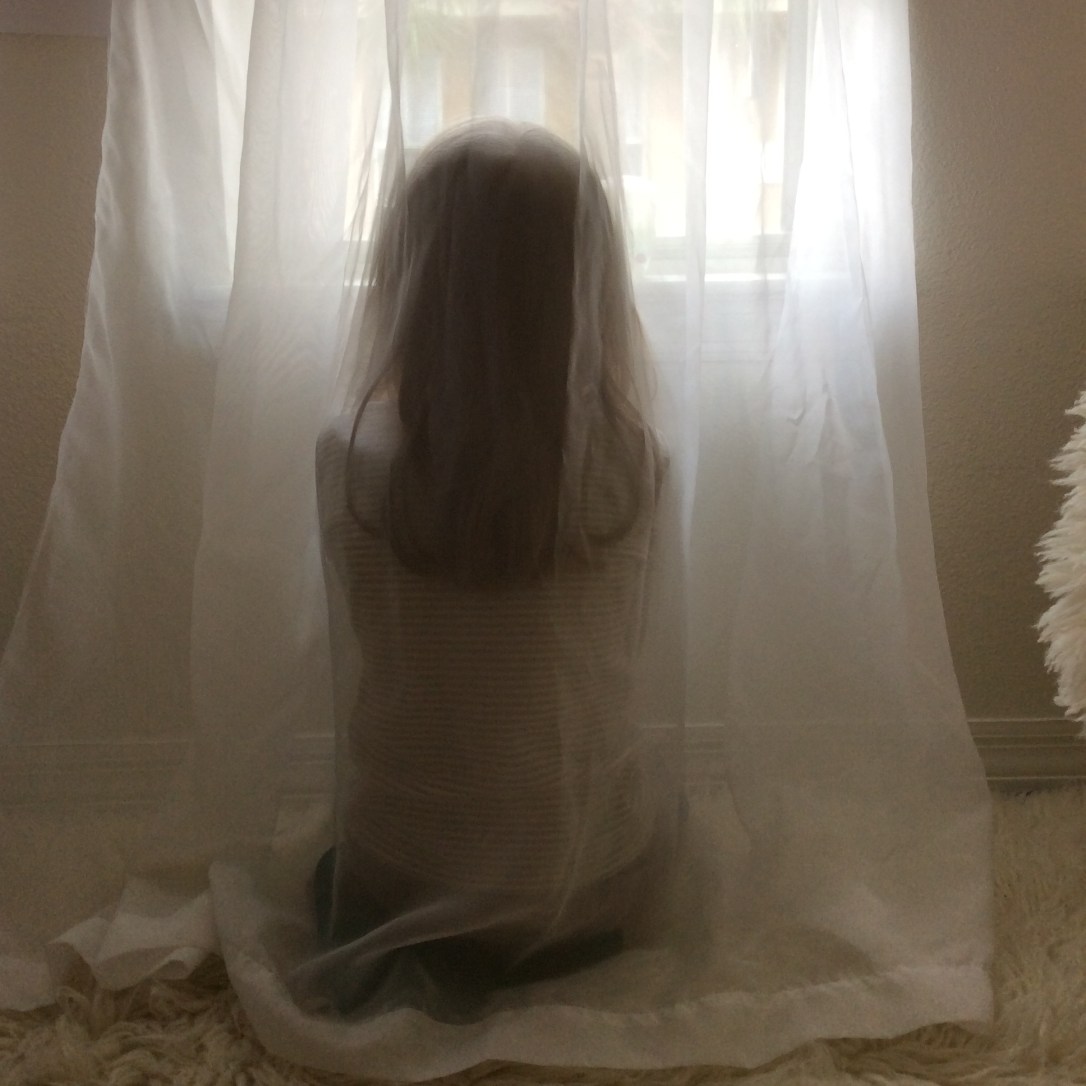
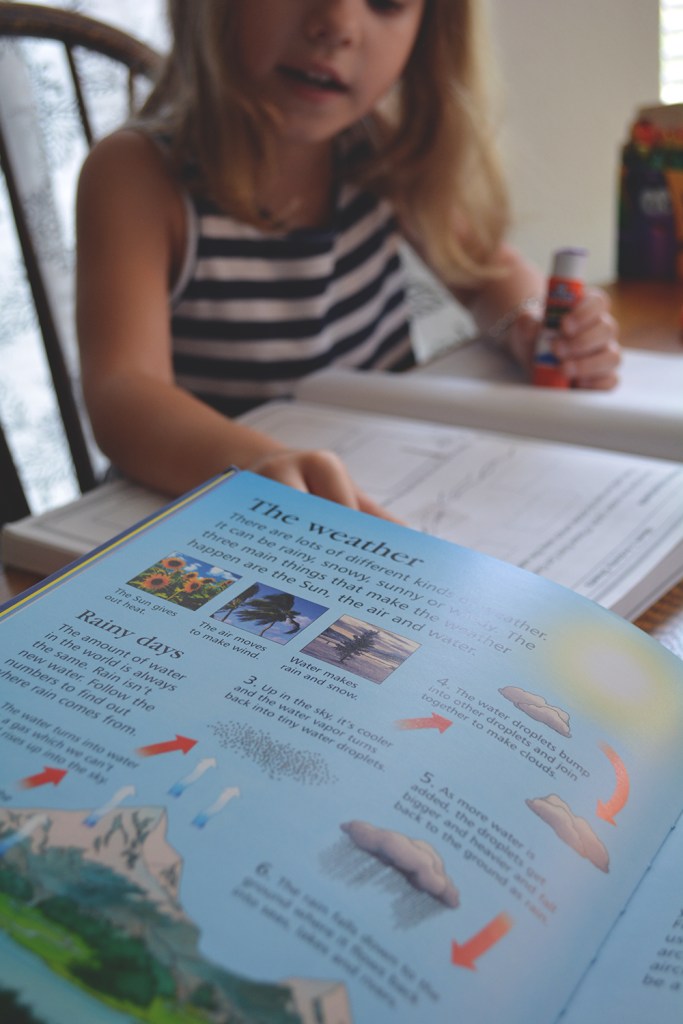
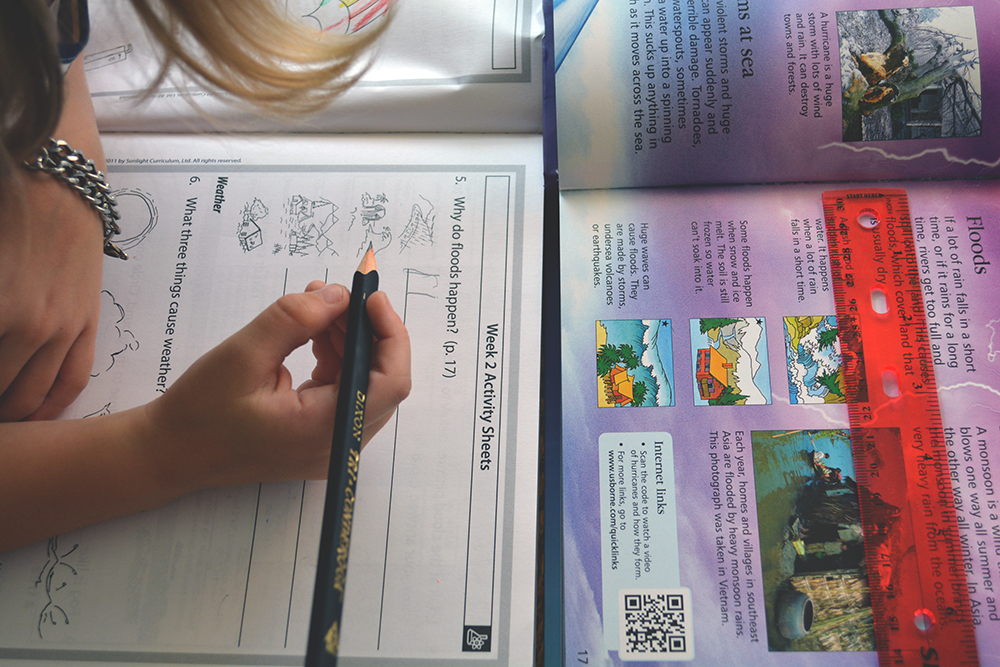
We spend the mornings together, side by side, she a constant inquisitive spirit, eager, joyful, full of wonder. We sit at the table together, the sun casting shadows through the curtains and across the stacks of books. Sometimes she slowly exclaims “Wow!” and sometimes she shrieks “Tell me more about it!” But always she wants to know more.
I read, she listens. She reads, I listen.
Civilizations.
Atoms.
Voyages and discoveries, light and darkness.
We turn the pages together. We marvel at the lines in the paintings of the masters together. We look up into the vast distance of the galaxies together. We talk of good and evil. We talk of beauty. She asks for more about Moses, more about Joshua, more about Sarah, more about these men and women who walked before. Her voice recites truths, her fingers are just beginning to dance across the piano keys, her little self is flying through books like there is no end to adventure.
It’s grown on me, this place, this place of swamps and heavy air and tangled underbrush rustling with the sound of lizards, great and small. Oh, the monsoons and the swirling hurricanes on either side of this peninsula don’t do anything for me. And with all the orange-beaked egrets in the world are nothing to the beauty that is the thirsty earth, the hills of golden grasses, and the twisted, reaching oaks of Sacramento Valley. There’s thick damp mist, here, that rests solidly and perpetually across the marsh; but there is nothing in the low clouds that can compare to the distinctive September aroma of scorched earth and wildfire, and nothing in the flatlands that compare to the piles upon piles of tall clouds stacking up against the Sierra ridge, across the horizon. One man’s hazard is another man’s beauty. Tectonic plates shift and the earth shakes on one edge of the world, and the low water tables rises and the earth sinks on the other edge of the world. There is no place safe.
But it’s grown on me, this place.
This place with all its oddities and all its weird news headlines and its slow, endless stares.
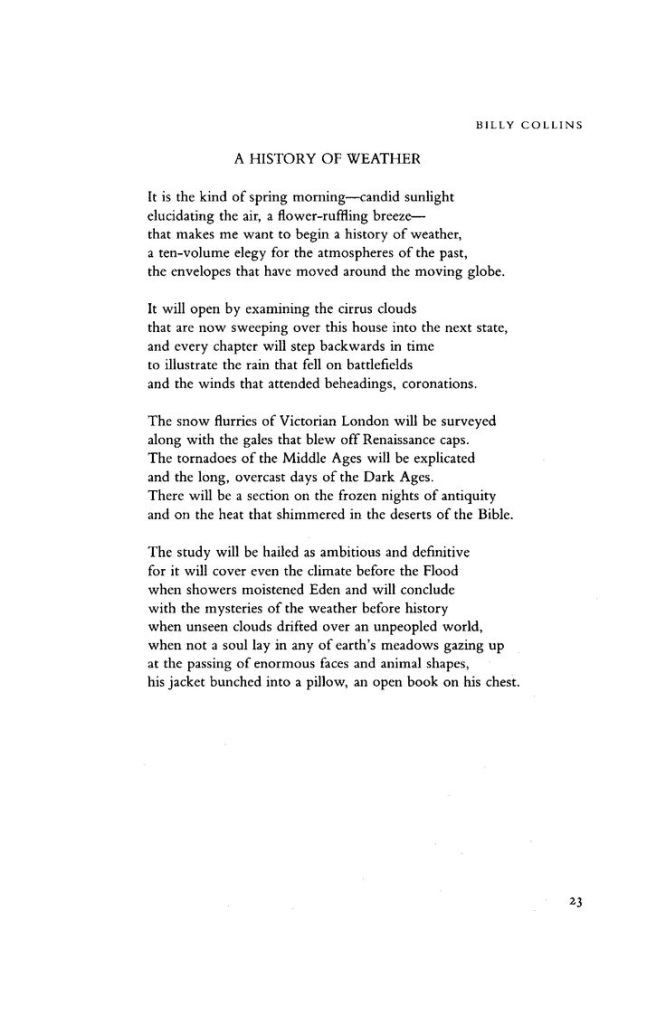
Billy Collins knew about the stares. They’re ubiquitous here. Even the animals look, slowly, here in the place where there is “no more snow…no hexagrams of frost…no black sweater”, only “those birds with long white necks”, who “swivel their heads / to look at me as I walk past / as if they all knew my password /and the name of the city where I was born.”[1]
But, I’m carving out my place here. This little one is carving out her place here. This little one who’s been raised here — this little one who thinks 72 degrees is winter, this little flatlander who thinks overpasses are such freakishly huge mountains, they necessitate shrieking each time we drive across — she’s been helping me see my place here.
Maybe I’ve shrieked a little, too, as I’ve metaphorically driven over high areas that seemed scary to me, areas where it was hard to keep my focus on the middle of the road and not at the unknown dropping off at either side. Just over a year ago, we suddenly started school because my three-year-old wouldn’t stop begging for “more worksheets, p’ease!” and I had no idea where it was gonna go. I wasn’t planning on a particular homeschool path, really. I just waded in to the waters, wishing they were clear, wishing I could see the bottom, wanting to turn back and sit with my feet dug into the shore, but knowing my little one was literally begging for “more school, p’ease”.
But now, a year later, we’re all in.
This little one just finished a full year of once-a-week Chinese language school (and Chinese folk dance). And she’s almost done with her first semester of Yamaha piano and voice. She finished the stack of preschool books ages ago, learned to read Chinese first, then she learned to read English. Now, the crazy kid is half-way through Kindergarten math, and just finished Kindergarten Science. She cried during Spring Break (“No school?!”) and cried when she found out summer meant no school.
But in Florida, she’s not legally old enough for Kindergarten.
I did hours of research, and toured the private Christian school near us anyway, to see what pre-kindergarten would offer. I wanted it to work; the teachers and administration tactfully told me it probably wouldn’t.
So, friends, we’re all in. We’re all in, despite all the experts saying it’s too early for formal academics.
We’ve grown into homeschooling, just like we’ve grown into seeing the beauty in the rain-soaked jungle around us. <3
I’m not an expert. I didn’t grow up speaking Chinese. But if you’ve followed @oaxacaborn on Instagram or @oaxacaborn on YouTube for any length of time, you’ve heard my daughter speak Chinese. This little fact delights some people, and perplexes others. Now, if you know Aveline, you know that she talks to everyone. EVERYONE, everywhere. Most people, when they hear her speaking Chinese, look bewildered and then quickly look away in confusion. After all, it is completely out of context for a little blonde girl to be reciting traditional Chinese poems down the aisles of Target in the suburbs.
[We are a participant in the Amazon Services LLC Associates Program, an affiliate advertising program designed to provide a means for us to earn fees by linking to Amazon.com and affiliated sites.
As an Amazon Associate I earn from qualifying purchases.]
Why Chinese?
Other people, though ask questions — a lot of questions. Many are just curious, “Why Chinese?” You’ve heard the old joke, right?
“What do you call a person who knows three languages?” “Trilingual.”
“What do you call a person who knows two languages?” “Bilingual.”
“What do you call a person who knows one language?” “American.”
But I’m not one to talk, since I lost both Spanish and Slovene to the cobwebbed recesses of my brain. So I usually just say, “Why not? Most people around the world learn more than one language, and ~1 billion people speak Mandarin [1]. Only about 480 million people speak English.”
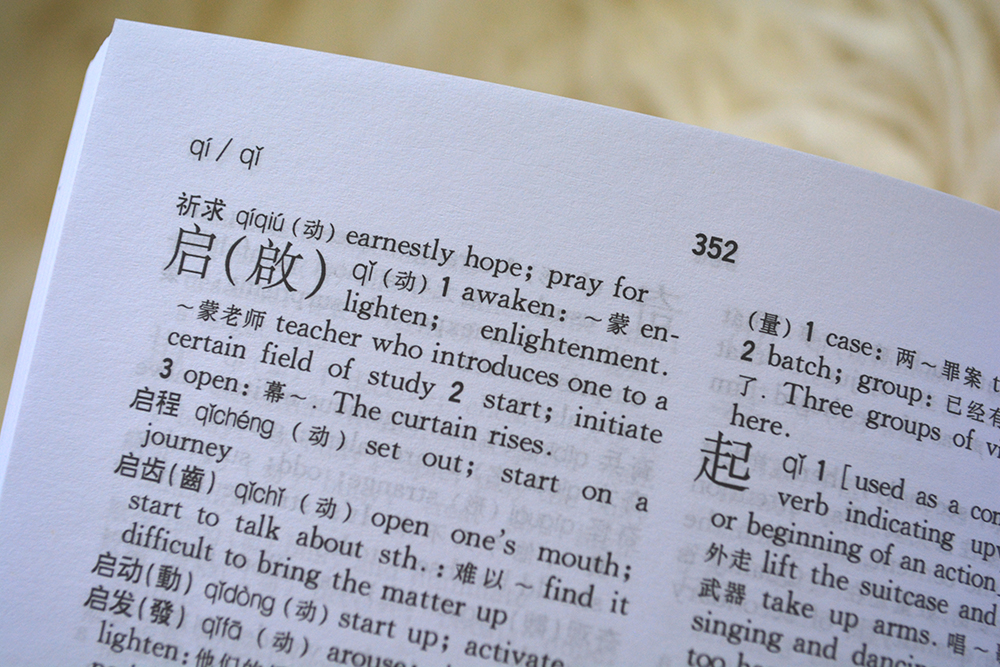
The truth is, while the characters seem intimidating, Chinese grammar is simple when compared to English’s complexities. For the most part, basic Chinese doesn’t concern itself too much with tenses, plurals, the gender of nouns, or articles like a, an, the. There are exceptions to this, of course, but the bottom line is that you can learn Chinese without spending hours pouring over verb conjugations they way you would in, say, French or Spanish. Yes, it’s a tonal language, so the tones are challenging, but children are much better are differentiating pitch than adults — and the earlier a child begins learning Chinese tones, the better. (Here’s a slightly off-topic study on pitch, musical ability, and early language development. But I digress.)
Another question many curious people ask is, “How do you get her to learn Chinese?”
Well, if you have figured out a way to get a human being — much less a four-year-old — to do anything, let me know, because you sure aren’t going to find the answer here. But I can share the resources we use that make the process fun!
Learning Chinese Through YouTube Videos
YouTube is just overflowing with language tutorials, and videos of native speakers demonstrating how to properly pronounce the words and phrases. And it’s free! YouTube is where it all started, actually. I was trying to find something fun and different for Aveline to engage her brain. She was three, begging to ‘do school’ and ‘have worksheets’ on an almost-hourly basis, and I was going through [English] preschool workbooks like there was no tomorrow. I really didn’t have some grand, well-thought-out plan to begin Mandarin instruction, I was just trying to get through the afternoon. (True confessions.) She was hooked after just one kids’ video in Mandarin. After that, it took going through several different Mandarin instructional channels before I found a teacher she really connected with, but once we found our favorite teacher, it was amazing how quickly she began speaking Chinese. I can’t recommend Emma form Learn Chinese With Emma highly enough. Our first video? Learning to count from 1-10 in Mandarin Chinese, seen above. Bonus? Learn the numbers, and you’ve learned the tones, without even realizing it.
Flashcards, Audio CDs, and Reference Charts
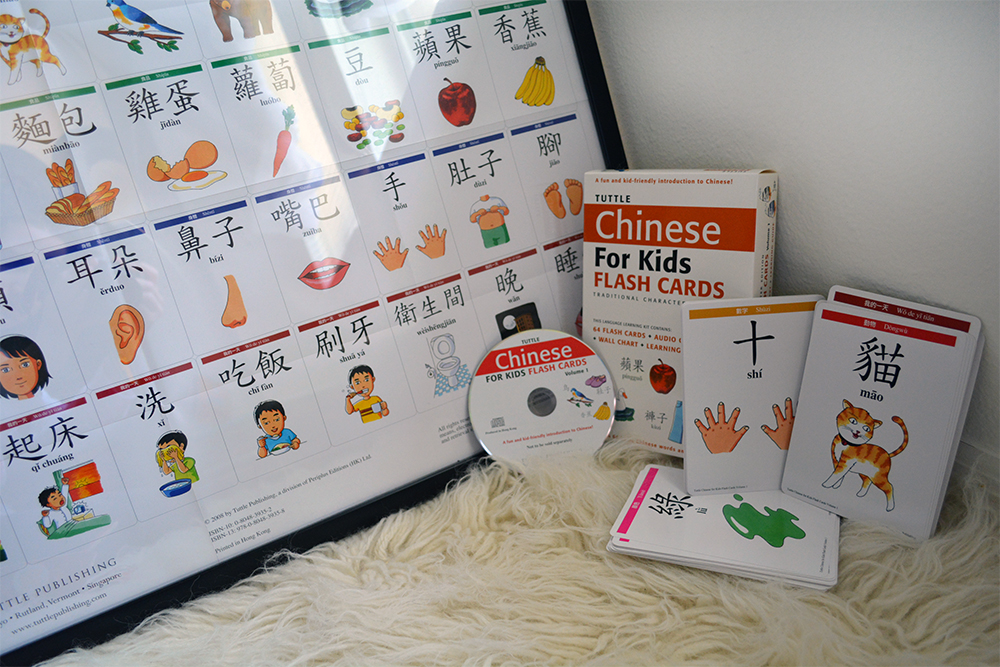
If you ask me, there’s only one solid resource in this category, Tuttle Chinese for Kids: Flash Cards Kit Vol 1! It’s just that good. This set comes with sixty-four beautifully illustrated, sturdy flashcards, an audio CD with all the vocabulary words in context, as well as a separate 24×36″ poster which shows the front side of all flashcards. We keep the poster out in the living room at all times, at kid-height, and our daughter consults it constantly. I really believe a big part of success in language learning is to make it a part of everyday life, rather than segmenting it off into a separate “learning” time. Isn’t that true with anything, though?
The CD is very well done. Each track was recorded at a relaxed pace, with pauses in just right places, so the child (and you!) can repeat back what’s said. Because this kit is designed for children, it’s a refreshing change from the stale “Where is the airport?” and “Can you exchange this currency?” phrases taught in so many (dull) language programs for adults. All sixty-four vocabulary words are included in the CD, as well as a couple of sentences for each, so each word can be learned in context as well. The sentences are spoken in Chinese as well as in English — and some of the sentences are even included on the back of the corresponding flashcards. For those interested in the proper stroke order to write the characters, that’s diagrammed on the flashcard back, too.
(With this, as with all our Chinese language resources, we’ve chosen the Traditional Character edition, which teaches the characters used in places outside mainland China, such as Taiwan. If you want to learn Simplified Characters instead, then you’ll want the Tuttle Chinese for Kids: Flash Cards Kit Vol 1: Simplified Character Edition.)
My daughter is in Chinese school — more about that later in this post — and I noticed that the content covered in this set was very on-track with the content covered in the first semester of her class. This week, since we’re already well into the second semester, I ordered the sequel set, Tuttle More Chinese for Kids: Flash Cards. These sets have turned me into something of a Tuttle fangirl, actually. Tuttle is a speciality publishing house focusing all Asian language, culture and history, and I’ve discovered it’s a terrific place to order books about Chinese, Japanese, Korean, and other Asian cultures. I guess I can wave zài jiàn 再見 to that money I’d stashed away for a rainy day!
Coloring and Activity Books for Chinese Education: Dover Books
Dover Books is another great resource for inexpensive, yet impressively detailed, consumable books. The coloring books, like the Chinese Fashions and Mandarin Picture Word Book titles shown here, have intricate black and white line drawings and historically/linguistically accurate captions. No, it’s not a Chinese language curriculum, but it’s such a fun — and cheap! — way to supplement cultural education. The various Dover Chinese Paper Dolls are great too!
Coloring and Activity Books for Chinese Education: Practical Chinese Series
The way Wendy Lin’s Practical Chinese Book Series is titled is a little confusing — at least, it was for me. I ordered Practical Chinese: Traditional Characters for Beginners I at first, but then realized what I really wanted was the first book, Chinese for Children,which is the red coloring/activity book pictured on the left. There’s no bells or whistles here, and the illustrations certainly aren’t high-quality, but the workbook lets very young children begin familiarizing themselves with with Chinese characters through basic coloring pages, matching exercises, and other similar activities. The book covers body parts, names of clothes, colors, fruits, numbers, and a few adjectives like “big” and “small”. I wouldn’t really call it curriculum, but it’s a good cursory, hands-on introduction for a young, interested, child. (If you’re learning Simplified Characters rather than traditional, then you’ll want Chinese for Children, Simplified Character Edition.)
Chinese Phonetics [Pinyin] and Learning to Read and Write Chinese Characters
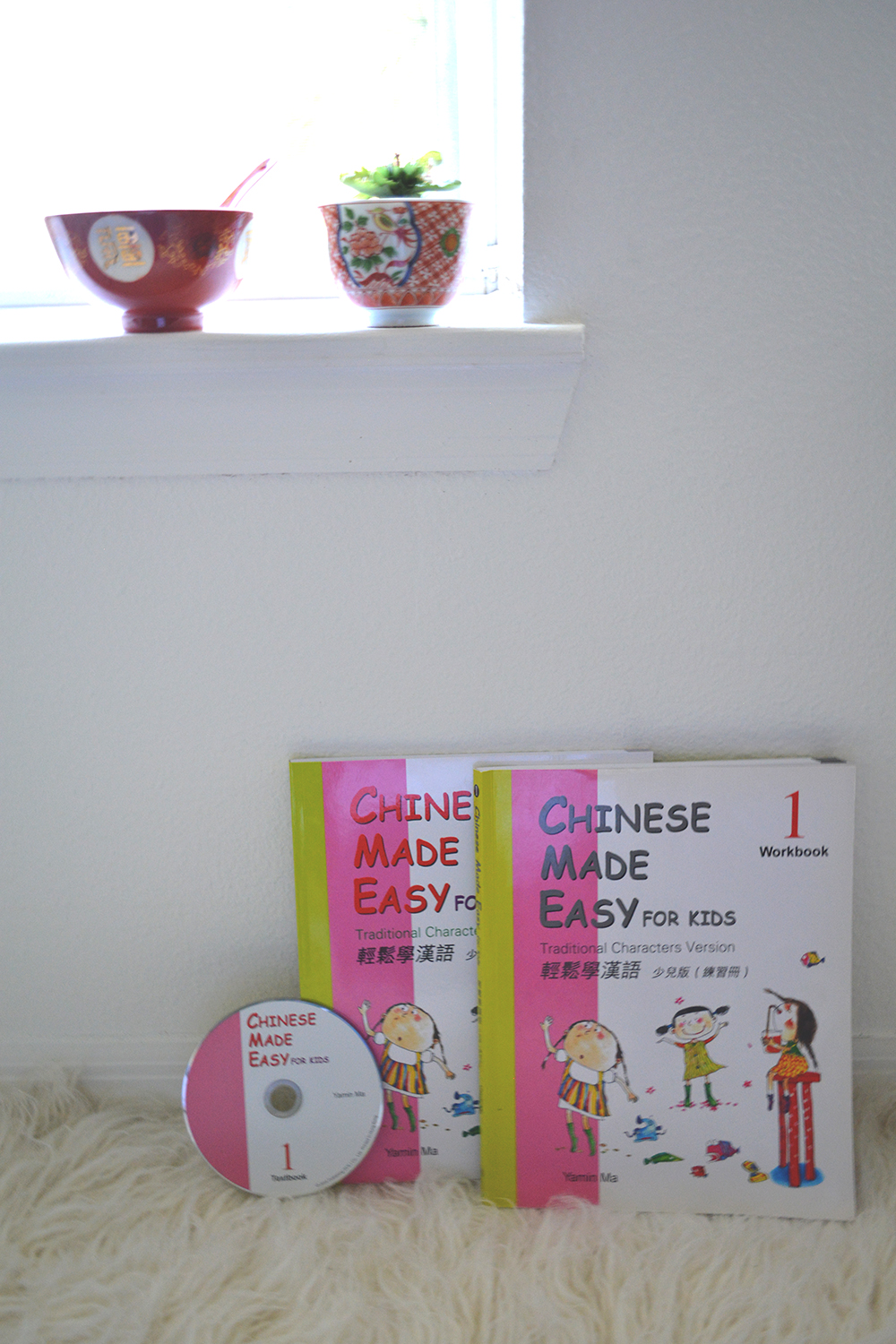
We started out with mostly spoken Chinese, but now we’re moving on to learning to read and write Chinese characters, since Aveline has expressed a great deal of interest in that. (Ok, fine, my strange child is begging.) And for reading and writing, I LOVE the Chinese Made Easy for Kids Textbook 1 with CD and the accompanying Chinese Made Easy Workbook 1, which also dives into Chinese pinyin. I think the phonetics aspect might be overwhelming if it was someone’s very first introduction to any kind of Chinese, spoken or written — but already being familiar with spoken Chinese, seeing the pinyin and learning to match them to the tones given on the CD hasn’t actually been very daunting. These books are fun — colorful, energetic, and designed to really motivate and give the child a sense of great accomplishment. They’re early elementary, but could definitely be used for someone older who wanted to start out as well — I’m doing them alongside my daughter. Again, we’re doing the traditional edition, so if you want Simplified Characters instead, you’ll want the Chinese Made Easy for Kids, Simplified Chinese Edition Textbook 1 and Workbook 1.
Your Local Chinese Cultural Center
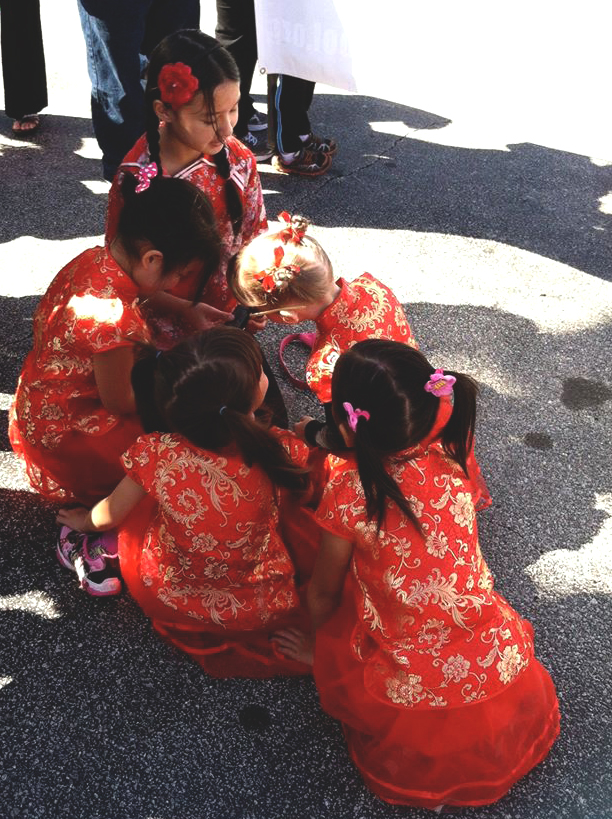
Many areas have an active Chinese-American community association, dedicating to teaching Chinese language, culture, and traditions. Don’t overlook this — it’s is an incredible resource! Through our local cultural center, my daughter not only attends language and folk dance classes each week, but she’s also participated in Chinese festivals like the Mid-Autumn Moon Festival, gotten to watch traditional Chinese opera, lion dance, kung fu and musical showcases, and even performed a Chinese folk dance performance with her classmates at the big local Lunar New Year parade and festival. It’s a terrific, welcoming community, and she (and I!) are able to practice speaking Chinese with native speakers on a regular basis.
Where to Buy Bilingual-Chinese Books, VCDs and More
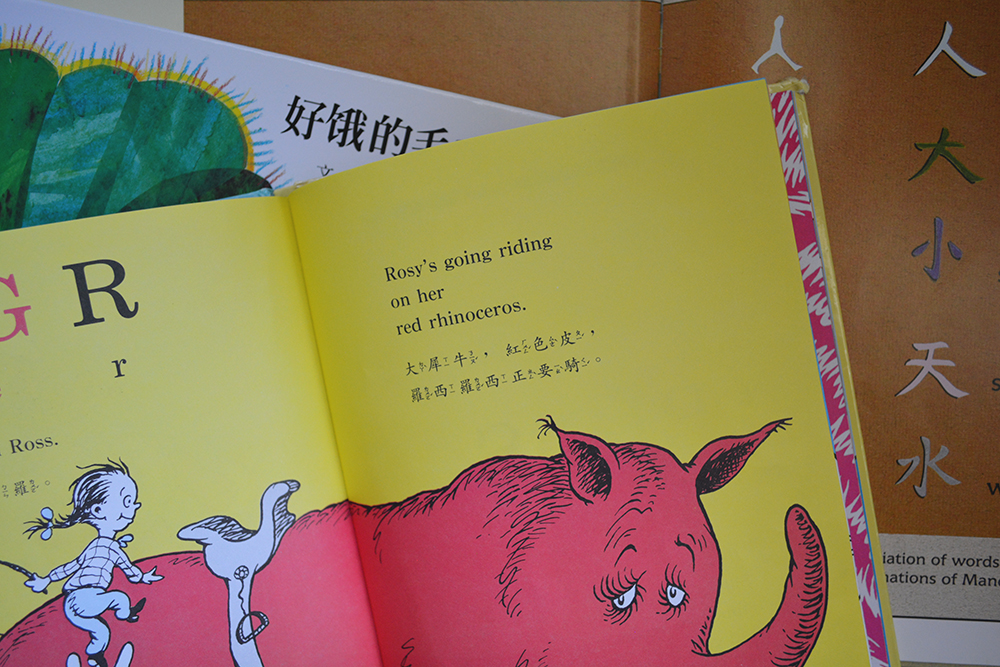
We love to have bilingual and Chinese books around the house, too, to keep the Chinese flowing between classes or workbook sessions. A few places I’ve found to order Chinese books, puzzles, and VCDs (video CDs that get around that pesky DVD region issue) are China Sprout (the site is split into Cultural and Education categories), Language Lizard, Asian Parent, and the Happy Panda Shop.
Don’t be afraid to begin learning Chinese! To quote a Lao Tzu cliché: “The journey of a thousand miles begins with a single step.” And, today’s internet makes the world so much smaller when it comes to venturing out on a journey like this. There are SO many resources available.
If you have questions, please leave them in the comments and I’ll do my best to answer! And if you found this helpful, why not click here to get this post’s Permalink, then pin it to Pinterest? :)
We are a participant in the Amazon Services LLC Associates Program, an affiliate advertising program designed to provide a means for us to earn fees by linking to Amazon.com and affiliated sites.
This post also participated, without compensation, in a Friday Favorites link-up on HipHomeschoolingBlog.com.
The kitchen lights are switched on, the dishes are in the sink, the washing machine is whirring, there’s laundry on the floor, and I’m leaning over a to-do list, panicking over the tickle in my throat and how much I have to do this week. Aveline is in the living room in her pajamas, kneeling down on the brown and grey rug in front of the little stable of twigs and moss that’s held together with nails, kneeling there in front of the baby Jesus.
She’s singing — not reciting, but singing — words as they come to her. The music is so pure and so real and so full of worship. She runs off, and comes back pulling a pirate ship behind her. “The Lalaloopsy would like to worship Jesus!” she shouts. “The pirates would like to worship!”
Because that’s how it should be, you know — no, no, that’s how it is. He didn’t come just for the shepherds of ancient yore, to be tucked neatly into a storybook and a creche to decorate our mantles and our church foyers. He didn’t come to live forever safely next to the haloed holy family statutes. He didn’t come for the perfect, for the sinless saints, for the angels in the winter sky. No, he came for all of humanity, all of us, every single one in every corner of the world.
He’s here for the blue-haired Lalaloopsy,
for the homeless woman
for the broken-down and grieving
for the sword-wielding pirates,
for the angry GI Joe
for the stowaways and the untouchables, and
for me.
And here I am, like Martha, “distracted by all the preparations that had to be made” [1], in danger of taking this miracle for granted.
So come. Come, everyone one of us. Just as we are — with our baggage and our stress and our burdens and our imperfections — come. Here’s here.














 and
and 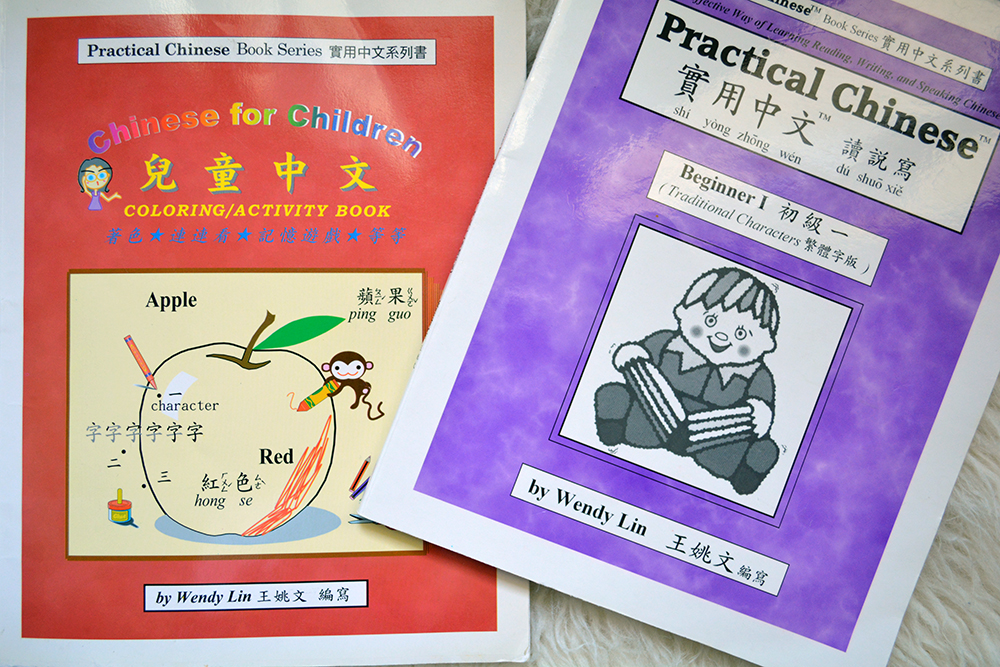
 at first, but then realized what I really wanted was the first book,
  which is the red coloring/activity book pictured on the left. There’s no bells or whistles here, and the illustrations certainly aren’t high-quality, but the workbook lets very young children begin familiarizing themselves with with Chinese characters through basic coloring pages, matching exercises, and other similar activities. The book covers body parts, names of clothes, colors, fruits, numbers, and a few adjectives like “big” and “small”. I wouldn’t really call it curriculum, but it’s a good cursory, hands-on introduction for a young, interested, child. (
 .)
.)
 and the accompanying
  and
and 
 The Oaxacaborn Blog